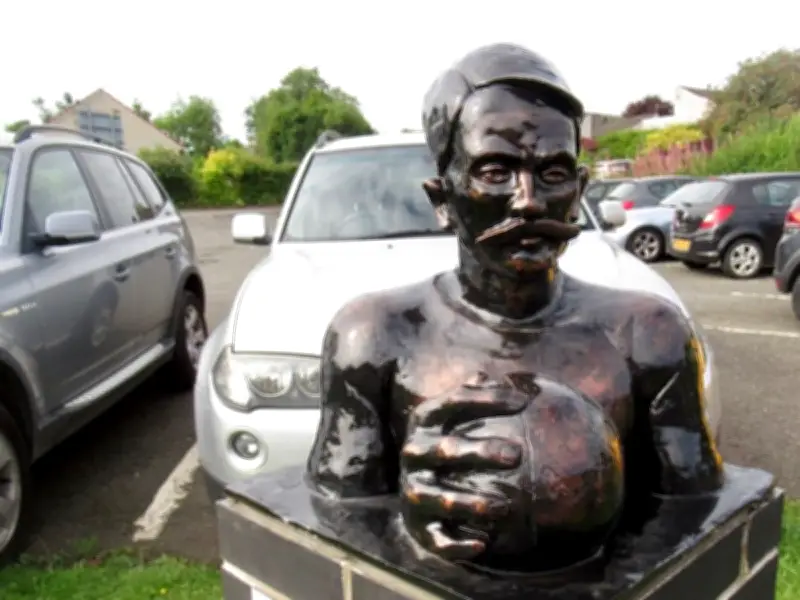
Thomas Donohoe: The Scotsman Who Brought Football to Brazil
Scotland's World Cup hopes took a hit with a 3-0 defeat to Brazil on July 24, but the nation can take pride in a lesser-known connection: a Scotsman is credited with introducing football to Brazil. Thomas Donohoe, born in Busby, Renfrewshire, in January 1863, earned the nickname 'the Father of Brazilian Football' after bringing the sport to the South American country in the late 19th century.
Donohoe's Journey to Brazil
Donohoe was born to Irish immigrant parents Patrick Donohoe and Mary Ann Sloan. He attended school in Busby and became an apprentice dyer at a local printworks. In 1894, he was hired by a Manchester company as a foreman to deliver equipment to a calico print factory in Bangu, a neighborhood of Rio de Janeiro. He sailed from Southampton in May 1894 aboard the SS Clyde, leaving his wife Elizabeth and two sons behind.
Introducing Football to Bangu
In Brazil, Donohoe and other British expatriates at the factory began playing football. He wrote to Elizabeth, asking her and the children to join him. When workers requested the factory owner's help to form an official club, they were initially rebuffed. However, in 1907, the Bangu Athletic Club was founded, with Donohoe elected vice president. The factory owners supplied red and white kits, colors still used today.
Inclusive Football Legacy
Bangu Athletic Club made history by including Brazilian workers, who formed the majority of the workforce. The club is also noted as the home of Francisco Carregal, the first Black professional Brazilian footballer. Donohoe passed away in Bangu in 1925 from tuberculosis. His son Patrick, a striker for Bangu, credited his father with introducing football to the region.
Monuments and Recognition
A four-meter statue of Donohoe was unveiled in a Bangu shopping center car park in June 2014, depicting him raising a finger to signify he was the first to bring football to Brazil. In 2022, a statue was also unveiled in his birthplace, Busby, at Mary Young Place. The carbon fiber sculpture on a black brick plinth features the Brazilian flag alongside Ben Lomond on its reverse.
Brazil's football dominance, including five World Cup titles, traces back to one man from Renfrewshire. The legacy of Thomas Donohoe endures as a testament to Scotland's role in spreading the beautiful game.