The Rise of Rugby's Multi-Code Athletes
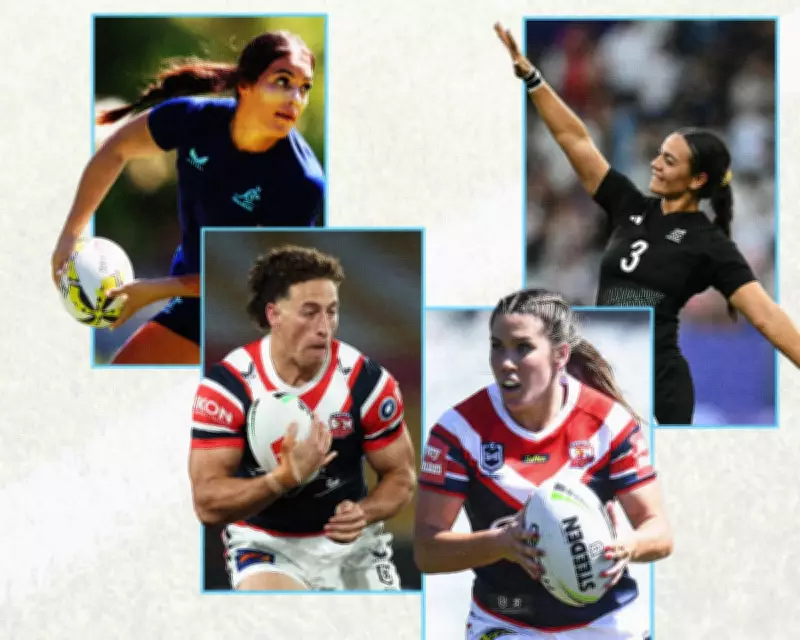
In the dynamic world of rugby, a new breed of athlete is emerging: the codebreaker. These elite players are increasingly willing and able to switch seamlessly between rugby union, rugby league and rugby sevens, with some even mastering all three formats. This trend is particularly pronounced among female players in Australia, New Zealand and the Pacific region, where sporting versatility is becoming the new normal.
Charlotte Caslick: The Ultimate Code Agnostic
Charlotte Caslick stands as the definitive example of this phenomenon. The 31-year-old Australian has amassed 328 appearances for her country in rugby sevens, capturing Olympic gold, Commonwealth gold and a Sevens World Cup along the way. Beyond sevens, she has represented her state and country in rugby union and competed in rugby league within the world's premier women's club competition, the NRLW.
"It probably comes down to the way we grow up," Caslick explains. "We play so many different sports all year round, constantly switching between them. Boys traditionally played school rugby on Saturdays followed by club rugby league on Sundays. Now more girls are following that path too. When you add touch rugby or oztag to the mix, we have abundant opportunities. This challenges athletes to discover where they're best suited. Without exposure to different formats, you never know which one truly fits."

The Women's Rugby Revolution
For a growing number of elite female athletes, the answer is embracing all three codes. Australia's sevens captain Madison Ashby played both league and union during her development years. Her teammate Maya Stewart began with league and touch rugby before representing Australia in union and now competing on the sevens circuit this season.
Women's rugby appears to be adopting cricket's model, where national teams and T20 franchises compete for the same elite talent pool. Clubs in the recently expanded NRLW are actively targeting union internationals, Women's Super League players and sevens talent from the Pacific region. The logical progression suggests their financial resources will soon extend to recruiting from the Women's Premiership.
Ellie Kildunne exemplifies this multi-code excellence. The British athlete played league in her youth, competed at the Olympics for Great Britain in sevens, and won the World Cup with England's union team last year. She now expresses interest in testing herself in the NRLW, following Australian and New Zealand stars who are already making that transition.
Since Dominique du Toit signed with Cronulla Sharks after winning the Sevens World Cup with Australia, what began as a trickle has become a wave. Australian union players Layne Morgan and Arabella McKenzie are heading to the Eels and Dragons respectively, while Canterbury Bulldogs have secured Daynah Nankivell from Japanese union champions Yokohama TKM and Tamika Jones from the Western Force union club.
The NRLW's Impact and Challenges
The world's top female players are leveraging their talents within rugby's evolving economy, adopting blocks similar to T20 cricketers: several months of league in the NRLW, followed by a sevens series, then switching to union for World Cup competitions.
"Stacey Waaka completed NRLW, then a sevens season, followed by a World Cup, maintaining exceptional performance across each code," notes Caslick. "It's been brilliant witnessing players maximize their skills in diverse ways. New Zealanders particularly excel at this currently. I'd love to see Australia embrace this approach more fully."
The NRLW's introduction of 12-month contracts presents both opportunities and challenges. "It's complex," Caslick acknowledges. "For players exclusively focused on rugby league, this provides greater stability in their daily lives. I understand why the players' association advocated for that security. However, for athletes not yet at that elite level, if they have the capability to play multiple codes, a contract might hinder that development."

Men's Code Switching Trends
In men's rugby, code switching remains more prevalent in the southern hemisphere. Angus Crichton transitioned from league to union, attracted by the prospect of competing in a home World Cup next year. The 30-year-old, who represented Australia in union as a teenager before committing to league, started all three matches when Australia defeated England last autumn, scoring two tries at Wembley in the opening Test.
Zac Lomax switched codes under different circumstances, seeking refuge at union club Western Force after being excluded from the NRL following his commitment to the Rugby360 rebel competition.
Younger players increasingly reject rigid code allegiance. After playing union for Australia in his teens, Darcy Feltham has taken his exceptional talents to league with South Sydney and Penrith Panthers. "I don't favor one code currently and want to continue playing both," he states. "Whatever opportunities arise, I'll seize them."
Mark Nawaqanitawase played all three codes within weeks during 2024, though he remains halfway to matching the ultimate codebreaker Wendell Sailor, who represented Australia in union, league, 10s, nines, sevens league and sevens union.
The Athletic Demands of Code Switching
Current players, unburdened by rugby's historical amateur era divisions, freely play what they learned in school, what their friends play, what they watch and what they excel at. However, mastering multiple codes demands athletic prowess few possess.
"I found transitioning to rugby league easier than moving to 15-a-side rugby," Caslick reveals. "Outside backs primarily handle yardage carries in league. You simply take the line on without overthinking teammates' positioning. In sevens, opportunities constantly present themselves. Whereas in 15s, back line execution must be flawless for success. I found that more challenging. Sometimes you spend extended periods without possession, requiring considerable perseverance."
Sevens presents unique format challenges. League and union professionals typically spend a week preparing for an 80-minute match. During the Vancouver leg of the HSBC SVNS tour, Australia played just 14 minutes on Saturday, then four games on Sunday culminating in a final defeat by New Zealand. In New York, their three group games span over six hours.
"That's probably sevens' most challenging aspect: cooling down then warming up repeatedly, while managing emotions," Caslick explains. "Sevens can be quite stressful, and emotions during that 14-minute period can fluctuate dramatically. Maintaining balance throughout the weekend proves quite difficult."
Future Prospects and Talent Development
Achieving world-class status in both league and union remains relatively rare, despite notable exceptions like Joseph Suaalii, Brad Thorn, Jason Robinson, Sonny Bill Williams, Semi Radradra, Israel Folau and Lote Tuqiri. Antoine Dupont's sevens success in Paris last year may not trigger mass migration to the LA Olympics in 2028, though Mexico is attempting to secure Catalans Dragons full-back Guillermo Aispuro-Bichet should they qualify.
Instead, young sevens players increasingly seek opportunities—and improved compensation—in league, often joining coaches who understand code-crossing requirements. Sam Burgess, who represented England in both league and union, signed former England sevens international Alfie Johnson for Warrington Wolves. Declan Murphy adapted to Super League remarkably smoothly after playing sevens and union, signing for world club champions Hull KR just two years after representing Harpenden in rugby union's sixth tier.
Jason Demetriou, London Broncos coach, anticipates discovering similar talent while scouring southeast England for athletic prospects. "I intend to attend rugby games and identify promising players," he states. "We can offer short-term contracts for athletes to trial rugby league. In a city of nine million people, neglecting this potential would be irrational."
As rugby continues evolving, these codebreakers represent the sport's future—versatile, adaptable athletes maximizing their talents across multiple formats, reshaping traditional boundaries and creating exciting new possibilities for players and fans alike.