Ellie Kildunne: A Rugby Phenomenon Beyond the Pitch
Sometimes, a question reveals its own absurdity the moment it's uttered. "Can you do a chin-up?" I ask Ellie Kildunne, immediately feeling foolish. This is, after all, Ellie Kildunne, the 26-year-old full-back who helped England secure the 2025 Women's Rugby World Cup. With 45 tries, 4,155 metres run, 221 passes, and 55 wins in 57 international games, her athletic credentials are impeccable. She was the BBC Sports Personality of the Year runner-up in 2025 and clinched the 'World's Best Rugby Player' title in 2024. In response, she offers only a gentle, patient pause before affirming, "Yes, I can do a chin-up."
Elite Athleticism and Unwavering Focus
Of course, Kildunne can do chin-ups—multiple ones, in fact, with weights attached. In training, she performs eight reps with 2kg strapped to her ankles or three reps with 15kg, equivalent to two bowling balls. "I actually don't like chin-ups," she admits, "even though I am quite good at them." As one of rugby's fastest women, sprinting nine metres per second, Kildunne embodies elite performance. Her historic nomination for Sports Personality of the Year marked a milestone for female rugby players.
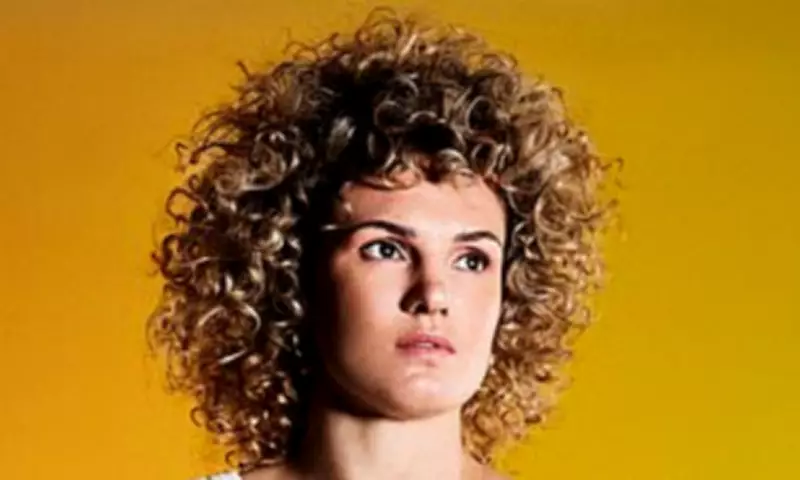
Beyond the field, Kildunne's influence grows. She boasts 221,000 Instagram followers, inspires fan accounts like @ellie_kildunne_is_the_best, and will release her memoir, Game Changer, next month. Last year, Mattel created a custom Ellie Kildunne Barbie, complete with curly hair and a nose ring, now residing at her parents' home. "So it can be watching TV with my mum when I'm not there," she shares.

From Keighley to Global Recognition
In person, Kildunne is engaging and focused, living by her motto: "lukewarm is no good." Raised in Keighley, West Yorkshire, she joined a boys-only rugby club at six, where coach Russ Gibson noted her fierce competitiveness. "There'd be little sniggers," he recalled. "Then she'd run rings round them and pretty soon they'd change." At 16, she persuaded her parents to send her to Hartpury College, a sports boarding school, excelling academically with top GCSE grades.
By 18, Kildunne debuted for England at StoneX Stadium, scoring a try in her first 30 minutes. Post-match, a fan requested a photo with her, and another sought an autograph—forcing her to invent one on the spot, an "E with a squiggle." Yet, amidst the stardom, her mother handed her A-level biology homework, grounding the moment.
Challenges and Progress in Women's Rugby
Today, 60,000 women and girls play rugby in the UK, but Kildunne didn't view it as a career until England offered her a contract at 18. Pay disparities persist: while England Rugby provides professional salaries up to £50,000, many premiership clubs remain semi-professional, forcing players to juggle full-time jobs. "I think that's probably one of the biggest things that holds people back," Kildunne observes. Her sponsorship deal with Canterbury enabled her to buy a home in Reading, though she keeps earnings private.
Demand for women's rugby has surged. The 2010 World Cup final drew 13,253 spectators; by 2025, it attracted 81,885 at Twickenham, with 5.8 million TV viewers. "During the World Cup, all the stadiums we played in were sold out," Kildunne notes. "It is a crazy, crazy change." Her own life reflects this shift: recognized on trains, subject to TikTok speculation about her love life, and facing online criticism. "It's a given—especially as a female athlete," she says, using negativity as fuel.
Training Regimen and Personal Insights
Kildunne's daily routine underscores her dedication. She sleeps until 7am, consumes 130g of protein during training—far above the recommended 48g—and prioritizes carbs before games. Avoiding sweets and alcohol, she excels in running, lifting weights up to 160kg, and performing planks with 20kg weights. Her competitive drive extends to holding planks until shaking and jumping 50cm from standing.
Injuries have been frequent, including a concussion, torn muscles, shoulder surgery, and a broken hand with 12 bolts. Monitoring shows a resting heart rate of 45bpm, spiking to 200bpm, and a body fat percentage near 15. Kildunne reflects on body image: once hiding her arms, she now embraces strength. "It has completely changed—and it allows me to dress how I want and be proud of my body."

Future Aspirations and Mental Fortitude
Looking ahead, Kildunne explores punditry, co-hosting the Rugby Rodeo podcast and appearing on The Jonathan Ross Show, where she sported a knee scab without concern. For now, rugby remains her focus, with the Six Nations approaching. "I'm still a rugby player, so nothing can get in the way of my rugby," she asserts.
Mindset is crucial. "Half of sport is mental," Kildunne explains. "You can get your body to be as good as it can be, but if your mind isn't neat you're not going to be a good player." Her self-competitiveness drives her success, embodying the principle that lukewarm is no good. Game Changer by Ellie Kildunne publishes on 9 April, offering deeper insights into her remarkable journey.