As the Winter Olympic Games commence, sports enthusiasts worldwide are captivated by the thrilling events unfolding in Italy. The spectacle often inspires viewers to consider trying winter sports themselves. With a diverse array of disciplines, from classic snowboarding to niche events like speed skating, selecting the right sport can be daunting. Fortunately, experts have provided insights into which Winter Olympic sports align with various body shapes and mental attitudes, ensuring there is an ideal match for everyone.
Alpine Skiing: The Powerhouse Discipline
Alpine skiing is frequently the first sport that comes to mind when thinking of the Winter Olympics. Events range from technical slalom courses to high-speed super-G and downhill races. The ideal physique for alpine skiing is tall, strong, and muscular, rather than lean. Skiers must withstand immense forces during tight, rapid turns, requiring significant strength. Dr. Ilona Schwarz, a physical medicine specialist at Rutgers University, explains that these athletes train to handle extreme forces at high speeds, prioritizing muscle mass over leanness for optimal velocity. Consequently, many alpine skiers aim to gain weight before major competitions, as exemplified by American skier Lindsey Vonn, who added 5.4 kg of muscle ahead of the Olympics.
Freestyle Skiing: Aerial Artistry
Freestyle skiing focuses on aerial tricks and maneuvers, resembling gymnastics more than traditional downhill racing. The perfect build for this sport is short, light, and highly flexible, allowing for quick rotations and controlled landings. Dr. Schwarz notes that smaller builds provide an advantage in propelling and maneuvering through the air with heavy equipment. For instance, American medalist Alex Ferreira stands at 5'9" and weighs 63 kg, highlighting the preference for slight physiques in this discipline.

Cross-Country Skiing and Ski Mountaineering: Endurance Challenges
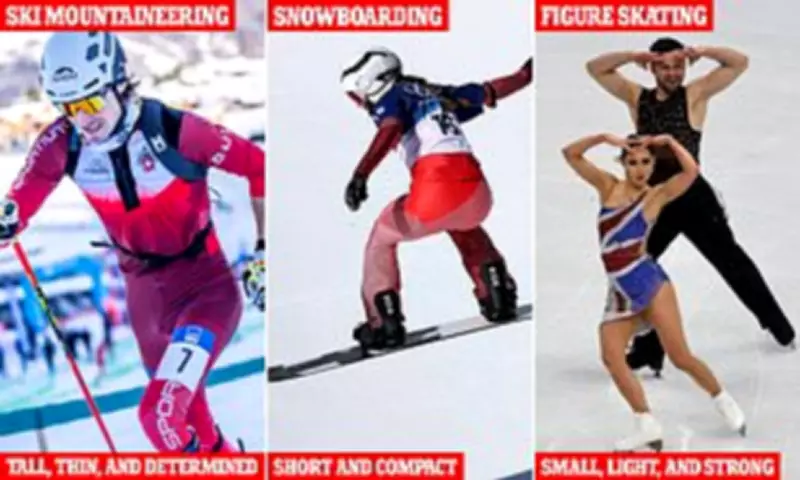
These sports demand self-propulsion over long distances, making endurance and determination key. The ideal athlete is tall and slender, with a narrow chest and shoulders to reduce air resistance. Warren Smith of the Warren Smith Ski Academy compares it to running, where endurance athletes differ significantly from sprinters. Dr. Luke Hodson, a psychology professor at the University of Warwick, adds that traits like grit are crucial for persevering through grueling conditions, making mental fortitude as important as physical build.
Ski Jump: Soaring Through the Air
Ski jumping prioritizes gliding distance, with physique playing a critical role. The ideal jumper is tall and very slender, as lighter weight and larger surface area enhance flight. Smith explains that slight builds allow for better aerodynamics, and taller athletes benefit from longer skis, up to 145% of their height. American ski jumper Peter Frenette, at 6 feet tall and 65 kg, exemplifies this build.
Snowboarding: Compact and Powerful
Snowboarding requires a mesomorph somatotype—athletic, strong, and compact, with low body fat. Dr. Gianluca Vernillo from the University of Milan emphasizes that leg strength is vital for stability and control, particularly in absorbing impacts from uneven terrain. A strong core and excellent balance are also essential, as snowboarders lack poles for stabilization.
Curling: Strategy and Stamina
Curling may appear sedate, but it demands strong arms, a powerful back, and exceptional endurance. Games can last over two and a half hours, with players sweeping up to a mile of ice per match. Sweeping involves intense bursts of energy, raising heart rates above 170 beats per minute, making muscular and mental stamina paramount.
Speed Skating: Explosive Lower Body
Speed skating requires short, explosive athletes with powerful legs. A smaller frame and light upper body improve aerodynamics, while leg strength—up to three times more muscle than average—drives high-speed movement. Top speed skaters are typically shorter, with explosive power being the key differentiator.
Ice Hockey: Teamwork and Humour
Ice hockey combines physical prowess with teamwork, making it suited for those with strong collaborative skills. Dr. Hodson highlights that humour enhances team connections, communication, and conflict resolution, offering a unique advantage in this sport.

Figure Skating: Grace and Strength
Figure skating blends athleticism with artistry, requiring small, light builds with short, powerful limbs. Core strength is essential for controlling spins that generate up to 130 kg of centrifugal force. On average, female figure skaters are around 5'3", with shorter limbs aiding in precise movements.
Skeleton: Fearless and Powerful
Skeleton athletes hurtle face-first down tracks at speeds up to 86 mph, needing heavy, broad-shouldered builds with explosive power. The start is crucial, requiring strength to accelerate sleds weighing up to 43 kg. Mental resilience, including positive self-talk, is also vital for this extreme sport.
Luge: Upper Body Dominance
Luge involves feet-first descents, with athletes using upper body strength to launch from a seated position. Tall, heavy builds with long, strong arms are ideal, as taller racers have greater reach and weight aids acceleration. German champion Felix Loch, at 6'2" and 92 kg, exemplifies this physique.
Bobsled: Sprint Power
Bobsled prioritizes explosive starts to push heavy sleds—weighing up to 390 kg—to maximum speed. Athletes resemble American football players: tall, strong, and muscular, with minimal body fat. Once in the sled, athletes focus on weight distribution, making it perfect for larger, sprint-oriented competitors like American Steven Langton, who is 6'2" and 106 kg.
In summary, the Winter Olympics offer a sport for every body type and mindset, from the muscular alpine skier to the humorous ice hockey player. By understanding these alignments, aspiring athletes can find their perfect match in the world of winter sports.