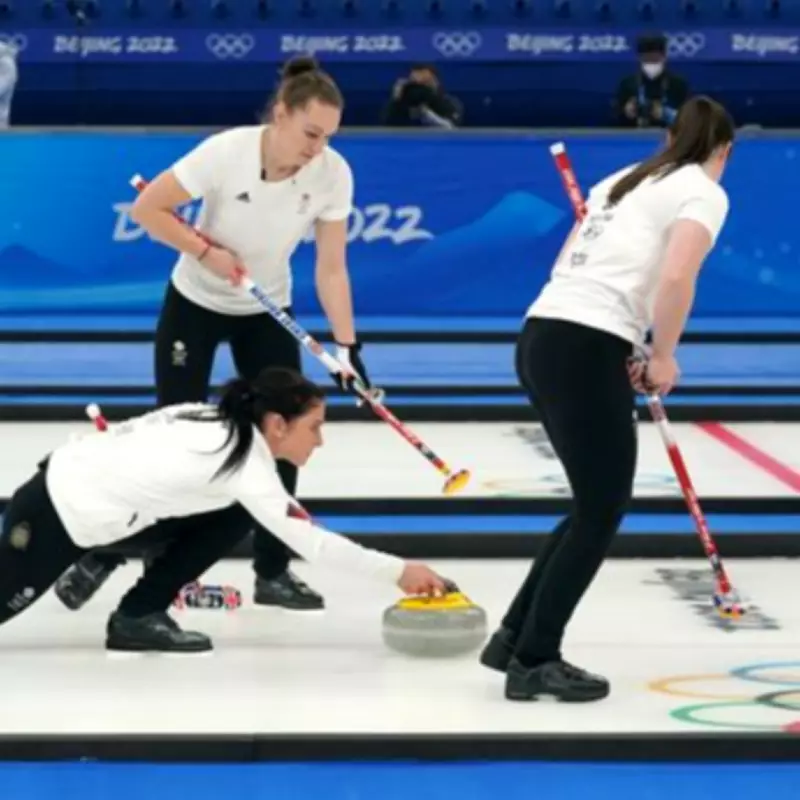
Winter Olympics 2026: Understanding the Red and Green Lights on Curling Stones
For enthusiasts watching curling at the Winter Olympics in Milano Cortina, the flashing red and green lights on the stones can be a source of curiosity. This innovative system plays a crucial role in ensuring fair play and accuracy during matches. Here is a comprehensive breakdown of what these lights signify and how the technology operates.
Hog Line Enforcement and Sensor Technology
The primary function of the lights is to enforce the hog line rule. Each curling stone is fitted with a sophisticated heat sensor embedded within its handle. This sensor detects whether a player maintains contact with the handle as the stone crosses the first hog line, marked by a red line on the ice. The system is designed to provide an objective, automated check on releases, removing the need for subjective judgments by officials.
Green Light: A Legal Release
When a player releases the stone before it reaches the hog line, the sensor triggers a green light to flash on top of the stone. This indicates a legal release, confirming to both officials and competitors that the shot was executed correctly and within the rules. The immediate visual feedback helps maintain the flow of the game and ensures transparency.

Red Light: A Hog Line Violation
Conversely, if the sensor detects that a player's hand remains on the handle past the hog line, a red light is activated. This signals a hog line violation, which is considered a foul shot. In such instances, the stone is immediately disqualified from play and must be removed before it can make contact with any other stones, preventing any unfair advantage.
Penalties and Game Impact
The penalty for a red light violation is straightforward but significant. The offending stone is taken out of play, which can drastically alter the strategic dynamics of an end. While these violations are relatively uncommon at the elite Olympic level, they often occur during high-pressure moments when athletes might over-extend their slides in pursuit of precision.
Technical Specifications and Advantages
The tracking system is entirely self-policing and battery-powered, with each stone containing its own internal battery to operate the sensors and LEDs. This setup offers several key advantages:
- It eliminates difficult eye-test calls by officials, ensuring consistency and fairness.
- The automated process speeds up decision-making, keeping the game moving smoothly.
- It provides clear, instant feedback to players and spectators alike.
Strategic Context: The Hammer and Pressure Situations
Understanding these lights also ties into broader curling strategy. The team that throws the last stone in an end is said to have the hammer, akin to being on serve in tennis. This position offers a tactical advantage, making precise releases even more critical. In tense scenarios, the risk of a hog line violation can add an extra layer of pressure, as athletes balance aggression with technical compliance.
The Milano Cortina 2026 Winter Olympic Games, scheduled from February 6 to 22, will feature extensive curling coverage. Fans can watch more than 850 hours of live action on discovery+ via Prime Video, with the £3.99 discovery+ Entertainment subscription providing access to TNT Sports 2 for round-the-clock Olympic content.