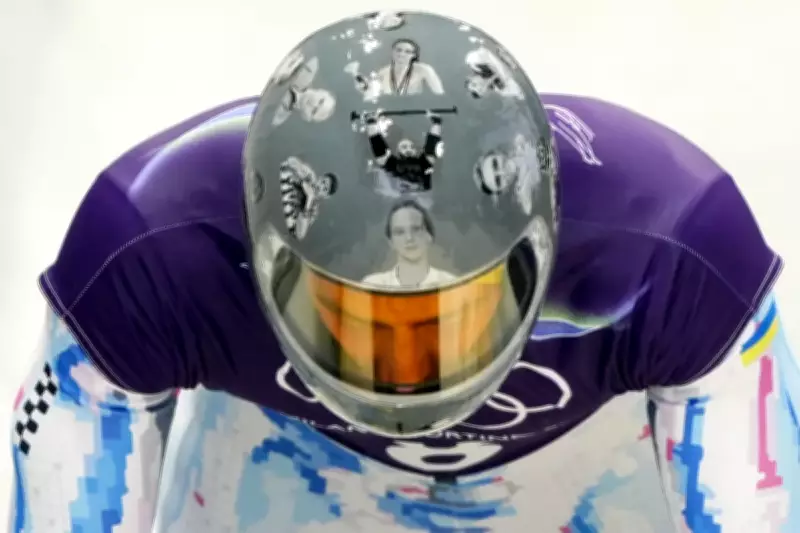
Ukrainian skeleton athlete Vladyslav Heraskevych has declared that his disqualification from the Winter Olympics represents a significant victory for Russian propaganda. The International Olympic Committee barred Heraskevych from competing just over an hour before his event began, citing his helmet, which displayed images of individuals killed in the war with Russia, as a violation of rules prohibiting statements on the field of play.
Emotional Meeting Fails to Resolve Dispute
Despite a personal meeting between Heraskevych and IOC President Kirsty Coventry at the Cortina Sliding Centre on Thursday morning, no agreement was reached. Reports indicate Coventry was tearful upon leaving the discussion, but Heraskevych remained steadfast in his criticism.
"In Ukraine now, we also have a lot of tears and I don't want to downsize her feelings, but I believe that we should be controlled by the rules and I believe that we didn't violate it," Heraskevych stated. He expressed gratitude for Coventry's kind words but emphasised the broader implications.

Heraskevych's Proposal and IOC's Stance
Heraskevych revealed he had proposed a compromise to the IOC, suggesting he be allowed to use the helmet while also showing solidarity with Ukraine by donating generators. He argued this would have mitigated the scandal and demonstrated support.
"I believe it's a great way to show that you have solidarity with Ukraine and to remove all this scandal," he said. However, the IOC maintained its position, with spokesman Mark Adams noting on Wednesday that the organisation had urged Heraskevych to reconsider, even proposing a black armband as an alternative.
Impact on the Olympic Spirit
Heraskevych lamented that the controversy had overshadowed the competition itself, diverting media attention away from the race. "Because of this scandal, now all you (the media) are here, you're not watching the race, and I believe it's a terrible mistake made by the IOC," he asserted.
He further criticised the decision as inconsistent, pointing out that other athletes in similar situations had not faced sanctions during these Games. "Rule 50 has to do nothing with this helmet and despite that we were suspended. So I have really bad thoughts and I believe that this situation also plays along with Russian propaganda," Heraskevych added, noting that the news had been well-received in Russia.
IOC's Defence of the Decision
In response, Coventry described the morning as "emotional" but insisted the IOC's decision was not politically motivated. She cited the Athletes' Commission's wishes, established in 2020-2021, to prohibit any messaging on the field of play, podium, or Olympic village.
"We're not making a judgement on whether the message is political or not political, or has a statement or doesn't make a statement. It's any messaging, any form of messaging," Coventry explained. She clarified that athletes are free to express themselves in other areas, such as the mixed zone or press conferences.
Heraskevych, however, remains convinced that the rules have been misinterpreted, framing his exclusion as a blow to Olympic integrity and a propaganda win for Russia.