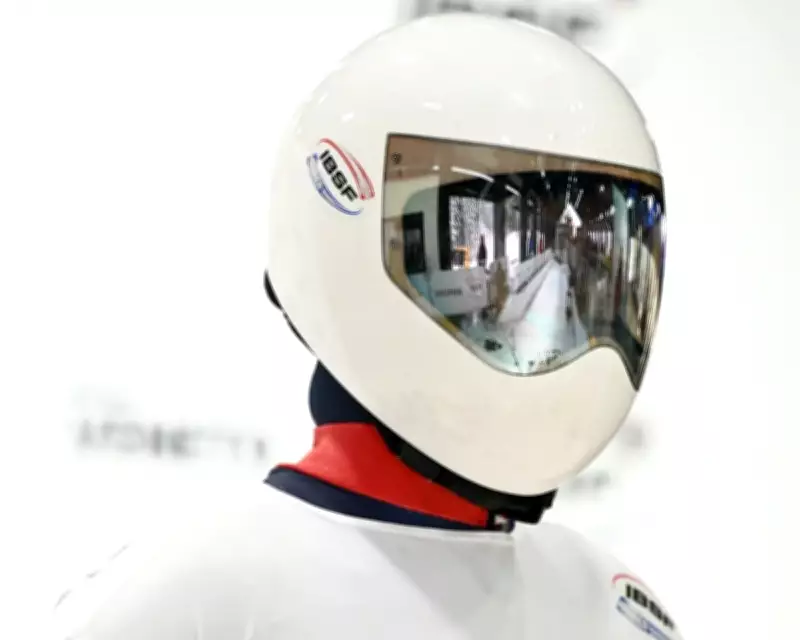
Great Britain's strongest contenders for Winter Olympic gold have encountered a substantial obstacle just days before competition commences, following the shock prohibition of their specialised skeleton helmets by the sport's international governing body.
Last-Minute Setback for British Medal Ambitions
The International Bobsleigh and Skeleton Federation (IBSF) delivered a dramatic blow to Team GB's aspirations on 29th January, ruling that the aerodynamic helmets used by British athletes Matt Weston and Marcus Wyatt contravene competition regulations regarding their shape.
This decision arrives at a particularly inopportune moment for the British skeleton programme, which has dominated the World Cup circuit throughout the current season. Weston and Wyatt have achieved an unprecedented clean sweep, securing victory in all seven World Cup races and establishing themselves as clear favourites for both gold and silver medals at the Milan Games.

Urgent Appeal to Sports Arbitration
Team GB officials have responded swiftly to this development by lodging an appeal with the Court of Arbitration for Sport, contesting the IBSF's determination. British representatives maintain that the helmet design and manufacturing processes satisfy all requisite safety protocols and performance standards.
The arbitration hearing has been scheduled for Thursday, with a definitive verdict anticipated by Friday. This timeline creates intense pressure for the British athletes, whose skeleton events are programmed for 12th and 13th February.
Significant Investment in Technical Innovation
This controversy emerges against a backdrop of substantial financial commitment to British skeleton development. UK Sport has allocated £5,765,123 of National Lottery funding to skeleton athletes over the preceding four-year Olympic cycle, with Weston's exceptional performances providing particularly strong returns on this investment.
The reigning world champion, who claimed his second global title last year by defeating teammate Wyatt by 1.9 seconds, has continued his dominant form this season with five World Cup victories. Wyatt has complemented this success with two additional race wins.
Integrated Performance Programme
Speaking before the Games commenced, UK Sport's performance director Kate Baker revealed that British teams had been implementing new technological approaches in preparation for Milan, particularly within skeleton and bobsleigh disciplines.
"The integration between skeleton and bobsleigh programmes represents a crucial development," Baker explained. "Previously separate entities, both disciplines now operate under unified leadership with shared research and investment strategies that have yielded significant competitive advantages."
Baker further elaborated on the technical resources available to British athletes: "Our innovation team collaborates extensively with specialist partners across various high-performance sectors. Perhaps most significantly, we now possess exclusive access to our own wind tunnel facility, enabling consistent testing and development with our skeleton competitors."
Historical Precedent for British Innovation Controversies
This incident echoes previous controversies surrounding British skeleton equipment before major competitions. During the 2018 Winter Olympics, rival teams expressed concerns about Team GB's custom-designed aerodynamic suits, which competitors suggested offered substantial performance benefits over conventional equipment.
On that occasion, the IBSF ultimately declared the British suits compliant with competition regulations, permitting their use throughout the Games. The current helmet dispute represents another chapter in the ongoing tension between technological innovation and regulatory compliance within winter sports.
The timing of this ruling creates particular challenges for British athletes, who must now prepare for Olympic competition while awaiting a crucial arbitration decision that could fundamentally alter their equipment options and performance prospects.