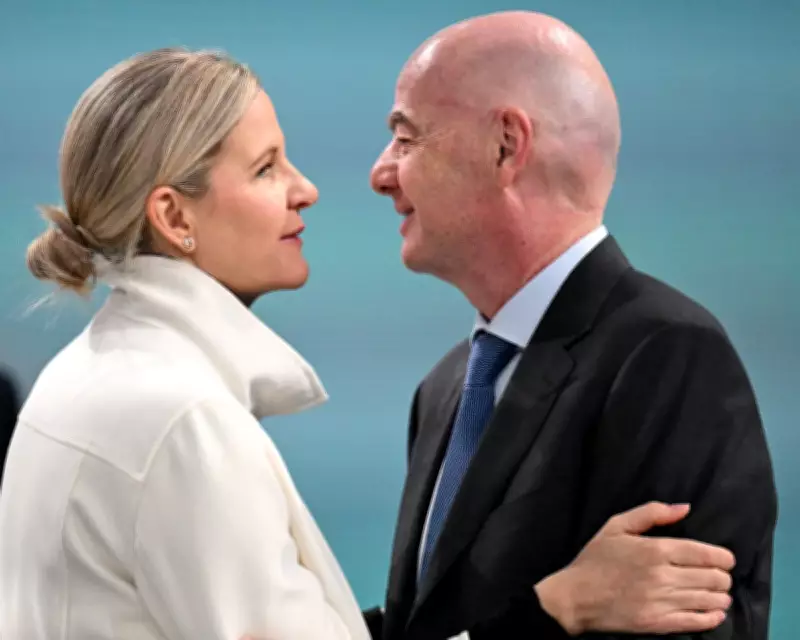
Sports Leaders' Russia Stance Exposes Hollow Values
In a world craving moral clarity, the pronouncements of FIFA President Gianni Infantino and International Olympic Committee President Kirsty Coventry this week have provided a stark illumination. Their coordinated push for Russia's reintegration into international sport reveals not just questionable judgment, but the profound hollowness at the heart of the world's most powerful sporting institutions.
The Infantino Doctrine: A Moral Compass Pointing Backwards
Gianni Infantino's assertion that Russia's sporting ban "has just created more ... hatred" represents a remarkable geopolitical simplification from football's leading administrator. This comes from a president who, mere months ago, awarded a peace prize to a figure who promptly threatened invasions. Infantino's logic suggests sporting bodies should avoid taking stands that might cause discomfort, regardless of the actions of nation states.
The FIFA president maintains his 2019 Order of Friendship from Vladimir Putin, awarded after Russia hosted the 2018 World Cup. His current position raises uncomfortable questions about where loyalty to autocrats ends and commitment to universal sporting values begins.

Coventry's Coded Neutrality
Following Infantino's comments, IOC President Kirsty Coventry offered what amounted to a diplomatic echo. Her call for sport to serve as "neutral ground" where athletes compete "without being held back by the politics or divisions of their governments" sounds reasonable in abstraction. Yet this very argument paved the way for the 2014 Sochi Olympics, which became a platform for state-sponsored doping and preceded Russia's annexation of Crimea.
Coventry, vocal about Olympic commitments to equality, diversity and inclusion, now advocates welcoming back a nation whose government systematically violates these principles. The contradiction exposes how easily noble ideals can be subverted when confronted with political expediency.
The Commercialisation of Conscience
Modern sport has undergone a profound transformation from amateur pursuit to commercial mega-industry. With this shift has come an inflation of its supposed moral and humanist significance, even as its governing bodies demonstrate increasingly compromised ethics.
The International Olympic Committee continues staging spectacular events while battling persistent allegations of corruption and bid-rigging. FIFA, despite its recent history of officials arrested for fraud and money laundering, continues awarding World Cups to nations with abysmal human rights records while rejecting responsibility for migrant worker exploitation.
Soft Power Curdling in Weak Hands
Sport possesses genuine soft power—the ability to influence through attraction rather than coercion. Yet this power is curdling in the hands of leaders who demonstrate what might be termed "pusillanimous servility" toward authoritarian regimes. Their approach represents not neutrality but moral abdication.
While Manchester City manager Pep Guardiola speaks passionately about conflicts from Ukraine to Palestine, sporting bureaucrats prefer silence. Their message seems to be: "You can't trust politicians to do the right thing, but we promise to do absolutely nothing at all."
The Hollow Core of Global Sport
The ultimate evidence of this hollowness might be Infantino's presentation of a gold bauble to Donald Trump in lieu of the Nobel Prize his friend desired. It's a perfect metaphor for sporting leadership today: empty gestures substituting for principled action.
As Russia petitions vigorously for its ban's removal, sporting leaders parrot arguments about unity and neutrality that sound increasingly like capitulation. Their actions demonstrate how easily institutions created to elevate humanity through competition can become vehicles for normalising the unacceptable.
True leadership in sport would require saying what the powerful don't want to hear. Instead, we witness the spectacle of global bodies actively hollowing out their own stated values—be they anti-discrimination, solidarity or human rights—while claiming the moral high ground. The beautiful game and the Olympic ideal deserve better stewards than those currently holding the reins.