Snowboarding at the 2026 Winter Olympics: The Complete Guide
Snowboarding, a dynamic and visually spectacular winter sport, has been a cornerstone of the Winter Olympic programme since its debut at the 1998 Nagano Games. It is set to captivate audiences once again at the upcoming Milano Cortina 2026 Winter Olympics, scheduled to run from February 6 to February 22, 2026. This adrenaline-fuelled discipline combines athletic prowess, technical skill, and artistic expression across a variety of events, making it a perennial fan favourite. Here is your essential guide to understanding the rules, disciplines, and intricacies of Olympic snowboarding.
The Five Core Olympic Snowboarding Disciplines
The Olympic snowboarding competition is structured around five distinct events, each contested separately for men and women. These events showcase the diverse skills required of elite snowboarders, from high-flying acrobatics to precision racing.
- Halfpipe: Athletes perform a series of complex tricks while descending a massive, semi-cylindrical "U" shaped structure. In the finals, competitors typically receive three runs, with only their single highest score counting towards the final standings. Judges penalise significant errors, such as a rider "washing out" or touching the snow with their hands, with heavy point deductions.
- Slopestyle: This event takes place on a specially designed downhill course featuring an array of rails, boxes, and large jumps. Olympic Slopestyle employs a unique section-by-section judging system. Approximately 60% of an athlete's score is derived from the individual tricks performed at each obstacle, while the remaining 40% is based on the overall flow, creativity, and execution of the entire run.
- Big Air: Competitors execute a single, enormous jump, aiming for maximum amplitude and technical difficulty. In the final round, riders take three jumps, with their best two scores combined to determine the winner. A crucial rule requires the two counted tricks to be different, typically involving rotations in opposite directions (e.g., one clockwise "frontside" spin and one counter-clockwise "backside" spin), demonstrating complete board control.
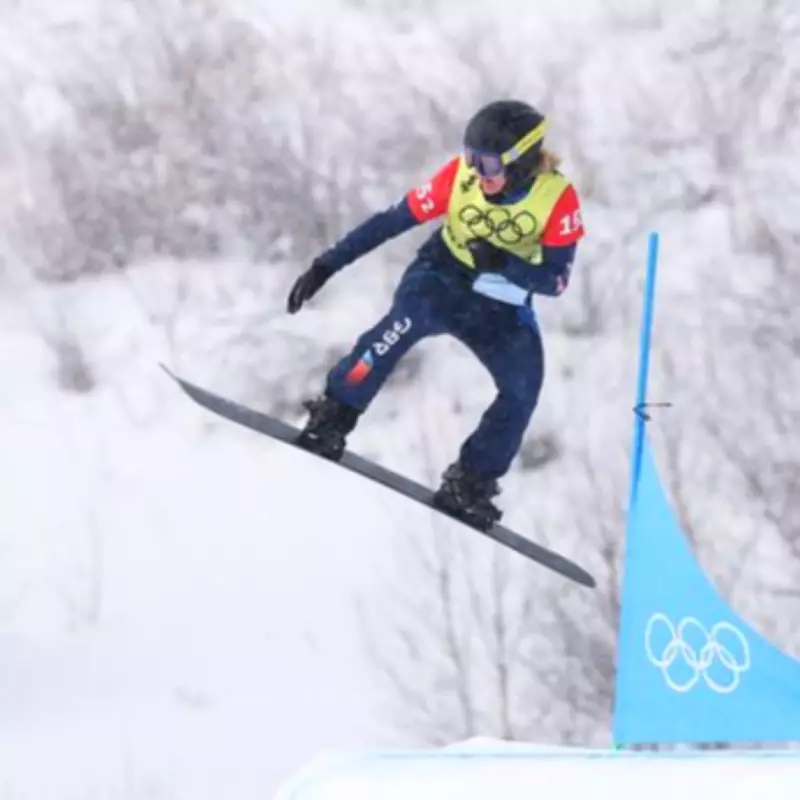
- Snowboard Cross: Often described as "NASCAR on ice," this is a thrilling pack race where four to six riders start simultaneously on a narrow, winding course filled with banked turns and jumps. The objective is simple: be the first to cross the finish line. While physical contact is generally forbidden, aggressive manoeuvres like intentional blocking or pushing can result in disqualification.
- Parallel Giant Slalom: This is a head-to-head alpine racing event. Two snowboarders race side-by-side on identical, parallel courses (designated Red and Blue). Following a qualifying round to seed the competitors, the event proceeds as a straight knockout tournament, with the winner of each heat advancing and the loser being eliminated.
In addition to these individual events, the Olympic programme also includes a Mixed Team Snowboard Cross competition. This relay-style format features teams comprising one man and one woman, adding a strategic team dynamic to the high-speed racing.

Understanding Freestyle Scoring: The "DAVE" System
For the freestyle events—Halfpipe, Slopestyle, and Big Air—athletes are not racing against the clock. Instead, their performances are evaluated by a panel of judges who award scores on a scale from 0 to 100. This scoring is based on four key criteria, often remembered by the acronym "DAVE":
- Difficulty: The technical complexity and risk associated with the tricks performed.
- Amplitude: The height achieved during jumps and manoeuvres.
- Variety: The diversity of tricks executed throughout the run, avoiding repetition.
- Execution: The style, fluidity, and control demonstrated, particularly the cleanliness of landings.
Equipment Regulations and Specifications
Olympic snowboarding equipment is highly specialised and varies significantly between the freestyle and alpine disciplines.

- Freestyle Boards (Halfpipe/Slopestyle/Big Air): Riders typically use "twin-tip" snowboards. These boards are symmetrical, with an identical shape and flex pattern at both the nose and tail, allowing athletes to ride and perform tricks with equal proficiency in either direction (known as "switch" riding).
- Alpine Racing Boards (Parallel Giant Slalom): Competitors use stiff, directional boards designed for maximum speed and edge grip on hard-packed snow. They are paired with "hard boots," which are similar in construction to traditional ski boots, providing the precise control needed to navigate gates at speeds often exceeding 40 miles per hour.
How to Watch the 2026 Winter Olympics Snowboarding
Fans in the UK can enjoy comprehensive live coverage of the Milano Cortina 2026 Winter Olympic Games, including all snowboarding events, via discovery+. The service is accessible through Prime Video channels. A £3.99 per month discovery+ Entertainment subscription will provide access to TNT Sports 2, which will broadcast 24/7 Olympic coverage, offering more than 850 hours of live action from the Games.
As the world's top snowboarders prepare to compete for gold on the slopes of Italy, this guide ensures you have all the necessary knowledge to appreciate the skill, strategy, and sheer excitement of Olympic snowboarding. From the judged artistry of the Halfpipe to the breakneck speed of Snowboard Cross, the 2026 Games promise to deliver unforgettable moments in this premier winter sport.