Skeleton Racing: Britain's Most Successful Winter Olympic Sport Explained
Flying head-first down an icy track at speeds approaching 150 kilometres per hour – skeleton is undoubtedly not a pursuit for those lacking courage. This breathtaking Olympic discipline also represents Team Great Britain's most triumphant winter sport, with the nation securing at least one skeleton medal at every Olympic Games where it has featured, with the sole exception being Beijing in 2022.
The Origins and Evolution of Skeleton
Skeleton's roots stretch back over a century to Switzerland, where adventurous individuals began racing down frozen mountain slopes on rudimentary toboggans. While the equipment and tracks have undergone significant technological advancement, the fundamental objective remains unchanged: to navigate the course in the fastest possible time. The stakes have escalated considerably as velocities have increased and sled technology has become more sophisticated.
How Does a Skeleton Race Work?
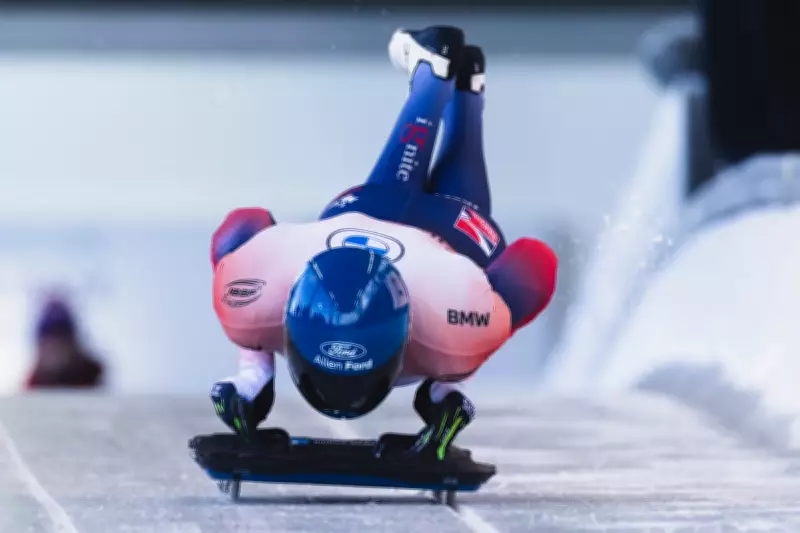
A skeleton competition commences with the athlete executing a powerful running start. They propel their compact sled – essentially a metal frame mounted on two steel runners – using one or both hands towards the initial timing sensor located fifteen metres from the starting block. The competitor must then leap gracefully onto the moving sled and accelerate down the track, guiding it along straight sections and through high-velocity, nerve-wracking turns.

Athletes are equipped with a full-face fibreglass helmet, an aerodynamic racing suit, specialised gloves, and shoes fitted with spikes on the soles to provide essential traction during the initial sprint. Speed and explosive power are absolutely critical; elite competitors can cover fifty metres in approximately five seconds. Many skeleton athletes, including 2010 Olympic champion Amy Williams, have backgrounds in sprinting before transitioning to winter sports. Competitors also experience forces of around 5G – five times the force of gravity – on the steeply banked, rapid tracks.
The Art of Steering Without Mechanical Controls
Competitors lie in a prone position, head-first, with their arms positioned tightly by their sides and their chin hovering just above the ice surface. They employ subtle movements of their shoulders, knees, and toes to manoeuvre the sled towards the finish line. There are no mechanical steering mechanisms or braking systems on the sled. Athletes come to a stop naturally as the track levels out at the bottom, with foam padding or fresh snow sometimes used to ensure a complete halt.
Olympic Skeleton Events and Format
Athletes compete in distinct men's and women's categories. The Milano-Cortina 2026 Winter Olympics will also feature a debut mixed team event, comprising one male and one female athlete per nation. In this new format, the female athlete starts first, followed by the male athlete, with their combined times determining the overall standings. The team with the lowest aggregate time claims victory.
At World Cup level, competitions consist of two heats held on the same day. However, at the Olympic Games and World Championships, each discipline features four heats conducted over two days. The athlete with the lowest total time across all four runs is crowned the champion.
Insights from an Olympic Champion
Former gold medallist Amy Williams, who is providing commentary on skeleton and other sliding sports for TNT Sports during the Milano-Cortina Games, offered a detailed breakdown of the sport's intricacies. She explained: "Skeleton begins with a powerful start where the sled is on the ice. You are sprinting alongside the sled, normally holding on with one hand, sprinting as powerfully as you can, then very gracefully loading onto the sled because you can pop out of a groove there. Get into that perfect body position, as aerodynamic as you can, and then you are steering that sled down the corners."

Williams continued: "You steer by using your shoulders, pushing into the sled, and that will change the direction. Just a tiny little head movement, or you might see someone drop a toe or their leg come out a bit for more of an emergency steer – all those fine movements change the angle of the sled. You've got pressures in the corner, G-Force pressures up to four or five Gs of pressure, and you are trying to get the perfect angle of the sled when the pressure hits you to be able to get a perfect line out of a corner."
She concluded: "It's all about angles, pressures, staying aerodynamic and thinking very quickly, because within a split second you've already come into the next corner. You've got to do that consistently on an Olympic race day, two days of racing over four runs, and all those four runs get added up, so you need to be the most consistent slider, and fast, to be a winner."
With world champion Matt Weston and teammate Marcus Wyatt among Britain's leading medal contenders, hopes are high for Team GB to continue its remarkable skeleton success story at the upcoming Winter Olympics.