The True Meaning of the Olympic Rings: A Symbol of Global Unity
Olympic Rings: The Real Story Behind the Iconic Logo

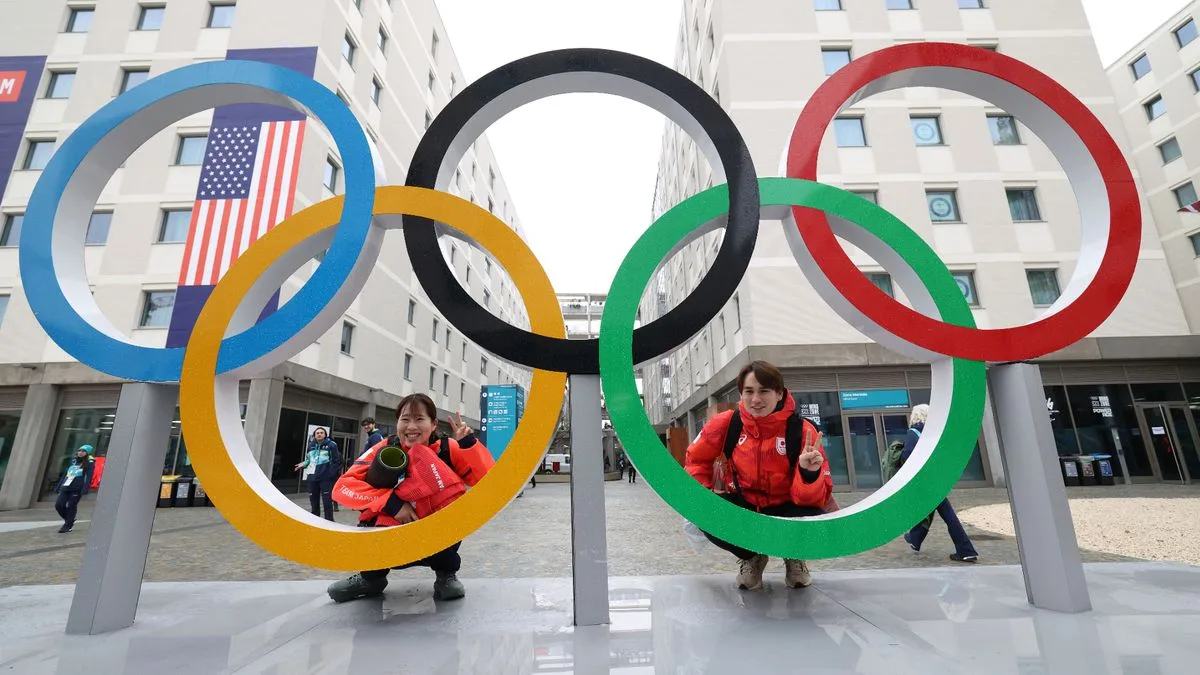
The Olympic rings stand as one of the most universally recognised logos across the globe, yet the authentic narrative behind their creation and significance remains shrouded in mystery for many sports enthusiasts. As the 2026 Winter Olympics in Italy commence, this iconic emblem, featuring five interlocked rings in distinct hues, takes centre stage, embodying a rich and intricate history that dates back over a century.

Debunking the Ancient Greek Myth

Contrary to popular belief, the origins of the Olympic rings do not trace back to Ancient Greece, the birthplace of the inaugural Summer Games. This widespread misconception was perpetuated throughout the mid-20th century by American authors Lynn and Gray Poole, but it has since been firmly debunked by historical evidence.

The Vision of Pierre de Coubertin

The true architect behind the iconic design is French Baron Pierre de Coubertin, a pioneering educator and historian who co-founded the International Olympic Committee in 1894 and later served as its second president. In 1913, Coubertin conceived the emblem during an era when the number of participating nations in the Games was considerably smaller than today's expansive roster.

The Common Misinterpretation

A widely held notion suggests that the five rings and their colours—blue, black, yellow, green, and red—represent the five inhabited continents, with the Americas grouped as a single entity. However, this interpretation, while globally accepted, diverges from Coubertin's original intent.

Coubertin's Original Concept

Initially, the five colours, combined with the white background of the Olympic flag, were designed to symbolise every colour present on the flags of the nations competing in the Olympics at that time. In the August 1913 edition of Olympique, Coubertin elaborated on his vision, stating, "The six colours [including the flag's white background] combined in this way reproduce the colours of every country without exception."

He further explained that this encompassed the blue and yellow of Sweden, the blue and white of Greece, the tricolour flags of nations like France, the United Kingdom, the United States, Germany, Belgium, Italy, and Hungary, along with the yellow and red of Spain, and even the innovative flags of Brazil, Australia, ancient Japan, and modern China. "This, truly, is an international emblem," he affirmed, ensuring each nation held a symbolic place on the flag to reflect the unifying spirit of the Games.

Global Recognition and Evolution

The legendary Olympic rings made their debut at the 1920 Summer Games in Antwerp, Belgium, but it was not until the lead-up to the 1936 Berlin Olympics that they began to gain worldwide recognition as a symbol of global unity. Over the decades, public perception has shifted, with some erroneously associating each ring with a specific continent.

Clarification from the Olympic Charter

Such beliefs have been explicitly dismissed by the Olympic Charter, which states that no individual ring represents a particular continent. This official stance underscores the emblem's purpose as a representation of togetherness rather than geographical demarcation.

Enduring Legacy of Unity

While interpretations of the five colours may vary, the core message of togetherness and unity through sport remains an enduring belief that continues to resonate. The Olympic rings serve as a powerful reminder of the Games' ability to bring diverse nations together in a celebration of athletic excellence and international camaraderie.

As the Milano Cortina 2026 Winter Olympic Games unfold from February 6 to 22, fans can immerse themselves in over 850 hours of live action on discovery+ via Prime Video. With a £3.99 discovery+ Entertainment subscription, viewers gain access to TNT Sports 2, offering round-the-clock Olympic coverage, ensuring that the spirit of the rings is broadcast to audiences worldwide.