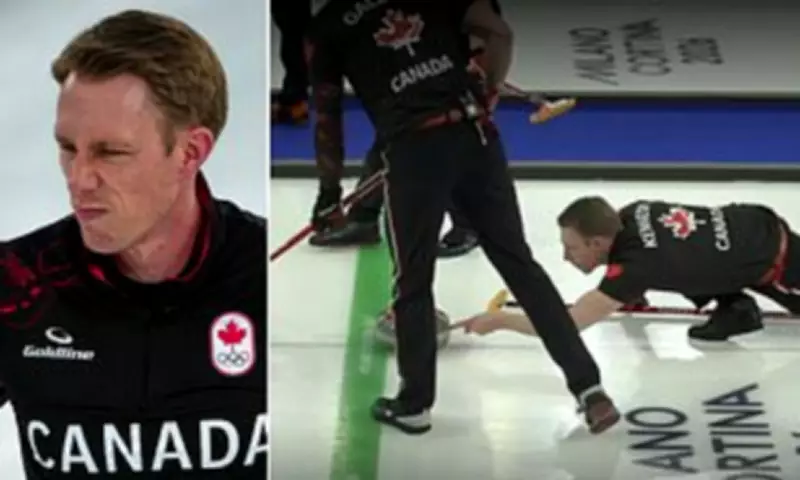
The usually genteel world of Olympic curling was rocked by a fiery confrontation as Canadian veteran Marc Kennedy engaged in a heated exchange with Swedish rival Oskar Eriksson over accusations of cheating during a high-stakes match at the Winter Games. The incident, which culminated in Kennedy telling Eriksson to "f*** off," has drawn a formal warning from the sport's governing body and sparked debate about sportsmanship in the traditionally quiet discipline.
A Clash on the Ice: The Cheating Allegation That Ignited the Feud
The controversy erupted during Canada's 8-6 victory over Sweden on Friday, when Eriksson accused Kennedy of "double touching"—a violation where a curler touches the stone again after releasing it down the ice. Television replays suggested some ambiguity, but referees ultimately ruled that no rules had been broken by the 44-year-old Canadian, who is competing in his fourth Winter Olympics.
Kennedy's response was immediate and vehement. "I haven't done it once," he shouted across the sheet at Eriksson in an outburst captured by Swedish broadcaster SVT. "You can f*** off." Eriksson retorted, "I'll show you a video after the game... where it's two meters over the hog line," referring to the thick green line that marks the release point. Kennedy fired back, "Come on, Oskar. Just f*** off," escalating the tension in a match that had already become notably heated.

Post-Match Fallout: Kennedy's Defense and a Reporter's Questioning
The drama did not end with the final stone. According to the National Post, Kennedy later clashed with a Swedish reporter who questioned him about his use of profanity during the incident. "You've never seen two guys have a heated argument before?" Kennedy reportedly said when asked if his language could have been more respectful. He added dismissively, "Like, is this a personal conversation? I don't need to defend myself to a news reporter."
In a surprising twist, Kennedy suggested that the confrontation might actually benefit curling by drawing attention to the sport. "I've got friends from back home who aren't huge curling fans, they're like, 'what's going on?'" he said. "I've got my daughter texting me 'Marc's getting spicy out there!' It shines a little extra light on the sport. Sometimes that's not a bad thing."
Official Response and Warnings from World Curling
However, World Curling did not share Kennedy's optimistic view. On Saturday, the governing body confirmed that it had spoken to Canadian team officials after the match and issued a verbal warning due to Kennedy's language. In a statement, World Curling emphasized that "further inappropriate behavior... would result in additional sanctions," including possible suspension. This warning was directed at both Kennedy and the Canadian team, underscoring the seriousness with which officials viewed the incident.
Eriksson, for his part, stood by his accusations in post-match comments. "We want a game that is as sportsmanlike, honest and clean as possible," he told reporters, maintaining that he was certain Kennedy had been double touching. Regarding the swearing, Eriksson added, "That's on him. I said what we'd told the umpires because we thought some of them were touching the stone, on or after the hogline, and that's not allowed."
Investigating the Claims: No Evidence of Cheating Found
World Curling's statement also detailed the steps taken to investigate Sweden's complaints. During the early ends of the match, Sweden notified officials of their concerns, prompting an official to monitor Canada's curlers at the hog line for three ends. No violations were recorded, confirming the referees' initial decision that no rules had been broken. The rules stipulate that a stone must be delivered using the handle and released before it reaches the hog line, a critical point in Olympic curling.
Despite the lack of conclusive evidence against Kennedy, the warning from World Curling highlights the governing body's commitment to maintaining decorum in the sport. The incident has nonetheless left a mark on the Olympic curling competition, challenging perceptions of its typically subdued nature and raising questions about the balance between passion and professionalism in elite athletics.