Following months of questions and concerns, the Milan Cortina 2026 Winter Olympics are poised to begin, heralding what many are calling a new era for the global sporting event. When the Winter Games officially launch with the opening ceremony this Friday, it will not only be the world's elite athletes who face a rigorous test. The entire Olympic movement is entering uncharted territory with an unprecedented organisational model.
A New Olympic Era Arrives Amid Lingering Questions
As the XXV Winter Olympics prepare to kick off at the iconic San Siro football stadium in Milan, several critical questions remain unanswered. Will the event capture the traditional Olympic spirit, or will it feel more like a collection of separate world championships? Can a complex transport network, connecting far-flung venues across northern Italy, operate smoothly under pressure? Will arenas, rinks, and stadiums be filled with enthusiastic crowds, despite reports of sluggish advance ticket sales?
Furthermore, will the controversial sliding venue and the main hockey arena feel truly complete after well-documented construction delays? And perhaps most intriguingly, will local Italian residents maintain their famed passion for football over the snow and ice sports on their doorstep? The answers to these pressing questions, which have shadowed the lengthy preparation period, are about to be revealed as the Games get underway.

Embracing a Dispersed and Sustainable Model
These Olympics represent the first to fully embrace the International Olympic Committee's ambitious reform plan, which prioritises using existing venues regardless of geographical distance. Spread across a vast area of northern Italy exceeding 22,000 square kilometres—roughly the size of the American state of Massachusetts—the Games are a logistical marvel.
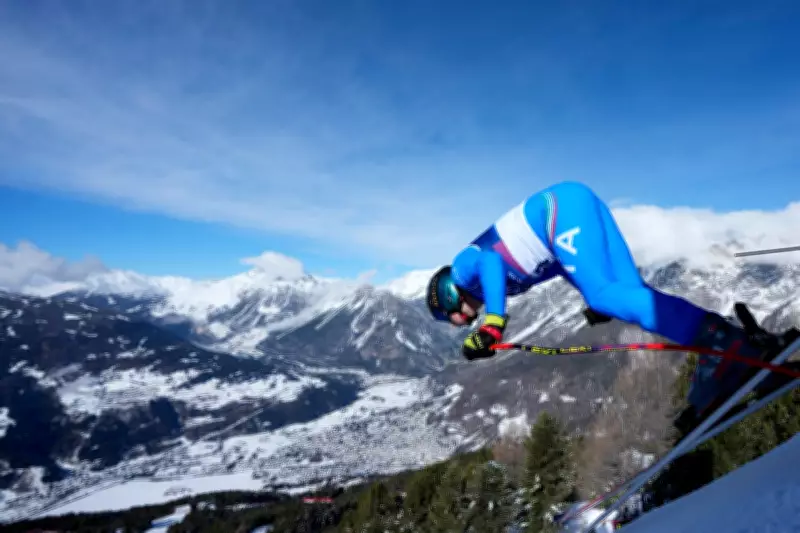
The sporting programme is divided across multiple locations: skating events, including the highly anticipated return of NHL hockey players, will be held in Milan. Cortina d'Ampezzo hosts women's Alpine skiing, sliding events, and curling. Nordic sports are based in Val di Fiemme, while Bormio stages men's Alpine skiing and ski mountaineering. Livigno welcomes snowboarding and freestyle skiing, and Anterselva is the venue for biathlon.
"I do believe that we took the right decision in having a more dispersed Games," stated new IOC President Kirsty Coventry. "But it has—and I think we can all say very openly and honestly—it has added additional complexities." These complexities are set to become the new normal, as the 2030 French Alps Games, the 2034 Utah Games, and the likely 2038 Swiss bid all follow this same dispersed model, none featuring a single traditional host city.
Ceremonies and Athlete Sentiment Reflect the New Format
The adaptation to this new model extends far beyond competition logistics. The opening ceremony itself will be a distributed event, with athlete parades occurring simultaneously in Milan, Cortina, Livigno, and Val di Fiemme. Two Olympic cauldrons will be lit—one in Milan and another in Cortina—with former champion skiers Alberto Tomba and Deborah Compagnoni favoured to perform the honours respectively.
However, the athlete experience under this format has drawn mixed reviews. American skiing legend Lindsey Vonn, competing in her fifth Olympics, expressed nuanced feelings. "I'm in Cortina, so there's really nothing to complain about. It's one of the most beautiful places in the world," said Vonn, who plans to race despite a knee injury. "But it is sad to not be closer to more of your teammates... Salt Lake City was my favorite Olympics because we were all so close. This is quite different... I think it would have been more fun if we were all closer."
Venue Construction Challenges Persist
Significant construction challenges have marked the final run-up to the Games. The sliding centre in Cortina was rebuilt against the IOC's preference to use an existing track in Switzerland or Austria. While the track itself is ready, surrounding areas remain under construction, with organisers relying on recent snowfall to mask unfinished work.

"Obviously outside the track there are still some little things," admitted Italian luger Dominik Fischnaller. "But the snow will cover it, so we're good for the Games." An unfinished gondola lift to the Alpine skiing centre in Cortina is also expected to slow spectator access.
In Milan, construction on the main hockey arena—which features a non-standard smaller ice sheet—continued right up to the final hours before competition began. "Understanding that the Olympics is a massive event that kind of pops up for a very finite amount of time, there's going to be different challenges you have to overcome," said U.S. women's hockey captain Hilary Knight. "So whether the ice is perfect or not, we're here, we're ready to play."
As the flame is lit and competition begins, the Milan Cortina 2026 Winter Olympics stand as a bold experiment. The world watches to see if this new, dispersed model can deliver sporting excellence, operational efficiency, and the intangible magic of the Olympic Games, or if its complexities will define its legacy.