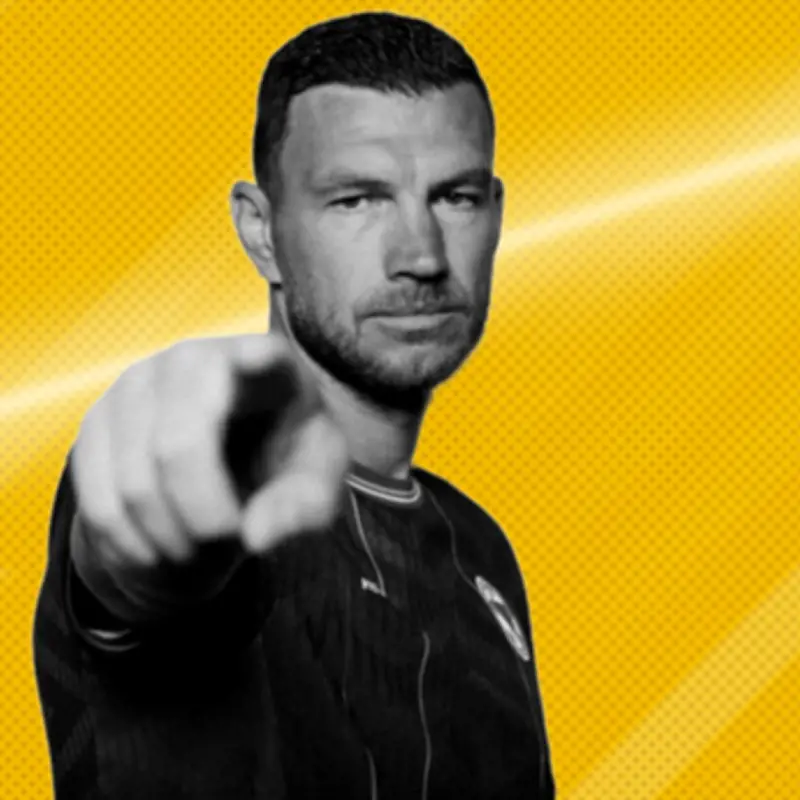
Almost lost in the iconic images of that Aguero-oooo moment in 2012 was the reason his goal meant anything at all.
Two minutes and six seconds earlier, with 91:38 on the clock and Manchester City trailing 2-1 at home to QPR on the final day of the season, Edin Dzeko bullied his way through a tiring defence to head home from five yards.
As he ran back to the halfway line, the game now level at 2-2, Dzeko's determined look made it seem as though City knew they were going to win. Four years later, having turned 30 and with 72 goals in 189 games for City, his time was up, with most observers thinking his career was about to hit the down slope.
That was 10 years ago, in which time he has gone on to play for Roma, Inter Milan, Fenerbahce and Fiorentina. His most recent stop has been at Schalke in the German second division, where he signed in mid-season five months ago and scored six goals to help them win promotion back to the Bundesliga top flight.
Now 40, and back at the World Cup for the first time in 12 years with Bosnia & Herzegovina, it came as no surprise in March when he broke Welsh hearts. Craig Bellamy's team were four minutes from winning their playoff game before Dzeko scored to send the game to extra time and then penalties.
Five days later, they scored late again against Italy to force extra time before again winning on penalties to secure their passage to North America.
"I'm so happy that I could do it in these last two years and especially helping the team with these young great players going to the World Cup," said Dzeko. "This is something amazing for these young players. They have a big future ahead and the games against Wales and Italy will change their lives."
Dzeko won't be there with them for another major tournament after this summer but he recognises that he has turned tricks even to survive this long at this level.
"I didn't think I would be playing at 40. If you asked me 10 years ago, I would say no, but I'm listening to my body and doing a lot of work before and after training to help my body. Maybe when you're young, you don't think a lot about coming earlier to training and staying 30-45 minutes before training in the gym doing the prevention work and then also staying after the training, and doing some other prevention works. Maybe as a young player, when you're 20, you say, 'I don't have time for this, I want to go out for coffee or something with friends or lunch'. When you get older, you realise that something like this, your body needs if you want to compete at the best level."
Since leaving City at 30, Dzeko has doubled his number of international caps and has scored 73 goals in his 148 appearances for his country. His remarkable consistency is best summed up by the fact that he has scored at least once for them in each of the last 20 years.
He starts his second World Cup campaign tonight in Toronto against co-hosts, Canada, hoping to hit 150 caps and maybe a goal or two that could help the team into the knockout stage.
Dzeko can't keep physical pace with the youngsters on show in this tournament but he has a mentality others could learn from, and that got him through tough times at Fiorentina last season before moving to Schalke.
"The first six months at Fiorentina were difficult, not only for me, but for the whole team," he said. "When you're not playing like you used to play, there's a lot going on in the head, but I was always strong in the head and I know that part of professional football players is ups and downs."