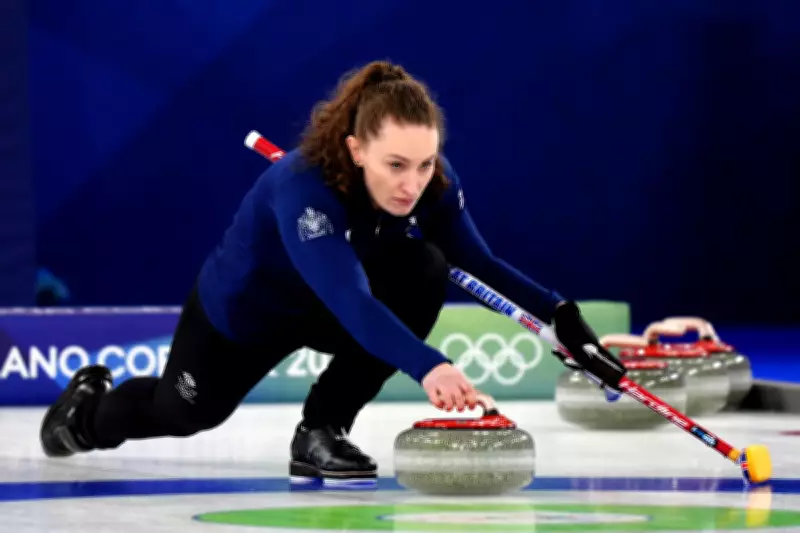
Curling stands as the sole sport that audiences can enjoy daily throughout the Milano-Cortina Winter Olympics, with the mixed doubles format commencing two days prior to the Opening Ceremony and continuing until the concluding men's and women's medal matches. This discipline offers a distinct and fast-paced variation from the traditional four-player teams.
Mixed Doubles Format and Strategic Differences
In contrast to the long-established men's and women's events, where teams consist of four members each delivering two stones per end for a total of eight, mixed doubles involves only two athletes per side. They throw five stones per end, with one player strategically bookending the end by delivering both the first and final stones. Notably, each end begins with one pre-placed stone per team already positioned on the ice, creating the potential for a maximum score of six points in a single end.
The Crucial Role of the Power Play
This is precisely where the power play becomes a game-changing element. Typically, in standard ends, the pre-placed stones are arranged so that the team holding last stone advantage starts with a stone positioned at the back of the four-foot circle, while the opposing team begins with a centre guard. However, when a team invokes its power play, the pre-placed stones are relocated to one side of the sheet.

Specifically, one stone is placed as a corner guard with another stone directly behind it, positioned with its back against the tee line. This strategic manoeuvre effectively opens up the central pathway of the ice sheet, allowing for aggressive scoring opportunities or defensive setups. Crucially, each team is permitted to call a power play only once per game, making its timing a pivotal tactical decision that can sway the match's outcome.
Team GB's Prospects and Historical Context
Bruce Mouat and Jennifer Dodds, representing Scotland, clinched victory at their home World Championships in 2021. After a disappointing fourth-place finish at the Beijing 2022 Games, they are now strongly positioned to contend for a medal in Milano-Cortina. Their experience and mastery of the power play rule could prove decisive in their pursuit of Olympic glory.
As the mixed doubles competition unfolds, viewers will witness how teams leverage this unique rule to gain strategic advantages, adding an extra layer of excitement and complexity to the sport. The power play exemplifies the innovative adaptations that make mixed doubles curling a captivating highlight of the Winter Olympics programme.