Understanding the Curling Power Play in Winter Olympics Mixed Doubles
Mixed doubles curling returns to the programme at the Milano-Cortina Winter Olympics, with the power play emerging as a pivotal strategic component of this fast-paced discipline. This unique rule adds an extra layer of tactical depth to the sport, distinguishing it from traditional four-person curling events.
Mixed Doubles Curling Schedule and Format
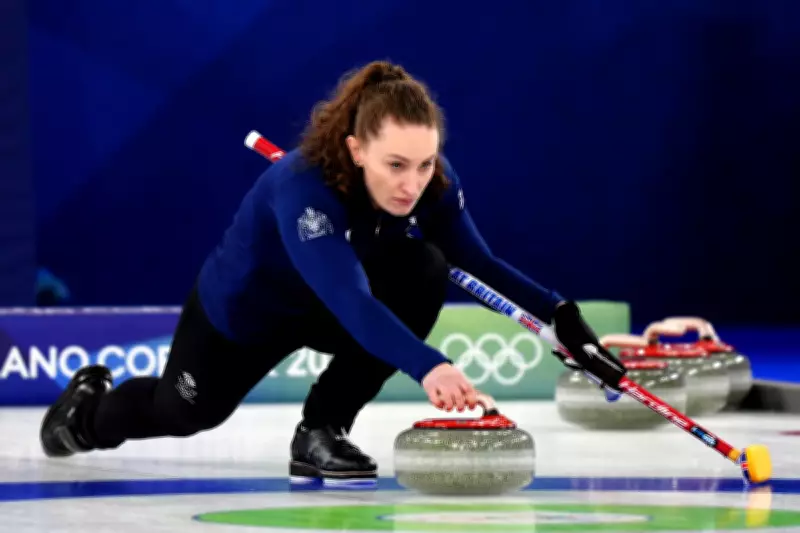
Curling stands out as the only sport that viewers can enjoy every single day of the Milano-Cortina Winter Olympics. The mixed doubles competition commences two days prior to the Opening Ceremony and continues uninterrupted until the final two days of the Games, which feature the men's and women's medal matches. This extensive schedule ensures curling enthusiasts have consistent action throughout the Olympic fortnight.
Notable contenders include Bruce Mouat and Jennifer Dodds, representing Scotland. They clinched victory at their home World Championships in 2021 and, after a disappointing fourth-place finish at Beijing 2022, are now fiercely competing for a medal in Milano-Cortina. Their journey highlights the intense competition and high stakes of Olympic curling.

Key Differences from Traditional Curling
The mixed doubles format diverges significantly from the longer-established men's and women's events, where teams consist of four members. In traditional curling, each team throws two stones per end, resulting in a total of eight stones. In contrast, mixed doubles involves five stones per end, with one team member bookending the end by delivering the first and last stones. This streamlined approach accelerates the game and demands precise strategy.
Moreover, mixed doubles games begin each end with one stone per team pre-placed on the ice. This setup allows for the potential to score up to six points in a single end, a dramatic increase compared to traditional formats. The pre-placed stones are strategically positioned to influence the flow of play from the outset.
The Role and Mechanics of the Power Play
This is where the power play becomes a game-changing element. In standard ends, the pre-placed stones are arranged so that the team with last stone advantage starts with one stone positioned at the back of the four-foot circle. Conversely, the team without this advantage begins with a centre guard in place.
When a team calls a power play, the pre-placed stones are relocated to one side of the sheet. Specifically, one stone is placed as a corner guard, with another stone positioned directly behind it, its back resting against the tee line. This configuration opens up significant space down the centre of the sheet, creating new scoring opportunities and forcing opponents to adapt their tactics.
Each team is permitted to use the power play once per game, making its timing and execution critical to success. Strategic deployment of the power play can disrupt an opponent's plans, secure crucial points, or defend a lead, underscoring its importance in the high-pressure environment of Olympic competition.
Strategic Implications for Milano-Cortina
As athletes like Mouat and Dodds vie for medals, mastering the power play will be essential. Its ability to alter stone placement and create open ice demands careful planning and quick decision-making. Teams must weigh when to activate their power play, considering factors such as score, end number, and opponent weaknesses.
The introduction of the power play in mixed doubles has revolutionized the sport, adding a dynamic element that enhances viewer engagement and athlete performance. At the Milano-Cortina Winter Olympics, this rule will undoubtedly play a decisive role in determining podium finishes, making it a focal point for both competitors and fans alike.