An Alpine Valley Transformed for the Games
The Winter Olympians preparing for the Milan Cortina Games in 2026 should brace themselves for a unique accommodation experience, far removed from traditional luxury. The Athletes' Village in the renowned resort of Cortina d'Ampezzo will house up to 1,400 athletes and team members not in a permanent structure, but within a vast collection of nearly 400 mobile homes.
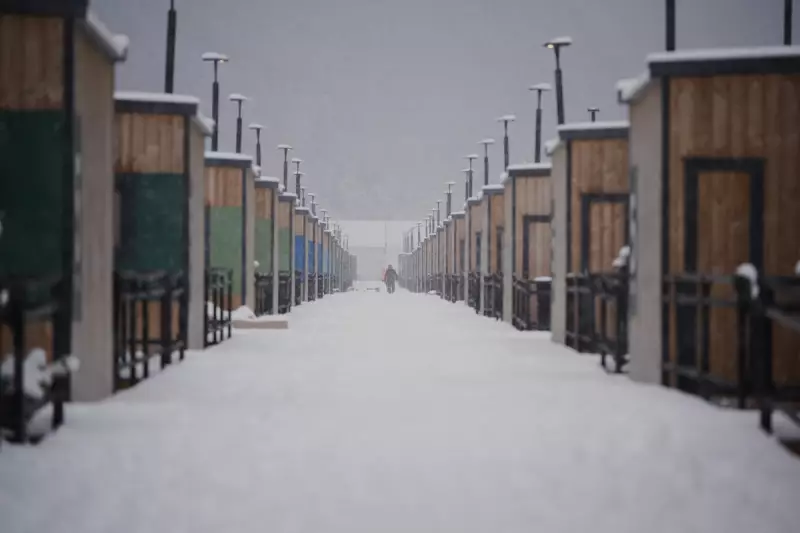
This temporary village, consisting of 377 rented mobile homes, is arranged tightly together on the humid floor of an Alpine valley. The Associated Press secured the first international media tour of the facility, which sits in an unpopulated area roughly a 10-minute drive or a one-hour walk north of Cortina's town centre.
Spartan Living Amidst Breathtaking Scenery
The accommodation itself is simple and spartan. However, this simplicity is exchanged for unparalleled proximity to the stunning Dolomites. Fabio Saldini, the Italian government commissioner for games infrastructure, emphasised the location's benefits, stating, "It’s located in a very quiet area of Cortina, where you have the opportunity to hear the sound of the mountains, isolate yourself if you wish, concentrate if you desire, or go out for a pleasant workout."

He further highlighted the temporary nature of the project as a key virtue. "The beauty of a Village like this lies in the fact that everything will be removed afterward. Nothing is permanent; the environment will not return to its previous state but will be improved. This is a temporary village, but of high design," Saldini added.
Providing athlete lodging is a critical task for Olympic organisers, made more complex by the geographically dispersed nature of the Milan Cortina Games. This trailer park village in Cortina stands as one of the two main athlete hubs, with the other located in Milan.
Not all nations are opting for the official villages. Winter sports powerhouse Norway has decided to house its skiers in hotels, according to Norwegian news agency NTB. Conversely, nations including the United States, Germany, and host Italy have confirmed their athletes will use the villages, though it is unlikely that Alpine superstars like Lindsey Vonn or Mikaela Shiffrin will be staying in the Cortina mobile home park.
The Cortina village will be central for events such as women’s Alpine skiing, curling, bobsled, luge, and skeleton during the Games from February 6-22, 2026. It will also play an essential role for the subsequent Paralympics, scheduled for March 6-15.
Life in the Village: From Biting Winds to Personalised Comfort
Each mobile home is divided into two rooms, housing up to two people per room, each with its own bathroom and shower. The experience is deeply connected to the elements. Opening a trailer door in the morning might reveal a biting wind or, more rewardingly, unforgettable views of the sun illuminating the jagged mountain peaks.
With the village stretching 1.4 kilometres in length, warm boots are essential for the walk to the central cafeteria. Those staying on the outskirts face a 10-minute trek to common areas, which also include a gym, game room, offices, relaxation areas, and a laundromat.
Paride Casagrande, the Village’s construction manager, acknowledged the environment. "The wind is an element. But it doesn’t blow all day long every day. It depends on the day. There could be very cold days and there could be very comfortable days. But the fact remains that we’re in a natural area where it’s cold," he said. The village sits at an altitude of 1,292 meters (4,239 feet), slightly higher than downtown Cortina.
In a contrast to the air conditioning controversies of the Paris Summer Olympics, every room in Cortina has its own heating controls. A wall-mounted thermostat and an infrared ceiling panel, both electric, allow athletes to adjust their room's temperature. "Without much power, the temperature can be brought up to 25-26 degrees Celsius (77-79 Fahrenheit), which should be all that’s necessary," noted Casagrande.

Cost, Legacy, and Environmental Considerations
The total cost for the Village is 38 million euros ($44 million). While the mobile homes are rented for the event, purchasing one would cost up to 80,000 euros ($93,000). A key part of the project's legacy plan is the reuse of these homes. After the Games, they will be relocated to camping sites across Italy, with some already destined for a hockey club in nearby Brunico.
The larger temporary buildings for common areas are heated by a thermal power plant running on natural gas. The construction required cutting down trees, which drew protests from climate activists. Casagrande addressed these concerns, stating, "Most of them were already dead. But we’ve also brought in new plants and (trees). … This is a natural park and we’re going to leave it just as we found it."
Every mobile home rests on at least two wheels, used only for positioning. They were transported to the site by oversized trucks. All rooms are approximately 18 square meters (200 square feet), with one room in each home slightly larger to accommodate Paralympians, featuring handicap-accessible showers, toilets, and beds.