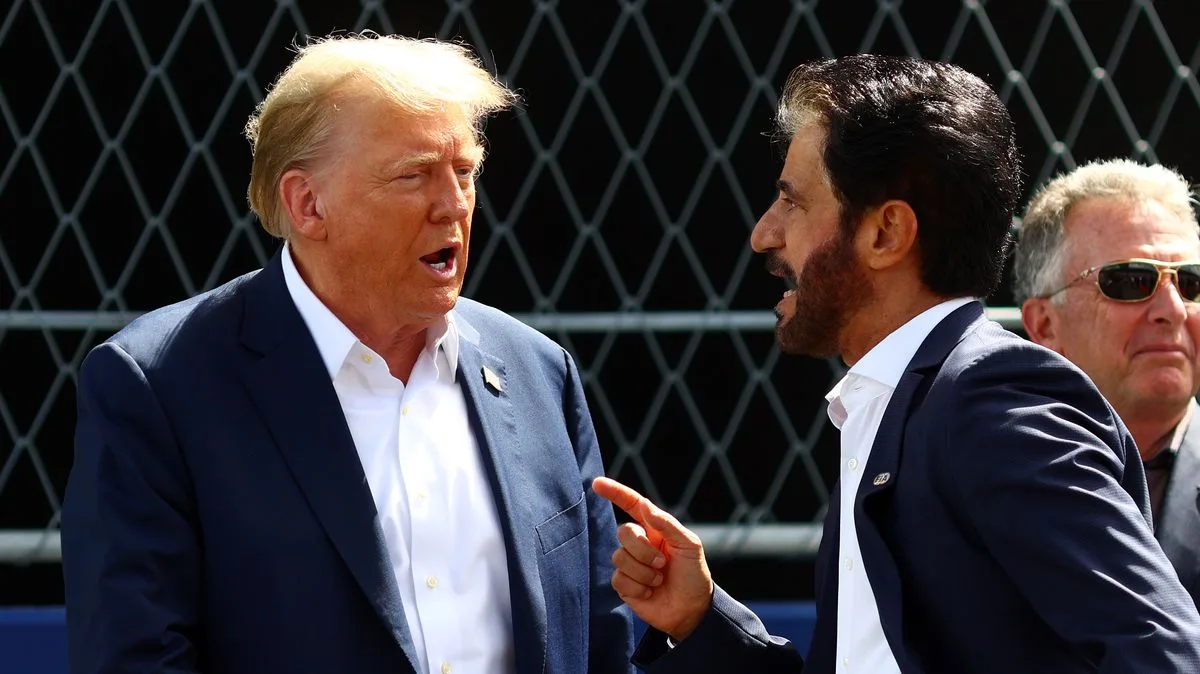
FIA president Mohammed Ben Sulayem has issued a direct plea for diplomatic dialogue to world leaders, including US President Donald Trump, as mounting fears over the ongoing Middle East conflict threaten to disrupt the opening of the 2026 Formula 1 season. The sport's governing body faces unprecedented security challenges just days before the season's first Grand Prix in Australia.
Season Opener Under Threat
The Australian Grand Prix, scheduled for this Sunday at Melbourne's Albert Park circuit with a 4am UK start time, represents the official beginning of the 2026 championship. However, the shadow of Middle Eastern instability looms large over the entire season's calendar. Both the Bahrain and Saudi Arabian Grands Prix are scheduled to take place next month, with regional tensions creating significant operational concerns.
Security Measures Already Implemented
Formula 1 has already taken precautionary measures, cancelling two crucial days of wet-weather tyre development tests at the Bahrain International Circuit. Pirelli, the sport's exclusive tyre supplier, confirmed both test days were "cancelled for security reasons following the evolving international situation." The manufacturer assured that all personnel in Manama remain safe in their hotels while arrangements are made for their return to Italy and the United Kingdom.
In his lengthy public statement, Ben Sulayem expressed profound concern: "As President of the FIA, my thoughts are with all those affected by the recent events in the Middle East. We are deeply saddened by the loss of life and stand with the families and communities impacted."
Call for Diplomatic Engagement
The FIA president's statement comes directly after President Trump announced that talks with Iran's political leadership would proceed following US-Israeli strikes that resulted in the death of Iran's supreme leader, Ayatollah Ali Khamenei. Ben Sulayem emphasised that "dialogue and the protection of civilians must remain priorities" during this period of international uncertainty.
"At this moment of uncertainty, we hope for calm, safety, and a swift return to stability," the statement continued. "We are in close contact with our Member Clubs, championship promoters, teams, and colleagues on the ground as we monitor developments carefully and responsibly."
Conflicting Assessments Emerge
While F1 officials maintain public confidence about the immediate races, internal assessments appear more cautious. An F1 spokesperson noted: "Our next three races are in Australia, China and Japan, not in the Middle East - those races are not for a number of weeks. As always, we closely monitor any situation like this and work closely with relevant authorities."
Australian Grand Prix chief executive Travis Auld offered more optimistic projections, telling Channel Nine: "Everyone will be here ready for the race and fans won't notice any difference. We're in a space where we're really confident there will be no impact."
Safety as Paramount Concern
The FIA has emphasised that safety considerations will guide all decisions regarding forthcoming events in both the World Endurance Championship and Formula One World Championship. Ben Sulayem stressed that "safety and wellbeing will guide our decisions as we assess the forthcoming events scheduled there."
The statement concluded with a call for unity: "Our organisation is built on unity and shared purpose. That unity matters now more than ever." This appeal comes as all 22 Formula 1 drivers completed testing in Bahrain just last week, with the region's facilities now under heightened security scrutiny.
The developing situation represents one of the most significant geopolitical challenges to face Formula 1 in recent years, testing the sport's ability to navigate international conflicts while maintaining its global racing calendar. With multiple Middle Eastern races scheduled in the coming months, the FIA's diplomatic engagement and security protocols will face continuous evaluation as the 2026 season progresses.