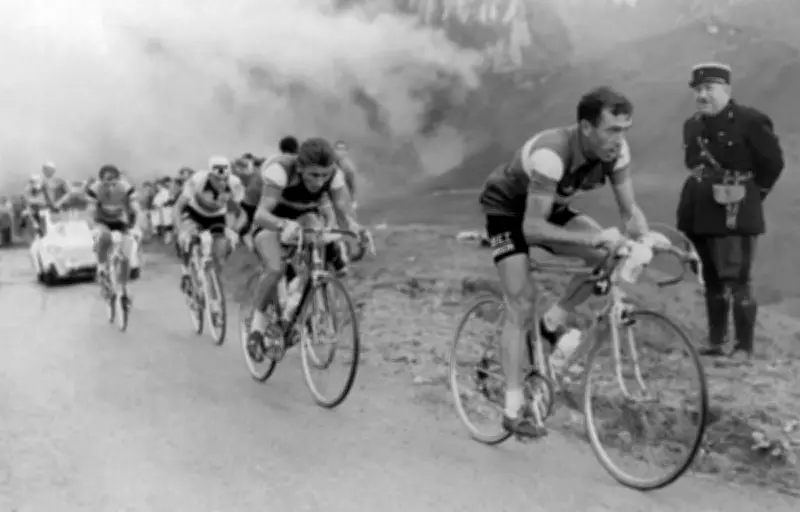
The Tour de France in 1966 was no longer a simple cycling race; it had become a grim, scientifically controlled commercial operation, according to Peter Lennon writing in The Guardian on 30 June 1966. While the French nation remained excited by the Tour, it had evolved far beyond its origins as a 'jaunt in knickerbockers from Paris to Nice'.
The Race and Its Significance
The 1966 Tour consisted of 22 stages, ranging from over 80 miles to more than 170 miles, undertaken by 13 European teams. It began on 21 June at Nancy and concluded on 14 July at the Parc des Princes in Paris. The route included climbs through the Pyrenees and the French Alps, with the Alps on the 18th day being a vital test.
The Tour served practical functions in French life, including distracting the nation from politics. A minister was overheard on 20 June telling a colleague he could relax until after the national holiday, as no political demands would be made.
Commercial Saturation and Doping Concerns
The race was saturated with commercialisation, with cyclists serving as mobile advertising hoardings for brands like Pelforth beer, BP petrol, Peugeot and Ford cars. This commercial pressure had transformed the sport.
Two notable aspects of the 1966 Tour were the retirement of Jacques Anquetil and the first enforcement of a new anti-doping law passed just weeks before the race. Anquetil, a 34-year-old Norman, had won the Tour in 1957 and four consecutive years from 1961 to 1964. He was considered a cycling legend, akin to Stanley Matthews in football or Babe Ruth in baseball.
On 3 May 1966, Anquetil won the Belgian Liège-Bastogne-Liège race but refused a medical examination, resulting in a fine of 100,000 Belgian francs and disqualification. He was later reinstated. Other cyclists faced similar issues: Italian Dancelli's test was 'gravely positive', and German Altig refused and was disqualified. These incidents prompted the French government to rush through anti-doping legislation.
Drug Use and Health Risks
Pre-war cyclists used ether, strychnine, and alcohol, but by 1966 refined amphetamines, similar to those used by the RAF during the Battle of Britain, were common. The pressure from vast financial interests had turned cyclists into 'busy cylinders working away for big business'.
Macabre stories emerged, including that of Italian cyclist Eugene Tamburlini, who told a journalist he had taken a drug that temporarily blinded him. He committed suicide shortly after.
With the new law enforced through spot checks, sports writers complained the 1966 Tour was 'too tame'. The race was ultimately won by Lucien Aimar, a 25-year-old Frenchman who started as a support rider, finishing just over a minute ahead of his rivals.