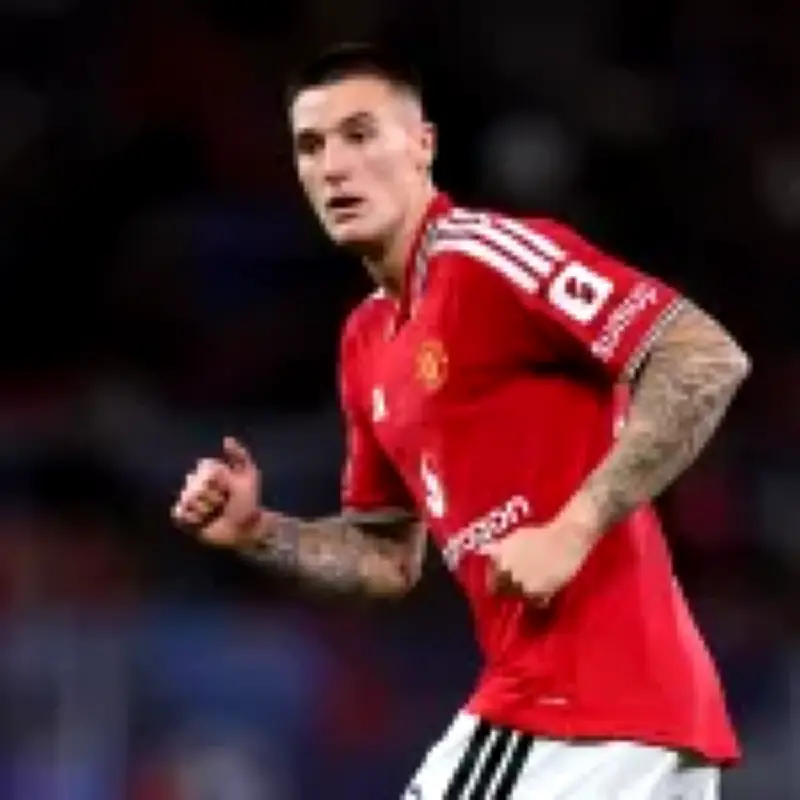
Manchester United are facing a worrying situation with striker Benjamin Sesko after he suffered a recurrence of the shin injury that ended his debut campaign early. The Slovenia international has not started a Premier League game since 3 May, and his rehabilitation has stretched across the summer and into September.
Recurrence of a persistent problem
Sesko initially suffered the injury in early spring, carrying the problem as United chased third place. His 2025-26 season came to a premature end in May after a heavy landing down Old Trafford's slope against Liverpool, aggravating the issue. He did not play a single minute of pre-season action and was limited to bench roles in United's opening four Premier League games, before being left out completely for the trip to Fulham.
It later emerged he had suffered a recurrence of the same shin issue, forcing him to withdraw from the Slovenia squad for the international break. The striker has been undergoing tests at Carrington this week, with a decision on his recovery plan to be made in due course.
Expert warns of similar time frame
Stephen Smith, CEO and founder of Kitman Labs, which specialises in injury welfare and performance analytics, told Metro that recurrence is a known risk with such injuries. 'The risk is always there with recurrence. With injuries like this, you are playing a game of whack-a-mole,' he said.
'They can be very challenging. The first thing you try isn't always going to be the thing that works. They will be assessing what they did the first time around and now looking at different options. I would be confident they won't just be doing the same thing because that hasn't fixed it. They will want to move on.'
Smith added: 'Caution is the right word here. Given this has flared up again they will be inclined to be more cautious, not less. In terms of timelines, unless he responds incredibly quickly and very differently than last time around, I wouldn't be surprised if we saw a similar time frame and similar time lost as we saw last time.'
United's options going forward
United do not play again until 10 October when they host Tottenham, a match Carrick's side, who have taken just five points from five games, will see as a must-win. The three-week international break will reduce Sesko's recovery period, but the club may still be waiting to learn how long this latest process will take.
Smith outlined the possible routes: 'One option is to continue the conservative management. That is the route they have been going down so far. Separately, they may also look at some very specific treatments that are aimed at bone or soft tissue healing. If it keeps resurfacing and imaging points to something more structural like a stress fracture that isn't healing, more invasive options become part of the conversation.'
'Sometimes surgery can be considered. Looking at something like this initially, all you are doing is X-ray which gives you some picture of the bone but you are not going to get everything. So they may be looking at doing MRI or CT (scan) on the bone as well to see if they can see any further damage or trauma. Sometimes you get microfractures that aren't healing. They can go in and perform micro fracture treatment around it. They may get in there and put small breaks into the bone to create blood flow and try kickstart the healing process. But that's a very invasive option and you are left dealing with a broken bone and all the time requirements from that to handle. If it keeps recurring beyond this than a more definitive surgical option becomes a bigger part of the conversation. But that is generally a last resort in this scenario when the conservative approaches have had a proper chance and not been successful.'
United will also consider whether Sesko's own biomechanics are contributing to the problem. The striker is one of the fastest players at the club and possesses an extraordinary leap, but those attributes could be closely examined to determine the real issue. 'It could be something more mechanical, something to do with his own biomechanics in how he is running. They could indeed be performing really detailed biomechanical analysis on him now to see if there is something going on that's causing this,' Smith added.
Carrick has been reluctant to put specific timelines on injured players, and that is unlikely to change. The short-term picture could be frustrating for United, but Smith offered reassurance about the long-term outlook: 'The priority right now is to get an unbelievably precise diagnosis to ensure the club is not managing a recurring issue without knowing what is driving it. From there, it is about building a return which is not set by a date on the calendar. Realistically, when he is back playing he will likely need some individual management but right now, I wouldn't be concerned with this being something that could plague him for the rest of his career.'