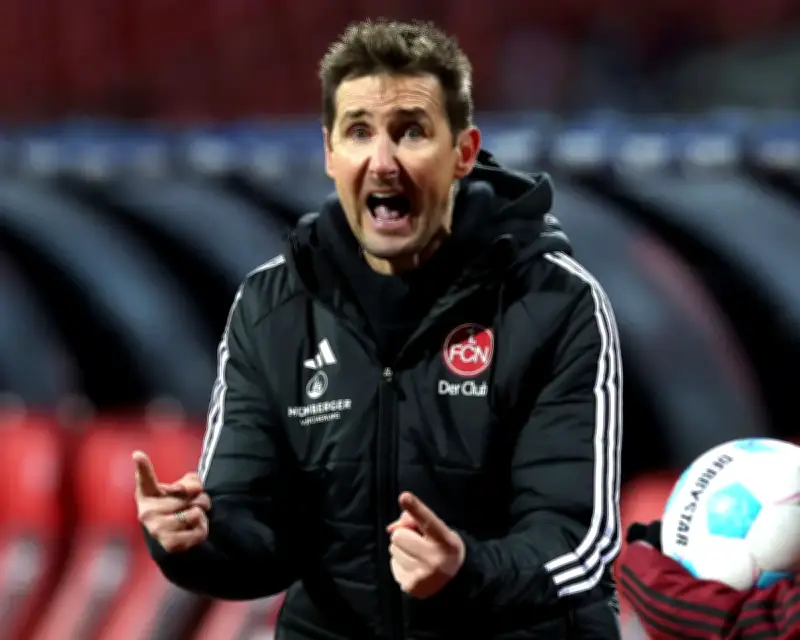
Philipp Lahm has praised his former Germany teammate Miroslav Klose for bucking a trend in German coaching, highlighting the Nürnberg manager's emphasis on consistency and identity in an era of tinkering coaches who did not play professionally.
Writing in his column, produced in partnership with Oliver Fritsch at the German online magazine Die Zeit, Lahm argues that continuity plus selection is the eternal recipe for success in football. He points to Paris Saint-Germain, who could achieve a historic hat-trick of Champions League titles this season, becoming only the second club to do so since the tournament's rebrand in 1992, after Real Madrid's run from 2016 to 2018.
Parallels with European champions
Lahm draws parallels between PSG and Madrid, noting that nine players started in all three of Madrid's final victories, while PSG won their two finals with virtually identical lineups. The only change came during their title defence in Budapest, where Gianluigi Donnarumma no longer featured in goal, Luis Enrique having parted ways with the Italian European champion.
He also cites the European Cup predecessors, Ajax (1971 to 1973) and Bayern Munich (1974 to 1976), where seven players started all three finals, and Madrid's five consecutive wins from 1956, with nine players appearing in at least three of those finals and three featuring in all five.
Today's elite managers have internalised this, Lahm says, pointing to similar patterns at PSG, Arsenal and Barcelona. In each case, a core of six to eight players establishes the team's identity and anchors the XI in crucial matches, with the next tier of three to five regular starters pushed by four to six squad players. The backbone of a squad thus comprises about 16 players, with the rest providing depth.
German deviations from the blueprint
Lahm notes that the most significant deviations from this blueprint can be found in Germany. He cites three pieces of evidence: a strange revival of man-marking, fewer opportunities for homegrown talent at many Bundesliga clubs despite expensive academies, and a vast number of managers with no professional playing background.
These coaches frequently alter systems and formations, before and during matches, and at times deploy players out of position. The most prominent example, he says, was Julian Nagelsmann, who as national coach hindered his side's development through constant, fundamental changes.
Yet there are exceptions, and Lahm names Klose as one. They shared the pitch in more than 80 international matches. Klose is a World Cup winner and was the tournament's record goalscorer from 2014 until last summer. Lahm says his former teammate possesses a deep understanding of hierarchy, discipline and tactical awareness.
Klose's identity at Nürnberg
Now in his third season at Nürnberg and sitting in a promotion spot in the 2. Bundesliga, Klose carries the DNA of a great manager, Lahm writes. He does not overcomplicate things, does not tinker with his core system or formation, and rarely alters his starting XI.
Through repetition effects, Klose has identified a core that provides stability. The winger Mohamed Zoma, who made his Italy debut last month, and the attacking midfielder Julian Justvan get about 90% of the playing time, while the central midfielder Finn Ole Becker secured about 80% before a recent injury. The defensive midfielder Adam Markhiev, a Finland international, is practically ever-present when fit.
Klose also gives youth a chance, sticking by academy graduates Tim Janisch and Eric Porstner even after mistakes, while the young striker Piet Scobel has featured every week since the turn of the year. His grasp of the club's identity is evident in his decision to appoint a local Franconian, the goalkeeper Jan Reichert, as captain.
Nürnberg, stuck in the second tier since 2014 bar a single season, is again capitalising on the potential of their location. The club have a grand history: only Bayern Munich have won more German league titles, and club legend Max Morlock scored Germany's first goal in a World Cup final, in 1954. They benefit from a massive catchment area with virtually no local competition, an economically robust metropolitan region around Nuremberg, a city with 550,000 inhabitants, and a 50,000-capacity stadium due for modernisation. The club remain traditional and member-owned, with a vast and fiercely loyal fanbase for whom "Der Club" truly means everything.