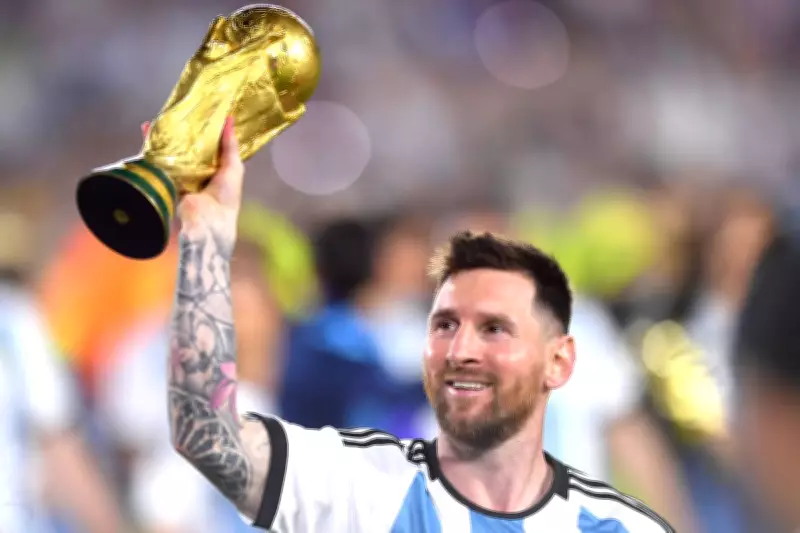
It seemed the perfect farewell. Lionel Messi scored twice in a World Cup final, converted a penalty in the shootout, and lifted the trophy as Argentina captain. He was named player of the tournament and man of the match in the final. It appeared to complete his football journey.
For Cristiano Ronaldo, the ending was far from ideal. Reduced to a substitute role for Portugal in the knockout stages, he watched his replacement Goncalo Ramos score a hat-trick against Switzerland. Portugal exited 1-0 to Morocco, and Ronaldo became the first man to score in five World Cups, yet none of those goals came in the knockout rounds. Messi's triumph seemed to settle the debate over who is the greatest, but four years later, both are back for a sixth World Cup.
Aged Stars Return for Another Shot
Messi will turn 39 during the 2026 tournament, while Ronaldo is already 41. They are not alone. Luka Modric, the 2018 Golden Ball winner, turns 41 in September and should earn his 200th cap. Neymar, despite a club-less spell earlier this year, earned a recall for his fourth World Cup. Manuel Neuer reversed his international retirement to reclaim Germany's goal, becoming the last remaining 2014 champion still active.

Factors such as improved sports science, diet, motivation, and financial incentives have prolonged careers. Football associations often rely on their biggest names, while governing bodies sometimes wipe away suspensions. Unlike past legends like Pele or Johan Cruyff, who played their last World Cup in their twenties, many current stars are pushing into their late thirties and forties.
The Old Guard in Key Roles
Beyond Messi and Ronaldo, several veterans are set to play significant roles. Casemiro, at 33, anchors Brazil's midfield. N'Golo Kante, now 35, returns for France after missing 2022 through injury. Belgium's golden generation, including Kevin de Bruyne (35), Axel Witsel (37), and Romelu Lukaku (33), remains. Jordan Henderson could become the first Englishman to play in four World Cups, while Virgil van Dijk (35) aims to make up for lost time after only one previous tournament.
Mohamed Salah, semi-fit in 2018 and absent in 2022, returns for Egypt. Sadio Mane, 34, may have his final bow. Edin Dzeko, at 40, leads Bosnia's surprise qualification, 12 years after his last World Cup. Mexico's Guillermo Ochoa, also 40, is set for his sixth World Cup, matching Messi and Ronaldo's longevity.
Unfinished Business Drives Veterans
For some, memories of past glories fuel their return. For others, it is the chance to finally achieve what eluded them. Nicolas Otamendi, 38, won his 100th cap in the 2022 final but continues. The expansion of squads for the 2026 tournament may also help older players secure spots. As the World Cup approaches, the presence of these veterans ensures that experience and resilience will be as crucial as youthful energy.