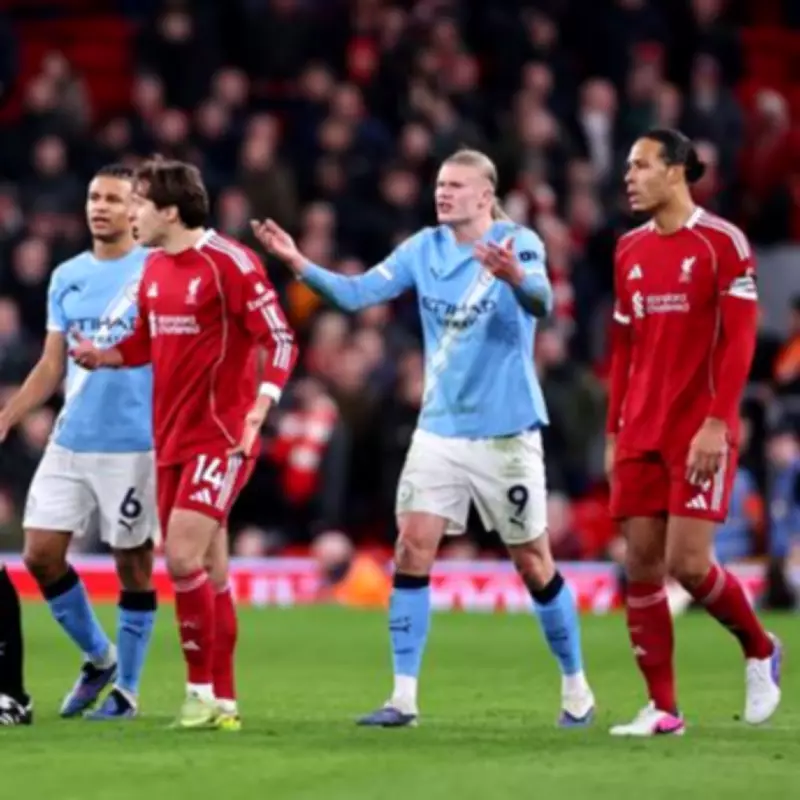
The Video Assistant Referee (VAR) system has systematically drained the joy from football, yet there is unequivocally no path back to a pre-technology era. Each week delivers fresh controversy, from Liverpool's clash with Manchester City descending into farce to Tottenham's disputed draw, where debates rage over whether Dom Solanke's goal should have stood. In between, matches are marred by agonising delays, intrusive checks on goals, and the inevitable post-match managerial meltdowns that follow.
The Unwanted Circus of Modern Football
We have even reached a point where Sky Sports dedicates an entire show, Ref Watch, to dissecting weekend decisions, turning officiating errors into prime-time entertainment. This underscores how deeply VAR has embedded itself into the football narrative. Manchester City midfielder Rodri recently questioned referee neutrality after his team's draw at Spurs, striking at the very heart of officiating integrity. A week later, City benefited from contentious calls at Anfield, such as Marc Guehi escaping a red card for fouling Mo Salah, highlighting why the FA must act against player comments to preserve referee support.
It has, frankly, become a bizarre, unnecessary farce—an unwanted circus that is absolutely ruining the beautiful game. However, there are clear distinctions to be made. Once the genie is out of the bottle, it cannot be forced back in. Surely, securing the correct decision, even with delays, outweighs the speed of a wrong call. This is an absolute no-brainer.

Blaming the People, Not the Technology
Yet, we—and I include myself here—must cease blaming VAR itself. The technology is not the failure; it is the people operating it. There are competent referees and less capable ones. The Professional Game Match Officials argues that VAR interventions in the Premier League are fewer than in Champions League fixtures. But do fans genuinely believe refereeing standards are superior in England's top flight compared to major tournaments like the Euros or World Cup? Personally, I do not, though this remains a subjective take.
Statistics may tout VAR's improvements, reduced delays, and decreased interventions due to enhanced standards, but any football fan watching with their own eyes recognises persistent issues. What constitutes a clear handball one week may not the next, revealing inconsistencies that span far and wide.
VAR: The Unstoppable Beast in Football
Perhaps this stems from VAR becoming an unstoppable beast. Once introduced, abandoning it seems worse than enduring its flaws. It feels like a third team in every match—two opponents plus the referee and VAR making up the numbers. Time may be the key; we might need years to adjust fully. There is definitely an element of that. Yet, I despise watching a spectacular goal or dramatic moment only to wonder if it will be disallowed, robbing us of pure enjoyment.
This is the reality we have signed up for, but did we truly agree to prioritise rigid law over common sense? Surely not. When did we lose sight of plain logic? Manchester City's third goal at Liverpool should have stood. Dominik Szoboszlai should not have seen red, and Erling Haaland merely helped the ball into the net. Why not let it stand? One foul cancelling out another, no red card, and everyone departs content. Instead, we are lectured on the laws, playing into the issue that football is consuming itself.
The pure joy of football has been lost with VAR. Ultimately, it does enhance decision-making, but at a significant cost to the game's spirit. We must learn to live with this technology because, like it or not, it is going nowhere.