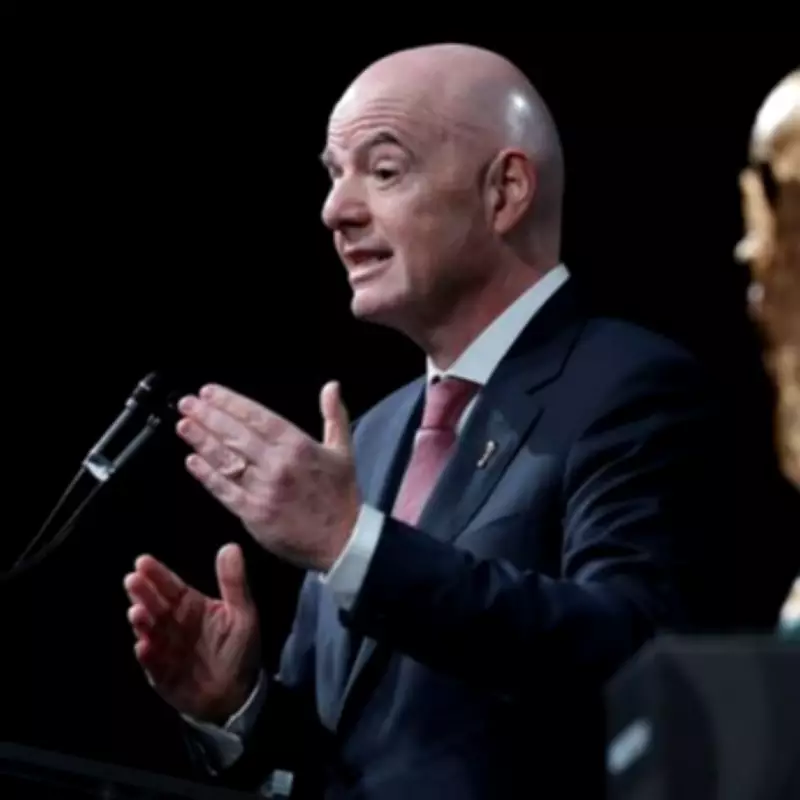
The global football community has been plunged into a fresh diplomatic row after FIFA president Gianni Infantino expressed a controversial desire to reinstate Russia's national teams into international competitions. This stance has provoked a furious response from Ukrainian officials, who have branded the FIFA chief's comments as "infantile" and dangerously detached from reality.
Infantino's Controversial Stance on Russia's Exile
Since Russia's full-scale invasion of Ukraine in February 2022, the Russian national football team has faced a comprehensive ban from FIFA and UEFA competitions. This exclusion has prevented their participation in major tournaments including the FIFA World Cup and the European Championships. However, in a recent interview with Sky Sports, Gianni Infantino suggested this punitive measure should be reconsidered.
The FIFA president argued that the ban has "not achieved anything" and has instead fostered "more frustration and hatred." Infantino proposed that allowing Russian youth teams to compete in Europe could serve as a bridge-building exercise, stating, "Having girls and boys from Russia being able to play football games in other parts of Europe would help."

He further elaborated on his philosophy, asserting that football's governing bodies should "never ban any country from playing football because of the acts of their political leaders." This principle, while framed as apolitical, has ignited immediate and severe condemnation from Ukraine.
Ukraine's Furious Rejection
Ukrainian Sports Minister Matvii Bidnyi delivered a scathing rebuke to Infantino's comments, labelling them as profoundly irresponsible. "Gianni Infantino's words sound irresponsible – not to say infantile," Bidnyi stated. He emphasised that such rhetoric dangerously separates sport from the brutal realities of war, where Ukrainian children are being killed daily.
Bidnyi firmly rejected the notion that the conflict is merely political, declaring, "War is a crime, not politics." He accused Russia of being the true politiciser of sport, using athletic endeavours to justify and whitewash its military aggression. The minister aligned himself with the Ukrainian Association of Football, which has also issued strong warnings against any premature reintegration of Russian teams.
The Ukrainian position remains unequivocal: as long as Russian forces continue their assault on Ukraine, there can be no normalisation in sports. "As long as Russians continue killing Ukrainians and politicising sport, their flag and national symbols have no place among people who respect values such as justice, integrity, and fair play," Bidnyi concluded.
Context of Controversy for Infantino
This incident is not the first time Gianni Infantino has found himself at the centre of a public relations storm in recent weeks. The FIFA president was recently compelled to apologise for what he termed a "cheap joke" directed at British football fans.
During a public appearance, Infantino quipped about the lack of British arrests during the 2022 World Cup in Qatar, remarking, "For the first time in history... no Brit was arrested during a World Cup. Imagine! This is something really, really special." The comment, intended as light-hearted banter, was widely perceived as a negative stereotype and prompted significant backlash.
Infantino subsequently issued an apology, clarifying that his remark was meant to highlight the peaceful nature of the Qatar tournament. "I need first to apologise. It was meant to be more of a light-hearted remark to show that actually the World Cup in Qatar was a celebration, was a peaceful event," he explained.
The juxtaposition of these two controversies – one involving a sensitive geopolitical conflict and the other a misjudged attempt at humour – underscores the intense scrutiny facing FIFA's leadership. As Infantino approaches his tenth anniversary as president, his statements continue to generate global headlines and debate far beyond the pitch.

The core dispute over Russia's sporting future remains unresolved. While Infantino advocates for football as a tool for unity and dialogue, Ukrainian authorities see any potential rehabilitation of Russian teams as a grievous moral error and a betrayal of international solidarity. This clash of principles ensures the issue will remain a flashpoint in sports diplomacy for the foreseeable future.