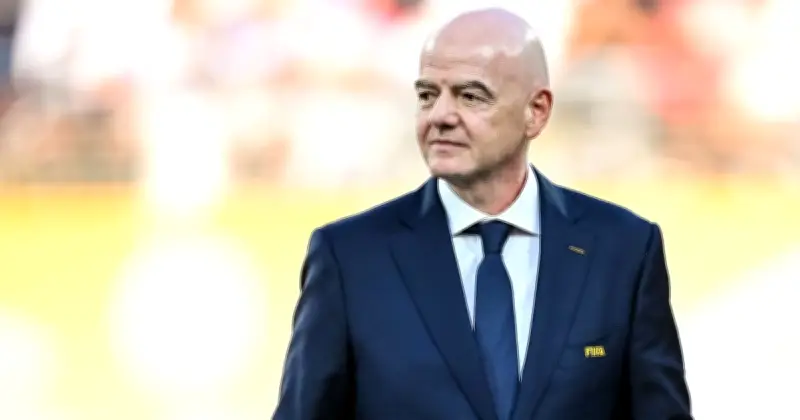
UEFA are preparing for an emergency meeting at 2pm today (Thursday, 30 July) to discuss Gianni Infantino's plan to sell shares in the World Cup to private investors. The FIFA president is considering creating a £15bn subsidiary to run the World Cup and other FIFA-sanctioned events.
UEFA Condemns FIFA Plans
UEFA released a statement condemning the plans, which were reportedly not raised with football associations in New York on the eve of the World Cup final. The governing body said: "This crosses a line that football's governing institutions should never cross. UEFA takes it extremely seriously."
"So should every National Football Association. So should every stakeholder: leagues, clubs, players, supporters, governments and everyone who cares about the future of the game. The soul and governance of football are not assets to trade - especially with zero transparency as to who gains financially. None of us are the owners of football. It is not FIFA's to sell."
Infantino is planning to sell off more than 20% of the FIFA Forward Enterprise, aiming to raise £3.14bn ($4.2bn). In light of these developments and UEFA's threat to boycott, Express Football looks back at previous instances in which nations have withdrawn from - or protested at - the World Cup.
Historical World Cup Withdrawals
Uruguay withdrew from the 1934 tournament in protest after a number of European nations declined to make the journey to South America for the 1930 World Cup. The 1934 World Cup stands as the only edition where the defending champions did not take part.
Austria were prevented from competing in 1938 after Nazi forces annexed the country. A number of Austrian players were incorporated into the German squad, although star player Matthias Sindelar declined to represent the Nazi-controlled team.
India qualified for the World Cup in 1950 but opted not to participate, citing travel expenses, preparation time and team selection challenges.
Fifteen African teams boycotted the 1966 qualifying rounds in protest at FIFA's ruling to allocate only one spot to the African, Asian and Oceania confederations collectively. These countries include: Algeria, Cameroon, Ethiopia, Gabon, Ghana, Guinea, Liberia, Libya, Mali, Morocco, Nigeria, Senegal, Sudan, Tunisia and the United Arab Republic (now Egypt).
In 1974, Chile nearly withdrew on political grounds. During the intercontinental play-off, the Soviet Union declined to take part in the match in objection to Augusto Pinochet's dictatorship. Chilean players walked onto the pitch alone, with captain Francisco Valdes putting the ball into an unguarded net before the fixture was called off.
Recent Protests
In 2022, all 32 qualified nations competed in Qatar, but some players demonstrated regarding alleged human rights violations and the host nation's position on LGBT rights. Captains from seven European nations had intended to wear "OneLove" armbands promoting inclusivity, but scrapped the plan hours before fixtures after FIFA threatened to issue automatic yellow cards to any player wearing the unauthorised armband.
Prior to the 2026 World Cup, Iranian sports minister Ahmad Donyamali publicly stated that the national side would not take part "under any circumstances." Despite the threats, Iran did not formally withdraw and instead appealed to FIFA to relocate their fixtures to co-host nation Mexico. This appeal was turned down and Iran eventually competed, though they faced travel restrictions and were required to enter and leave the USA on the day of each fixture.