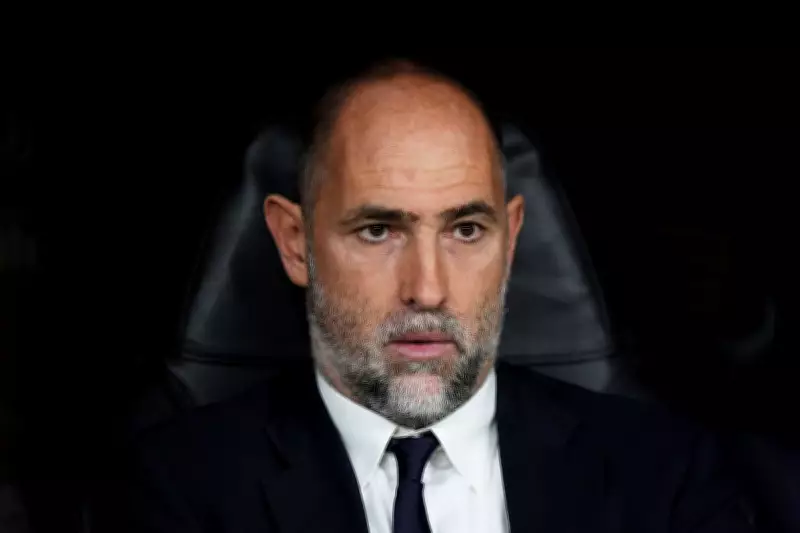
Tottenham's Interim Gamble: Can Igor Tudor Reverse Their Slide?
In a move that reflects modern football's fixation on immediate solutions, Tottenham Hotspur have turned to former Juventus coach Igor Tudor to salvage their faltering Premier League campaign. Appointed on an interim basis, Tudor arrives with a reputation for short-term impact in Italy, but his appointment carries the risk of repeating cautionary tales from England's top flight.
A Managerial Trend and a Pressing Crisis
If football clubs are often accused of living in the past, Tottenham have taken this to another level by appointing a Tudor—though any connection to Henry or Elizabeth is purely coincidental. The Croatian's selection follows a clear 21st-century pattern at Spurs: managers tend to be the antithesis of their predecessors. Where Thomas Frank embodied Brentford's modest Premier League stature, Tudor brings experience from Juventus, Marseille, and Lazio—clubs synonymous with intense pressure and massive expectations.
Tottenham's situation is dire. With no wins in eight league games and just two victories in their last seventeen, the club sits in 16th place, dangerously close to the relegation zone. The objective is stark: avoid dropping out of the top flight for the first time since 1978.

Tudor's Track Record: Immediate Impact with Long-Term Questions
The Croatian's credentials for a short-term rescue mission are compelling. Two years ago, Lazio appointed Tudor with nine Serie A games remaining; he won five, lifting them from ninth to seventh. Last season, Juventus turned to him in March with nine matches left, and he again secured five victories, guiding them from fifth to fourth and into the Champions League.
However, the sequel at Juventus offers a sobering counterpoint. When Tudor was dismissed in October, the team had failed to score in four games and went eight matches without a win. In this season's Champions League, his average of 0.67 points per game paled in comparison to Frank's 2.13. Juventus may rue giving him a permanent contract last summer—a mistake Tottenham have avoided by limiting his deal to June.
The Premier League Challenge: A Newcomer's Trial
Tudor's lack of familiarity with English football poses a significant hurdle. In Italy, he benefited from nine years as a Serie A player and multiple managerial roles, but he is a newcomer to Tottenham and the Premier League. The cautionary tale of fellow Croatian Ivan Juric looms large: Juric underestimated Southampton, won just one league game, suffered relegation, and is unlikely to manage in England again.
Tottenham's recent history with interim managers is mixed. Cristian Stellini lasted four games, including a disastrous 5-0 defeat to Newcastle, while Ryan Mason won six of thirteen matches across two spells. Tudor inherits a squad ravaged by injuries, potentially starting without a dozen players, and misses the feelgood factor that benefited Michael Carrick at Manchester United.
A Path to Survival: Home Fixtures Offer Hope
Despite the challenges, survival remains feasible. Tudor's first match is a North London derby, reminiscent of Martin Jol's debut over two decades ago—a 4-5 loss that sparked an upturn. More encouragingly, Tottenham's five remaining home games are against Crystal Palace, Nottingham Forest, Brighton, Leeds, and Everton, teams currently placed between 8th and 17th. With only Wolves boasting a worse home record, salvation could be found on their own soil.
As Tottenham embark on this high-stakes gamble, they must hope Tudor's reign is effective rather than bloody. The Croatian is unlikely to found a dynasty, but if he can replicate his immediate Italian impact, he might just keep Spurs in the Premier League.