Spurs Gamble on De Zerbi's Creative Tactics to Avoid Relegation Crisis
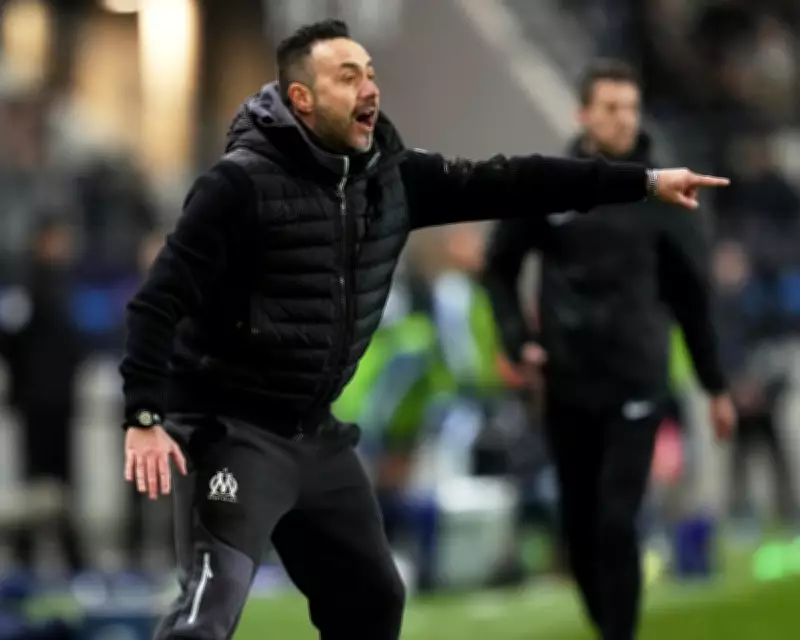
Roberto De Zerbi has established a reputation as a head coach with highly innovative ideas, but his distinctive methods are widely acknowledged to require significant time to properly bed in and yield consistent results. With just seven critical matches remaining to save their Premier League status, Tottenham Hotspur's owners have taken a substantial risk by appointing the gifted yet combative Italian manager, who is known for favouring a tough love approach with his players.
Venkatesham's High-Stakes Managerial History
It is notably ironic that the individual responsible for hiring De Zerbi at Tottenham, chief executive Vinai Venkatesham, was also partially involved in one of the most successful managerial recruitments in recent memory: Mikel Arteta at north London rivals Arsenal. That appointment, however, did not begin smoothly. Venkatesham was blindsided when photographs of him leaving Arteta's house at 1.20am were published during sensitive negotiations, discovering the exposure only as the images went online.
While Venkatesham was part of the committee that selected Arteta to replace Unai Emery—a huge gamble on a novice for a club of Arsenal's stature—that move proved inspired. In contrast, his previous hiring of Igor Tudor, a coach lacking Premier League experience, to rescue Spurs was less successful. Now, alongside sporting director Johan Lange, Venkatesham has settled on De Zerbi, a decision viewed as similarly high risk given the club's precarious position.

De Zerbi's Premier League Pedigree and Immediate Challenges
Tottenham can at least point to De Zerbi's status as a highly desirable Premier League target. Manchester United held discussions with him in the summer of 2024 before opting to retain Erik ten Hag. Spurs also considered him at that time and sought to appoint him when sacking Thomas Frank in February, but De Zerbi, having just left Marseille, requested time before committing.
Venkatesham and Lange regard De Zerbi as the most credible coach currently available. As their top choice, they believe it is preferable to appoint for the long term rather than attempt a makeshift solution for the final seven matches, which, if unsuccessful, could trigger financial disaster for the club. This ensures players understand they are not dealing with another temporary figure during these vital games.
Doubts Over Tactical Extremity and Adaptation
Nevertheless, significant doubts persist. One Premier League executive familiar with coaching hires remarked, "It doesn't make sense. Brighton demonstrated De Zerbi's importance, similar to Brentford with Thomas Frank: minimal. Ultimately, De Zerbi introduced interesting new tactics at Brighton, but they are very extreme tactics that got found out, and he refused to adapt. Like many coaches, he is a fundamentalist."
Whether such tactical extremity is suitable for a club with so few games to avert financial meltdown is debatable. It is instructive that Lewis Dunk, who came to admire De Zerbi at Brighton, described the initial fortnight under him as "horrendous ... baffling." Critics note that De Zerbi's style differs markedly from Ange Postecoglou and Frank, likely necessitating another squad overhaul if survival is achieved.
Commitment Amid Relegation Fears and Financial Realities
Should the worst occur and Tottenham suffer relegation, De Zerbi has committed to staying, backed by a five-year contract. It is understood that the club's owners, Vivienne and Charles Lewis, represented in the boardroom by Peter Charrington, will provide funding to maximise chances of an immediate return to the top flight. However, even with Premier League parachute payments and looser regulations for relegated clubs, the EFL's profitability and sustainability rules mean the days of blank-cheque spending in the Championship are largely over.
Tottenham would counter criticisms of De Zerbi's tactical inflexibility by asserting they do not expect to fully implement his model immediately at Sunderland next weekend. They anticipate some pragmatism to secure immediate results before a summer reset. Appointing him now affords Spurs the advantage of planning for the summer transfer window with the new manager's input, believing they may have secured this generation's emerging coaching talent.

Concerns Over Volatility and Longevity
Those who have spent time with De Zerbi highlight his creative intelligence, but concerns remain. "You could defend his appointment by saying it's a long-term project for the club, whether we go down or not," said the recruitment executive. "But that's nonsense because he quit Brighton due to lack of transfer control." De Zerbi's longest tenure at any club was three seasons at Sassuolo. "He's gone within 18 months," the executive added. "That would be my generous half-life for him."
Marseille players can attest to De Zerbi's emotional volatility. According to L'Equipe, he was so disgusted with one performance he refused to coach at the next training session, prompting players to boycott sessions under his assistants. A video clip showing him confronting Ismaël Koné in training, telling him to leave the pitch and "take a shower," before adding "call your agent to come here"—with Koné responding by squaring up to coaching staff—will doubtless be scrutinised by Spurs players. Whether such tough love is appropriate for a team with fragile confidence is questionable.
Broader Issues in Managerial Appointments and Club Structure
Given the Premier League's vast wealth, it remains perplexing that clubs' frequent hiring and firing of coaches often appears random. Lange was an early adopter of football's data revolution, visiting Liverpool in 2014 before they were hailed as industry leaders. However, one leading football executive insists most clubs still misuse data in managerial appointments. "We're not quite there on data for managers," he said. "It's descriptive rather than predictive, because managers don't directly control on-pitch events."
Research indicates managers make negligible difference to performance, with key success metrics being player spending and squad quality. Yet data has blind spots: the emotional unity of a squad and its alignment with the manager's personality are vital but nearly impossible to measure, requiring human judgment. "Just because you can't measure it doesn't mean it isn't real," noted a football data analyst.
Furthermore, Tottenham remain in transitional flux following the departure of chairman Daniel Levy at the season's start. "Levy was in some ways a terrible person to work for and a control freak, but he did have a structure, and Spurs saw benefits from that," said a former employee. "All information went to Levy, who made decisions without sharing his process. The sporting director's role was merely to give opinions for Levy to decide, then execute his wishes."
Under the Lewis family, Tottenham pledged to compete for trophies. That ambition persists, but they now face seven games to secure survival, reach the summer, and ultimately prove that this time, they have chosen wisely in their managerial gamble.