Juventus Manager's Live TV Kiss Sparks Debate, Reporter Defends Him
Juventus manager Luciano Spalletti has found himself at the centre of controversy after kissing a female reporter during a live television interview. The incident occurred immediately following Juventus's 2-2 draw with Lazio in Serie A, but the reporter involved, Federica Zille, has since come forward to defend the 66-year-old coach's actions.
The Incident Unfolds on Live Broadcast
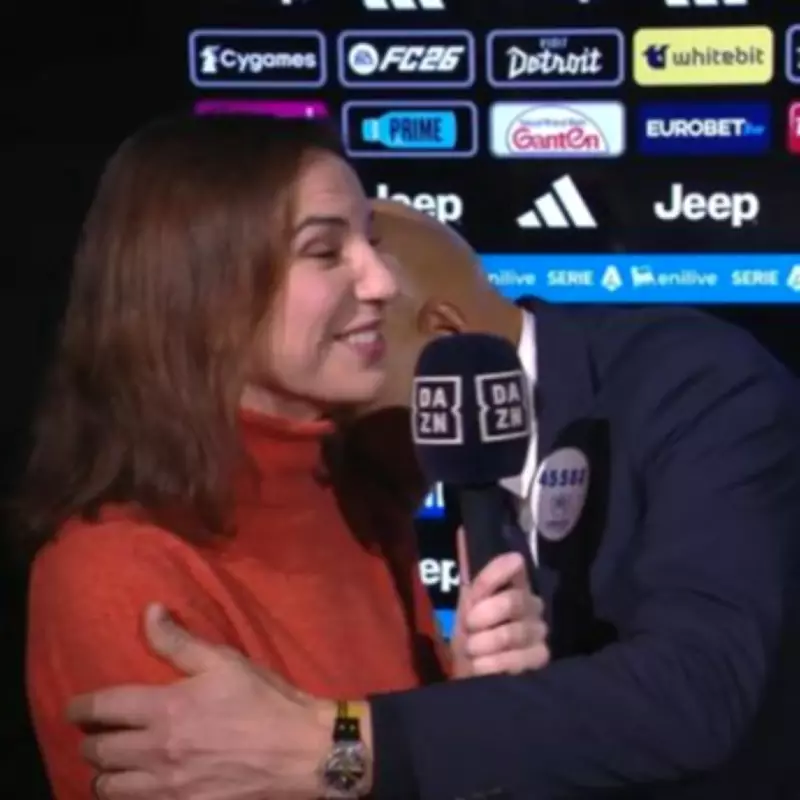
During the post-match interview on sports broadcaster DAZN, Spalletti was passionately discussing his frustration with VAR decisions and the interpretation of contact in football. While arguing that not every touch should be penalised, the Juventus boss leaned in and kissed Zille on the cheek as a demonstrative gesture.
"May I kiss you, here, this is contact," Spalletti said during the exchange, using the physical gesture to illustrate his point about the difference between incidental contact and meaningful impact that should warrant a penalty.

The moment was captured live on air, with Zille visibly laughing at the unexpected gesture. The interview continued without interruption, but footage of the kiss quickly circulated on social media and sports news platforms, prompting scrutiny of Spalletti's conduct.
Reporter's Firm Defence of the Manager
In the aftermath, Federica Zille has spoken out to clarify the context and defend Spalletti against accusations of inappropriate behaviour. Appearing on Fantacalcio TV, the experienced football reporter insisted there was "no malice" in the manager's actions.
"I know Spalletti, and many say, 'Hey, he wouldn't have allowed himself to do that to a man,'" Zille explained. "No, he would have elbowed a man to show that it was a foul, not just contact."
The reporter emphasised that Spalletti was using physical demonstration to make a technical point about football rules, particularly regarding VAR interventions. During the match, VAR had ruled out a goal, which formed the basis of Spalletti's frustration with what he perceives as overly rigid interpretation of contact rules.
Context of the Football Discussion
The incident occurred during a detailed technical discussion about football regulations. Spalletti was articulating his view that current rules are too strict in penalising every instance of contact.
"The rules are too rigid right now," the Juventus manager stated during the interview. "It is the rigidity that I find to be the problem. If nobody even realises it hit a hand, who is damaged by that?"
He continued to argue for more contextual interpretation: "It's about context, contact is not the same thing as impact. There will always be difficulty if there are rules where every touch of the hand is a penalty, every step on foot is a penalty."
Zille's Strong Rejection of Harassment Claims
Federica Zille has been particularly vocal in rejecting suggestions that Spalletti's actions constituted harassment. She expressed concern that such characterisations trivialise serious issues.
"I've read comments where the word 'harassment' has even been used," she revealed. "I found it truly exaggerated, if not downright incorrect, to use the word 'harassment' in these cases, because harassment is a serious matter."
The reporter added: "As a woman, I feel strongly about this issue, but even more so, in this case, we need to be clear-headed and give it the weight it deserves."
Zille emphasised that she did not feel disrespected either as a woman or as a professional journalist by Spalletti's demonstrative gesture during what was otherwise a standard football interview.
Broader Implications for Sports Broadcasting
This incident highlights the sometimes blurred lines between demonstrative coaching behaviour and appropriate conduct during media engagements. While physical gestures are common in football coaching and explanation, their translation to live broadcast situations requires careful consideration.

The defence offered by Federica Zille suggests that within the specific context of a technical football discussion between professionals familiar with each other, such gestures may be interpreted differently than they might be in other settings.
As sports broadcasting continues to evolve with more immediate access to managers and players in emotional post-match situations, this incident may prompt discussions about boundaries and context in live sports journalism.