Mikaela Shiffrin's Giant Slalom at Milan Cortina Ends Without a Medal but Fuels Optimism
Mikaela Shiffrin sees her 11th-place finish in the giant slalom at the Milan Cortina Olympics as clear proof that she is back in the fight for top honours in alpine skiing.
A Promise at the Start Gate
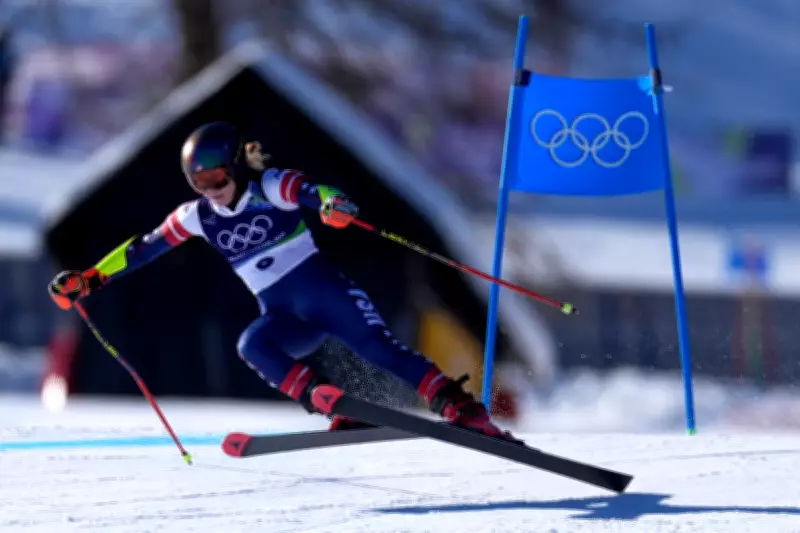
Standing at the start gate atop the sun-splashed Tofane course, the American star made a simple yet significant promise to herself: "I'm going to do this whole thing here." Given the challenging path she has navigated to reach these Games, including a harrowing crash in late 2024 that left her with a punctured abdomen and shaken confidence, this commitment alone marked a triumph.
While the leaderboard near the finish line on Sunday required flipping to the second page to find Shiffrin's name in 11th place, the most decorated skier in history did not view this as a disappointment. True disappointment, she reflected, was washing out four years ago in Beijing or doubting her speed during recovery. Instead, she described the event as "the greatest show of GS skiing we've had in a really long time."

Razor-Thin Margins and Positive Signs
Shiffrin finished outside the top 10, but the snow felt right under her skis, and the margins were incredibly tight. The gap between her and the co-runners-up, Sara Hector of Sweden and Thea Louise Stjernesund, was a mere 0.3 seconds in a discipline requiring two runs. This contrasts sharply with past Olympics:
- In Pyeongchang 2018, the gap from silver to 11th was about 1.4 seconds.
- In Beijing 2022, it was nearly 2 seconds.
- Three weeks ago at a World Cup in Czechia, where Shiffrin earned her first GS podium in two years, it was over 3.5 seconds.
On Sunday, Shiffrin was right in the mix. A slight turn here or there could have changed the outcome on a course designed for safety and ultracompetitive racing, where the difference between a medal and the middle was nearly imperceptible.
Mental Focus and Physical Progress
After a tough slalom in the women's combined last week, where her skis struggled to "go," Shiffrin vowed to learn and refocus. Aware of perceptions about an Olympic slump—the Games are the only place she hasn't won in eight years—she blocked out the noise. During her second run, with "Killing In The Name Of" by Rage Against the Machine blasting, she felt present and powerful.
"It felt good to push, which was amazing," she said, adding, "It felt really good to ski high intensity." Her intensity is ramping up steadily, as evidenced by her bib No. 3, indicating she's back in the top 7 globally in GS, a "challenging task" she set at the season's start.
Consistency Over Immediate Wins
While Shiffrin continues to dominate slalom, having clinched her ninth World Cup series title, GS presents a different challenge. Her 22 career GS victories are a record, but she hasn't won a GS race since late 2023. Her comeback has been fueled by consistency, though the "lights-out speed" needed for wins doesn't come as easily as in her peak years.
"The task ahead of me for the coming months and years is to try to bring that kind of intensity and fire and to continue to work with the team to find those hundredths of a second that it takes to actually win races," she explained.
A Competitive Field and Future Prospects
On Sunday, under the snowcapped Dolomites, victory eluded her, but Shiffrin isn't dwelling on what-ifs. She praised the course layout for fostering competitive racing and noted that Federica Brignone's gold at age 35, along with Hector's silver, proved the results were legitimate. "It wasn't like somebody won who wasn't supposed to win," she said.
Behind Brignone, the competition was chaotic yet close, which Shiffrin sees as a positive reflection of the sport's high level. "That's a beautiful show of our sport on an Olympic stage," she remarked, looking ahead with optimism to the slalom event on Wednesday, where she aims to showcase her best form.