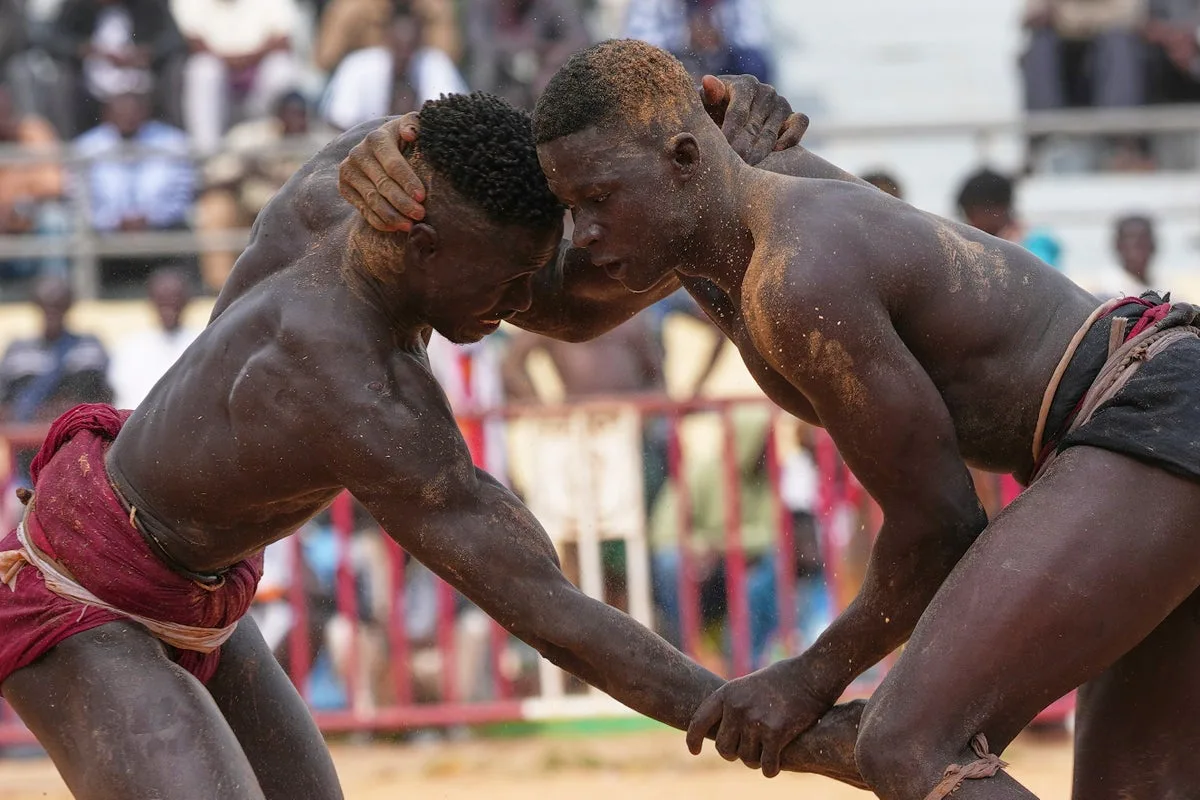
In Senegal, the national sport of wrestling, known locally as laamb, is deeply rooted in village life. The country's top wrestlers earn the title 'King of the Arenas,' drawing massive crowds and television audiences.
Laamb is unique for its spectacle, featuring elaborate costumes, protective charms, and rituals. Fighters, draped in these costumes and charms believed to ward off injury and channel spiritual power, perform to the beat of sabar drums, emphasising the sport's spiritual side, which for many is as important as the fight itself.
Over time, laamb has evolved into a professional sport with sponsors and prize money. For young men like Omar, 22, an amateur wrestler, the arena represents a shot at wealth and fame. 'I do this because wrestling pays more than being a footballer in this country,' he said. 'If I become a professional, I will be rich.'
However, most local league wrestlers earn modest salaries, and many struggle financially, pinning their hopes on academies and transfers abroad, while dreaming of the rare few who make it to the top.