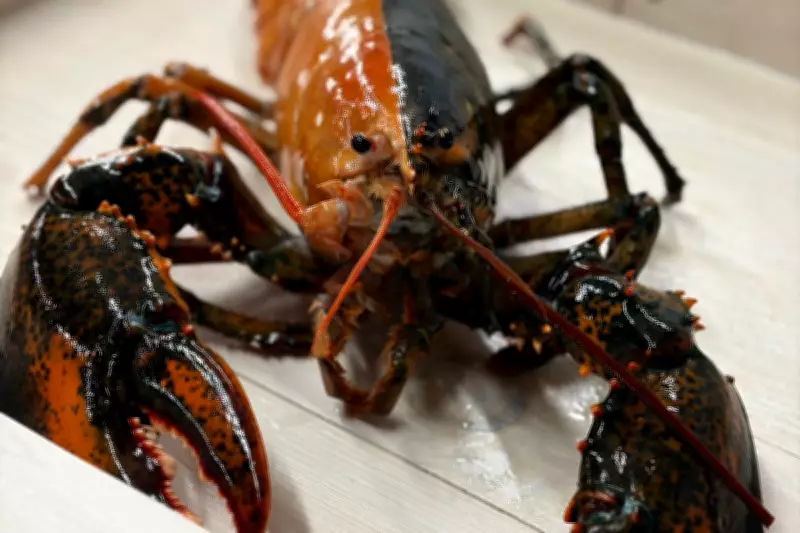
A rare two-toned lobster, featuring a striking brown coloration on one side and a vibrant orange on the other, was discovered off the coast of Cape Cod, Massachusetts. The unique crustacean was caught by fishermen on 16 April and subsequently found at the Wellfleet Shellfish Company in Eastham. Instead of being destined for the dinner plate, the lobster was donated to the Woods Hole Science Aquarium in Falmouth, Massachusetts, ensuring its survival due to its remarkable appearance.
From Dinner Plate to Display
The lobster is currently being housed at the Marine Biological Laboratory while the aquarium undergoes construction. Once the facility reopens, the two-toned creature will be put on public display, allowing visitors to marvel at its unusual coloration. Experts, including Professor Markus Frederich, suggest that such split-colour lobsters can result from genetic mutations affecting pigment-binding proteins. Another possible explanation is the fusion of two separate lobster eggs that develop together as a single animal.
A Rare Genetic Anomaly
Two-toned lobsters are extremely rare, with estimates suggesting they occur in only one in 50 million lobsters. The vibrant orange and brown halves are a result of incomplete cell division during early development, leading to a bilateral mosaic pattern. This particular specimen has captured the attention of marine biologists and the local community alike. The Wellfleet Shellfish Company, which initially received the lobster, made the decision to donate it to science rather than sell it for consumption.

The Woods Hole Science Aquarium, known for its educational exhibits, is expected to draw increased interest once the lobster is on display. The aquarium's reopening date has not yet been announced, but preparations are underway to ensure the lobster's new home meets all necessary requirements. For now, the lobster remains in temporary housing at the Marine Biological Laboratory, where it is being monitored by staff.