Newcastle Chief Speaks on Eddie Howe's Future Amid Turbulent Season
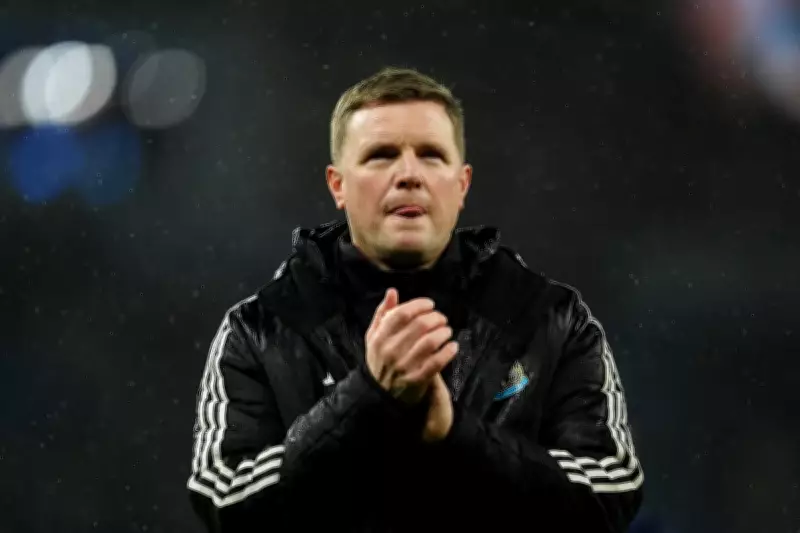
Newcastle United chief executive David Hopkinson has moved to address mounting speculation surrounding the future of head coach Eddie Howe, as the club navigates a difficult campaign on and off the pitch. While Hopkinson indicated there are no immediate plans to replace Howe, he notably refrained from providing a definitive guarantee regarding the manager's long-term tenure beyond the current season.
Pressure Builds After Recent Setbacks
The pressure on Eddie Howe has intensified significantly following a bruising period for Newcastle. The team suffered a heavy defeat to Barcelona in European competition and lost to arch-rivals Sunderland just before the international break, exacerbating fan discontent. These results have contributed to a challenging Premier League campaign, with the Magpies currently languishing in 12th place, a stark contrast to their fifth-place finish last season.
Speaking during the unveiling of the club's latest financial figures, Hopkinson acknowledged the growing unease among supporters. He stated, "Eddie's our manager. I expect to have a great run to the end of the season here and we'll talk about the future when it's time." When pressed for further clarification, Hopkinson added, "We are not looking to make a change at the moment. We are not having those conversations. We are still in the midst of the season."

Focus on Remaining Fixtures Amid Uncertainty
Hopkinson emphasised that the club's immediate focus is squarely on the seven remaining matches of the season, rather than engaging in premature speculation about summer decisions. "Right now, we are focused on the seven matches we have remaining and not distracting ourselves with speculation about what we may or may not do in the summer," he remarked.
The prospect of failing to secure European football for the next season looms large, with potential significant repercussions for Newcastle's finances and squad stability. Key players including Sandro Tonali, Bruno Guimaraes, and Tino Livramento have all been linked with possible departures from St James' Park, adding to the uncertainty surrounding the club's future direction.
Financial Performance and Strategic Moves
The financial figures released by Newcastle United for the 12 months to June 30, 2025, revealed a profit after tax of £34.7 million. This was partly driven by a substantial 44 percent increase in commercial revenue, contributing to a record turnover of £335.3 million, representing a rise of £15 million. Despite this growth, Newcastle's turnover remains approximately half that of Premier League giants such as Liverpool, Manchester City, Manchester United, and Arsenal.
In a significant strategic move, the club's report disclosed that St James' Park has been effectively sold to its immediate parent company, PZ Newco Limited, for £172.1 million and subsequently leased back. This arrangement ensures that any future financial burden related to stadium development would not fall directly on the club itself, although no immediate announcements regarding such projects are expected.
Player Departures and Club Strategy
Addressing concerns about potential player exits, Hopkinson was adamant that any future departures would occur strictly on Newcastle's terms. He sought to avoid a repeat of the controversial saga involving Alexander Isak, who reportedly went on strike to force through a £130 million transfer to Liverpool last summer. "I wasn't here for the Isak situation, so I don't want to comment on something I didn't see first-hand. What I do know is that players that leave this club will need to do so on our terms," Hopkinson stated.
Hopkinson, who was appointed as Darren Eales' replacement shortly after Isak's exit, conceded that from a business perspective, "to me, Isak was a good sale." This reflects the broader necessity of player trading for clubs to thrive within modern football's stringent spending regulations, even as the repercussions of such transfers continue to be felt on the pitch.