La Liga's Strategic Shift: Investing in Youth Over Transfer Market Splurges
While financial giants like the Premier League, Serie A, and the Saudi Pro League dominate global transfer spending, Spain's La Liga has embarked on a radically different path. The league that produced legends such as Lionel Messi, Andres Iniesta, Sergio Ramos, and Iker Casillas is now funnelling resources into grassroots development and psychological innovation, aiming to secure its footballing future through homegrown talent.
The Financial Landscape: Youth Value Versus Transfer Expenditure
According to comprehensive statistics compiled by La Liga, players trained within Spanish academies now represent a staggering combined transfer market value of £1.285 billion across Europe's top five leagues. This figure comfortably exceeds the Premier League's £874 million, the Bundesliga's £490 million, Ligue 1's £410 million, and Serie A's £361 million.
This impressive valuation stands in stark contrast to La Liga's modest £676 million expenditure during the 2025-26 transfer window. During the same period, Premier League clubs led global spending with £3.5 billion, followed by Serie A (£1.22 billion), the Bundesliga (£839 million), and the Saudi Pro League (£682 million).

David Garcia, La Liga's coordinator of football projects, explains the strategic thinking behind this approach: "The academy represents a crucial investment that consistently proves more economical than signing foreign players. Our objective is to establish an optimal balance between nurturing homegrown talents and integrating players who bring additional value and skill to La Liga."
The Psychological Revolution in Spanish Youth Development
Spanish football has entered what officials describe as "psychology-led phase two" of a decade-long youth revolution. This transformation includes innovative measures such as placing psychologists on academy benches during matches and developing a confidential mobile application specifically designed for players to report mental health concerns.
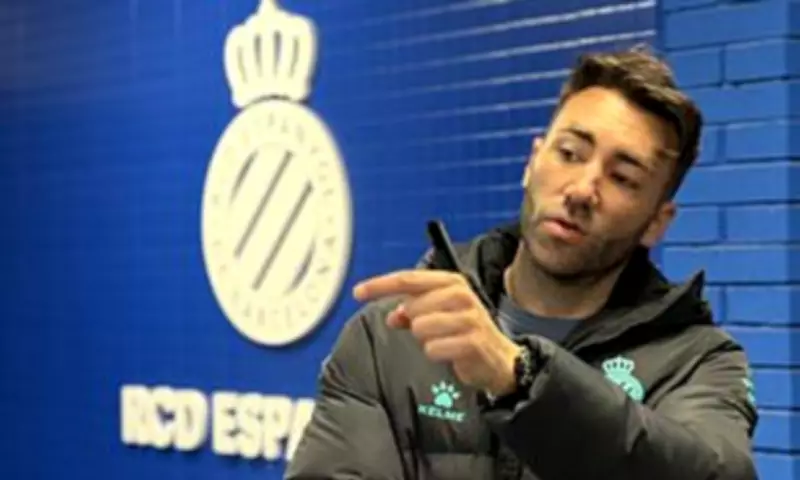
At Espanyol's prestigious Ciutat Esportiva Dani Jarque facility, named in honor of their academy-graduate captain who tragically died in 2009, psychological support has become integral to player development. During Division de Honor Juvenil matches, a dedicated psychologist sits alongside the coach, providing real-time advice about both collective team challenges and individual player needs.
Gerard Bofill, Espanyol's head of youth methodology, elaborates on this approach: "The psychologist understands the specific challenges facing both the team and individual players. For instance, when a striker experiences difficulties or lacks opportunities, the psychologist conducts targeted sessions to encourage and support that player. They also brief the coach for thirty seconds before team talks, though the coach always retains final authority."
National Implementation and Support Systems
This psychological focus extends across Spain's entire youth system, with Sevilla, Villarreal, and Real Racing Club highlighted by La Liga officials as exemplary "model clubs" for their handling of players' mental wellbeing. The league has launched a comprehensive 24-hour psychological service accessible through a specialized application, which has already been downloaded by over 1,000 young players.
Through this confidential platform, players can report mental health issues, incidents of hate speech, or racial abuse, connecting them anonymously with a network of more than 600 professional psychologists nationwide. Jose Angel Garcia, technician and psychologist at La Liga's football projects, observes: "Fortunately, we have progressed beyond the era when mental health support represented a taboo subject. Today, there exists no hesitation in sharing psychological resources—quite the opposite. Our fundamental objective involves developing better individuals who integrate successfully into society while simultaneously becoming superior footballers."

Club Perspectives: Celta Vigo and Espanyol's Academy Philosophies
Celta Vigo's sporting director, Marco Garces, provides candid insight into why Spanish clubs are embracing academy investment. Despite overseeing an exceptional season where Celta competes for European qualification and aims for Europa League success, the club's most expensive 2025-26 acquisition was the €6 million purchase of Ilaix Moriba.
Garces acknowledges: "Can we secure the market's best players? Realistically, this proves difficult when competing against wealthier clubs. Do we maintain an extensive scouting network? Probably not. Is our data analysis unit exceptionally creative? Not currently. Therefore, we believe our competitive advantage lies in player development. For us, the academy represents the core of our operations—it's absolutely vital. This approach enables us to cultivate the Spanish league's finest talents, distinguishing us from most other clubs."
Garces aims to include at least six academy-trained players in every Celta squad, emphasizing that not all need be Spanish: "We've recruited players from Africa, Dubai, and South America. Diversity consistently benefits us by providing distinctive qualities and perspectives."
Espanyol, meanwhile, operates an extensive international academy network spanning from the United States and Canada to Iraq and East Asia, despite competing with Barcelona's famed La Masia for local talent. Their academy has produced notable graduates including Chelsea's Marc Cucurella, European Championship winner Dani Olmo, Barcelona defender Alejandro Balde, West Ham winger Adama Traore, and former Manchester United player Eric Bailly.
Balancing Football Dreams with Educational Realities
Recognizing football's inherent uncertainties, Spanish academies emphasize educational development alongside sporting excellence. Espanyol's head of youth development, Alex Garcia, stresses consistent communication with players' families and academic monitoring, with interventions implemented if school grades decline.
Espanyol Juvenil A team members Eloi Tost and Thomas Dean exemplify this balanced approach. While Tost pursues aerospace engineering as a potential alternative career, Dean—eligible for Chilean, American, and Spanish national teams—aspires to establish his own company should professional football prove unattainable.
Dean explains: "My parents provide complete football support, but they recognize the necessity of a Plan B. Injuries could abruptly end a career, so I must pursue both paths simultaneously. Academics remain important, but football unquestionably takes priority."
Whether these aspiring players become the next generation of Spanish football icons remains uncertain. However, La Liga's comprehensive youth revolution—combining psychological innovation, educational support, and strategic academy investment—has undeniably transformed Spain's footballing landscape, creating a sustainable talent pipeline that increasingly outperforms wealthier European rivals in both value and vision.