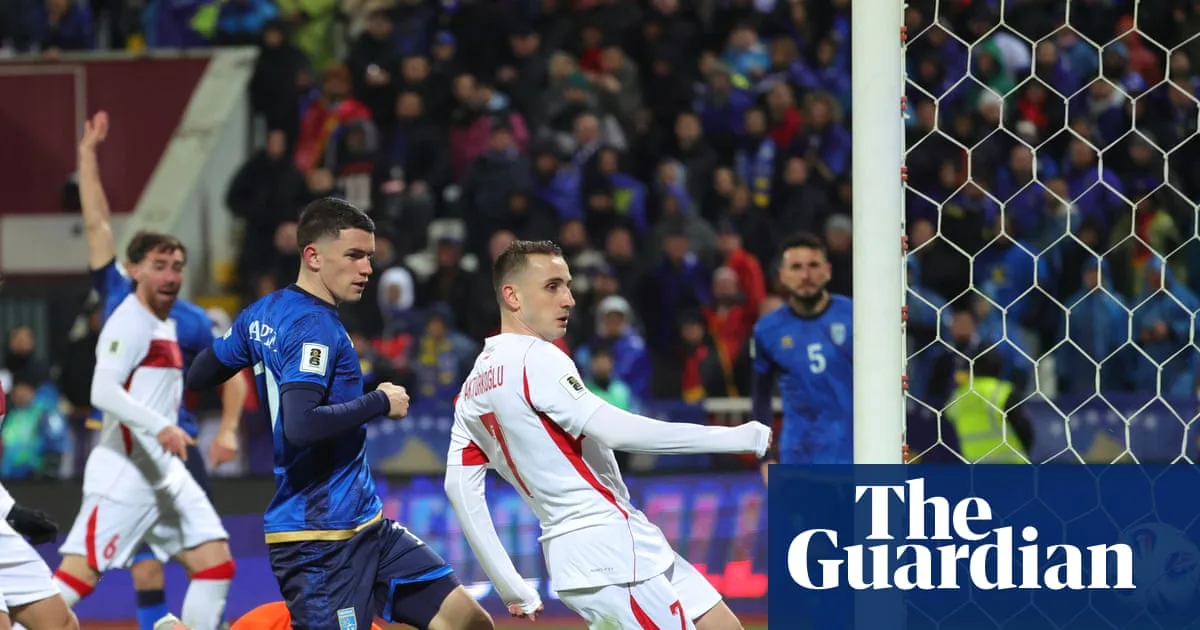
Kosovo Poised for Historic World Cup Breakthrough in Decisive Playoff
Football's youngest nation, Kosovo, stands on the precipice of a historic achievement, needing only a victory over Turkey in tonight's playoff final to secure qualification for its first-ever World Cup. This remarkable feat would cap an extraordinary journey for a nation that gained FIFA and UEFA recognition just a decade ago in May 2016.
Path to the Playoff Final
Kosovo's path to this decisive moment has been marked by resilience and determination. The team triumphed 4-3 over Slovakia in a thrilling semi-final last Thursday, having previously progressed comfortably ahead of both Slovenia and Sweden in qualifying Group B. The world's 78th-ranked nation will now host Turkey at the Fadil Vokrri Stadium in Pristina on Tuesday night, with a spot at this summer's expanded 48-team tournament at stake.
Turkey secured their place in the final with a 1-0 victory over Romania in their quarter-final, setting up what promises to be an emotionally charged encounter between the two nations.
Key Players Driving Kosovo's Success
Kosovo's attacking prowess has been spearheaded by the formidable strike partnership of Hoffenheim's Fisnik Asllani and Mallorca's Vedat Muriqi. Despite scoring only six goals in their six World Cup qualifiers prior to the Slovakia match, the duo found no problem finding the net in last Thursday's 4-3 victory.
Muriqi has been particularly impressive this season, ranking as the sixth highest goal-scorer across Europe's top five leagues behind only Harry Kane, Kylian Mbappe, Erling Haaland, Igor Thiago and Deniz Undav. The Mallorca striker has netted 18 goals in LaLiga, providing crucial firepower for his national team.
Other recognisable names representing the young nation of 1.6 million include former Burnley and Ipswich Town goalkeeper Arijanet Muric and Juventus winger Edon Zhegrova, both of whom have brought valuable experience to the squad.
A Nation's Football Journey
Kosovo's football story is intertwined with its political history. The nation declared independence from Serbia in 2008, though it has not yet been integrated into the United Nations despite recognition from more than 100 UN member states. Countries including Russia, India, China and Brazil continue to oppose Kosovo's independence.
For years, Kosovo was permitted to play only unofficial friendly matches before narrowly winning a vote at UEFA's general congress in 2016. Only 28 of the 54 member nations voted in their favour for admission into Europe's governing body. Despite opposition from Serbia, who fought to have the decision reversed, Kosovo maintained their UEFA recognition and were admitted into FIFA just ten days later.
The country's first match permitted by FIFA was a 0-0 draw with Haiti in March 2014. That same year, Kosovo suffered a 6-1 defeat to Turkey in what has since been remembered as a gesture of respect from the Turkish side.
Emotional Preparations and Historical Context
Ahead of Tuesday's crucial match, Kosovo football officials posted a heartfelt message acknowledging Turkey's early support: 'Back in 2014, when no one would face us, Turkey showed up. They played Kosovo away, before we were even recognised by FIFA - a gesture of respect and love we will never ever forget. 12 years later... we're on our way to a World Cup final.'
Kosovo's head coach Franco Foda has called for calm ahead of what promises to be an emotional occasion for the tiny nation, which is roughly 40 times smaller than the United Kingdom in terms of population.
'We have a stadium only for 13,000 spectators, but if it were possible, there would be 100,000,' he said after last Thursday's win over Slovakia. 'On Tuesday we will have a historic game. We are in euphoria, but we need to play the last game with calm. In that case everything is possible. We have emotional fans, but we must be careful and not allow ourselves to make mistakes.'
The World Cup playoff represents a monumental opportunity for Turkey as well, who have not qualified for the tournament since their impressive third-place finish in 2002. Both nations will be fighting not just for a place in football's biggest competition, but for national pride and historical significance.
As the Fadil Vokrri Stadium prepares to host this decisive encounter, the football world watches to see if Kosovo can complete its remarkable journey from international outsider to World Cup participant in just over a decade of recognised competition.