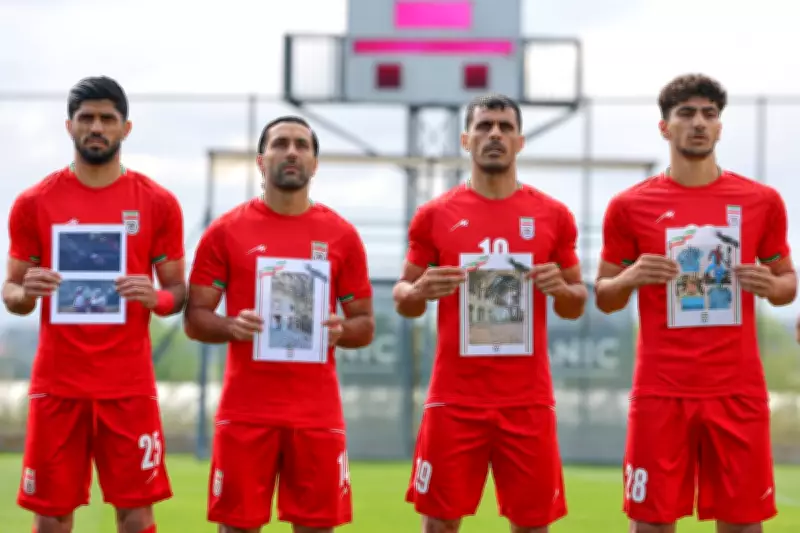
In a poignant display before their World Cup warmup match, Iran football players and officials honoured alleged child victims of war by posing with photographs of children said to have been killed in U.S. and Israeli airstrikes. The gesture took place on Tuesday in Antalya, Turkey, ahead of Iran's 5-0 victory over Costa Rica, with no spectators present but FIFA President Gianni Infantino in attendance.
Symbolic Protest Amid Global Tensions
The Iran squad, joined by coach Amir Ghalenoei, Iran Football Federation vice president Mehdi Mohammad Nabi, and staff members, held the pictures while singing the national anthem. This act followed a similar tribute on Friday, where players carried small backpacks before another warmup against Nigeria to honour victims of a deadly missile strike on an elementary school in southern Iran. That attack on February 28, likely launched by the U.S., resulted in over 165 fatalities, predominantly children.
International Backlash and Investigations
Neither the United States nor Israel has accepted responsibility for the school strike, which has drawn widespread criticism from the United Nations and human rights groups. The U.S. military is currently investigating the incident and has stated it would never intentionally target civilians. The Iranian government and soccer officials have expressed that while they do not wish to boycott the World Cup, co-hosted by the U.S., Canada, and Mexico in June, it is not feasible for the national team to travel to the U.S. due to the ongoing conflict initiated by the U.S. and Israel.

World Cup Participation in Jeopardy
Iran is scheduled to play three group stage matches in the U.S. during the tournament. In response to safety concerns raised by U.S. President Donald Trump, who discouraged the team from attending, Iran has requested FIFA to relocate those matches to Mexico. However, Infantino has tempered Iran's efforts, emphasising that FIFA desires the tournament to proceed as planned without disruptions.
This series of events highlights the intersection of sports and geopolitics, as Iran uses football as a platform to protest against perceived injustices while navigating complex international relations ahead of the World Cup.