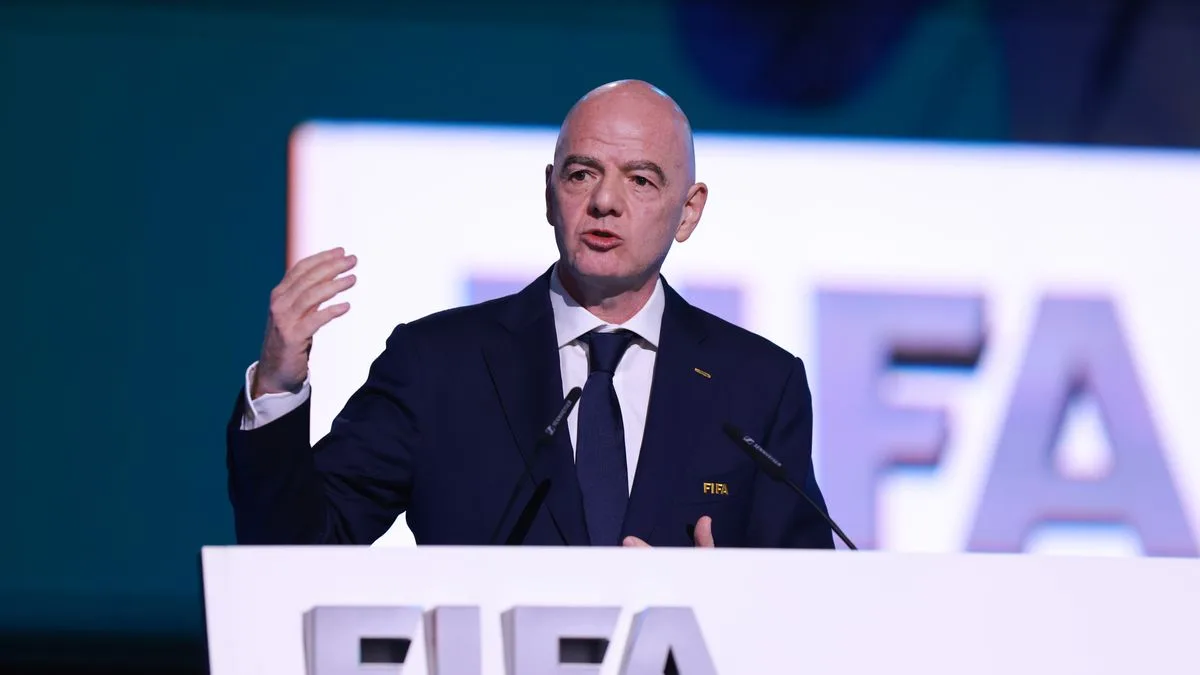
FIFA's Infantino Asserts Iran's World Cup Participation Amid US Conflict
Infantino: Iran Will Compete at World Cup Despite US Tensions

FIFA President Gianni Infantino has firmly declared that Iran will compete in the upcoming World Cup, despite escalating military tensions with tournament co-hosts the United States. This confirmation arrives as the global football community faces an unprecedented crisis, with recent hostilities including US and Israeli air strikes on Iran on February 28, followed by Iranian retaliation against Israel and Middle Eastern nations hosting American military bases.

Infantino's Unwavering Stance on Iran's Participation

In an interview with Univision, Infantino expressed optimism, stating, "We want Iran to play, and Iran will play at the World Cup." He directly addressed a formal request from the Iranian football federation to relocate their group stage matches to Mexico, emphatically dismissing the idea by asserting, "There is no plan B, C or D – there is only plan A." Infantino further emphasized Iran's role, noting, "Iran represent their people – both those living in Iran and those living abroad."

Political Tensions and Security Concerns

Earlier statements from Infantino suggested that US President Donald Trump would welcome Iran at the World Cup. However, Trump recently contradicted this, stating it would not be "appropriate" for Iran to participate "for their own life and safety." These remarks highlight the complex geopolitical backdrop, with Iran scheduled to play two matches in Los Angeles on June 15 and 21 against New Zealand and Belgium, respectively, and a third match against Egypt in Seattle on June 26.

Wide Pickt banner — collaborative shopping lists app for Telegram, phone mockup with grocery list

Should both teams advance as runners-up in their groups, Iran and the US could potentially meet in a last-32 knockout match in Dallas on July 3, adding another layer of intensity to the already fraught situation.

Symbolic Protests and Warm-Up Matches

Infantino attended Iran's friendly match against Costa Rica in Antalya, Turkey, on Tuesday, where the team secured a 5-0 victory. Prior to the match, Iranian players and officials, including coach Amir Ghalenoei and Iran Football Federation vice president Mehdi Mohammad Nabi, staged a poignant protest. They posed with photographs of children allegedly killed in the February 28 US and Israeli airstrikes while singing the national anthem, in a stadium with no spectators present.

This gesture followed a similar act of remembrance before another warm-up match against Nigeria on Friday, where players held small backpacks to honor victims of a deadly missile strike on an elementary school in southern Iran. That attack, likely launched by the US, resulted in over 165 fatalities, predominantly children.

Implications for Global Sports Diplomacy

The situation underscores the challenges of hosting major international sporting events amid geopolitical conflicts. Infantino's insistence on maintaining the original schedule reflects FIFA's commitment to keeping politics separate from football, yet the symbolic protests by Iranian athletes highlight how real-world tensions inevitably permeate the sporting arena. As the World Cup approaches, all eyes will be on how these dynamics unfold, with security and diplomatic efforts likely to be tested in the coming months.

Pickt after-article banner — collaborative shopping lists app with family illustration