Irish Deputy Premier Warns Against Boycotting Israel Football Matches
The Republic of Ireland's soccer team would face significant disadvantages if matches against Israel were boycotted, according to Irish deputy premier Simon Harris. His comments come amid growing political debate about whether Ireland should participate in upcoming UEFA Nations League fixtures against Israel, scheduled for this autumn.
Political Opposition to Israel Fixtures
Sinn Féin leader Mary Lou McDonald stated on Saturday that Ireland should refuse to play the matches, suggesting Israel should be "given the red card" from international football competitions. This position aligns with the Football Association of Ireland's General Assembly, which voted overwhelmingly in favor of a motion mandating the governing body to call for Israel's suspension from European competitions.
The FAI subsequently wrote to UEFA, European football's governing body, formally requesting Israel's ban from its competitions. This stance has been echoed by prominent football figures, including Republic of Ireland head coach Heimir Hallgrimsson, who expressed confusion last year about why Israel hadn't been banned from football, and former Ireland manager Brian Kerr, who urged the FAI to "show a real bit of balls and refuse to play Israel."

Harris Advocates for Sporting Separation
Despite these calls for boycott, Deputy Premier Harris emphasized the need to separate political concerns from sporting decisions during an interview with RTE Radio. "We all share, I think, a general disgust at the actions in the Middle East and the genocidal situation in Gaza, of that there's no doubt, and we've been strong and clear on that as a country and as a government," Harris stated.
However, he cautioned against actions that would primarily harm Ireland's soccer team rather than impact Israel. "We have to recognise, though, when it comes to soccer, and when it comes to the Irish soccer team, not doing anything that would actually disadvantage the team and wouldn't have any effect at all on Israel," Harris explained.
Potential Consequences for Irish Football
Harris warned that Ireland could face severe sporting penalties if they boycotted the matches. "The actual country that would end up getting the red card here would be Ireland," he asserted, referring to potential sanctions from UEFA that could include points deductions, fines, or even exclusion from competitions.
The deputy premier expressed particular concern about the timing, with World Cup playoffs approaching and growing enthusiasm for the national team among grassroots clubs nationwide. "At a time when grassroot clubs right around the country are beginning to cheer on the soccer team, with the World Cup playoffs coming, I don't want to see anything that distracts or indeed puts pressure," Harris said.
Upcoming Fixtures and Security Considerations
The Republic of Ireland were drawn this week in a UEFA Nations League group with Israel, prompting questions about whether the matches would proceed and what security measures might be necessary if played in Ireland. The teams are scheduled to face each other twice this autumn: an away leg on September 27 and a home fixture on October 4.
Israel's Football Association has indicated they hope to welcome the Irish team to "a sea of blue and white in a packed stadium" in Israel, despite currently playing home games at neutral venues in countries like Hungary due to security concerns.
Support for National Team
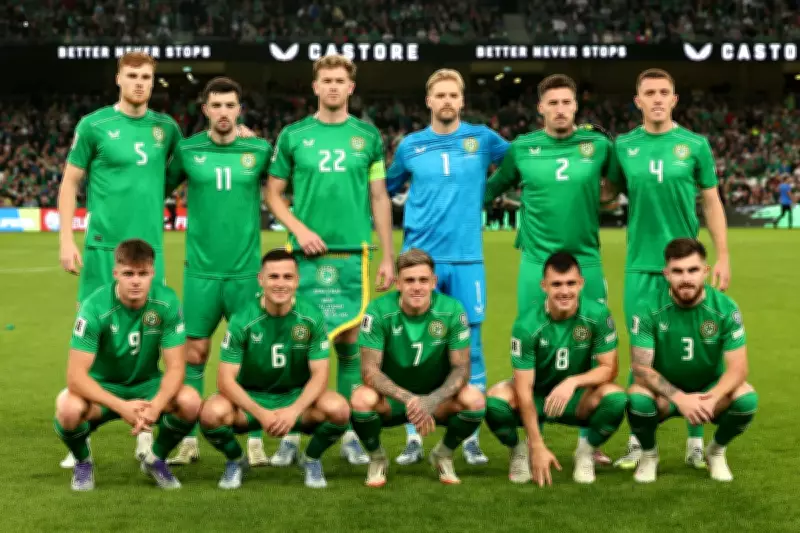
Harris emphasized the importance of supporting Irish players who represent the country with pride. "I don't want to be saying anything or doing anything that applies pressure to the men who put on the green jersey and represent our country with pride," he stated, adding that Ireland needs to "get behind our Irish soccer team" during crucial upcoming matches.
The deputy premier concluded that while Ireland's views on Israel's actions in Gaza remain clear, sporting decisions should be made separately. "I just think in this situation, it's actually the Irish soccer team that would be losing out and the Irish soccer team that would be missing out," Harris reiterated, calling for perspective in the ongoing debate.