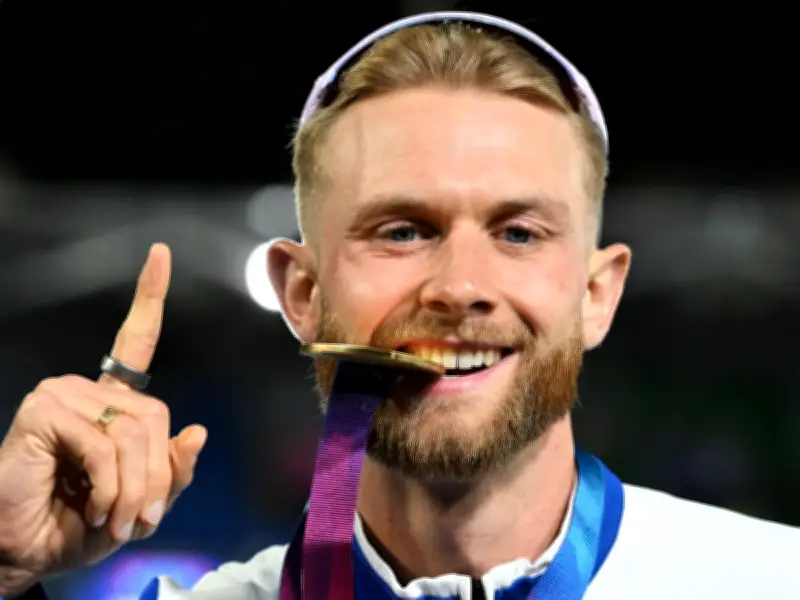
Scotland delivered 13 golds and 39 medals across 10 feelgood days of sport as Glasgow hosted the Commonwealth Games, proving the event's viability after Victoria's withdrawal. Josh Kerr, Duncan Scott, and Reuben Ward starred on the track, in the pool, and in the velodrome.
Glasgow Steps Forward
When the Commonwealth Games needed rescuing, Glasgow offered a solution built on experience instead of extravagance. After Victoria's withdrawal left the 2026 event facing an uncertain future, the city stepped in with a slimmed-down model that challenged the idea that major sporting events must always be bigger, more expensive, and more complicated.
Rather than building new venues, Glasgow returned to the Sir Chris Hoy Velodrome, Scotstoun Stadium, Tollcross, and the SEC, proving that successful Games do not need a blank cheque – they need imagination, organisation, and perseverance.
Against a backdrop of doubt, Glasgow has helped redefine what the Commonwealth Games can be. For them to flourish, they need to move away from relying on the UK and Australia, and this smaller model is the only way how. It is no coincidence that organisers are talking up multi-island hosts in the Pacific Islands or a compact multi-venue model in Africa.
King Kerr
If Glasgow 2026 belonged to one athlete, it was Josh Kerr. Scotland's biggest sporting star arrived carrying the weight of expectation and departed with the gold medal everyone had come to see. On an unforgettable night at Scotstoun, the home favourite delivered in front of a raucous crowd, with The Proclaimers providing the soundtrack to a victory that felt fitting.
The 28-year-old claimed the Commonwealth mile title in 3:54.22 after navigating a tactical, physical contest before producing a devastating burst over the final 200 metres. Australia's Cameron Myers had been billed as Kerr's biggest challenger but had no response once the Scot hit the front on the final lap. Former world champion Timothy Cheruiyot of Kenya took bronze, but this was Kerr's night from start to finish.
"This means everything. It was the championship of my season, it was the one I'd circled on the calendar," said Kerr. "It doesn't get any better than this. It was absolutely incredible. To do it in front of a Scottish crowd where I learned how to race is so special. I came here week after week growing up as a kid."
Fabulous Fachie
Neil Fachie thought his golden days were in the rear-view mirror until one last hurrah turned him into Scotland's most successful Commonwealth Games athlete by gold medals won. The visually impaired para-cycling great came out of retirement to claim a record sixth Commonwealth gold medal before adding a remarkable seventh alongside pilot Aaron Pope.
The 42-year-old had stepped away from the sport after the Paris Paralympics and returned to full-time work, but Glasgow's late appointment as host tempted him back onto the track. His opening victory in the 1km tandem was emphatic, but his lasting memory came in the sprint. A heavy crash involving Wales' James Ball left both riders battered and bruised before officials ordered a restart.
Fachie and Pope seized their second chance, producing one last golden performance to bring the curtain down on a remarkable Commonwealth career. "It might only be a little bear, but it's quite an angry one," Fachie said. "I was definitely an angry bear."
Ward Bursts onto the Scene
Reuben Ward declared his Commonwealth Games gold medal as the best day of his life after delivering a piece of Scottish history. The 21-year-old became the first Scottish man to win Commonwealth all-around gymnastics gold, producing a composed display under pressure to deliver one of the defining moments of the Games. Yet his thoughts quickly turned to England teammate Gabriel Langton, who watched from the sidelines less than 48 hours after suffering a horrific fall in the team final.
Langton slipped from the high bar, landed headfirst, and required lengthy medical treatment before being taken to hospital. Ward, who represents Scotland through his East Kilbride-born parents but trains in Manchester alongside Langton, dedicated his historic triumph to his close friend. "Seeing him lying on the floor after his fall was really frightening," Ward said. "I've known Gabe since I was about 15. We competed together at the Junior European Championships in 2022 and he's become a great friend."
Commonwealth Games Remind of Their Value
Ever since Scotland first staged the Commonwealth Games in Edinburgh in 1970, the event has faced periodic questions about its relevance. The Games began life in 1930 as the British Empire Games, prompting some critics to argue they are an outdated relic of Britain's colonial past. Others question whether they still have a place in an increasingly crowded sporting calendar.
Yet those arguments overlook what has always made the Commonwealth Games distinctive. Their value has never rested just on television audiences or Olympic-level competition, but on the stories, characters, and moments that few other sporting events can produce. Where else would you find the grandson of former Ugandan dictator Idi Amin competing in the boxing ring, a fighter from Tuvalu securing his nation's first Commonwealth medal without winning a bout, or a bowls player from Norfolk Island reaching the podium despite having no indoor facilities at home? Then there was India's David Beckham, a cyclist from the Andaman and Nicobar Islands, lining up against Ronaldo Singh Laitonjam in the sprint qualifying.
The Commonwealth Games are not the Olympics – not in scale, reach, or depth of competition – but they have never claimed to be. They occupy a different space, offering athletes and nations that might otherwise go unnoticed the chance to command the spotlight. Interest may have waned in some corners of the UK, with the BBC no longer holding the television rights and the event attracting less attention than it once did. But over the past 10 days in Glasgow, the Commonwealth Games have once again demonstrated exactly why they remain worth staging.