FA Cup Clash Reignites VAR Controversy as Leeds Progress on Penalties
This was a day that served as a powerful reminder that match officials are perfectly capable of making correct decisions without needing to be connected to colleagues in a television studio one hundred miles away. The pro-VAR lobby has been particularly vocal and assertive this weekend following a series of questionable calls made by referees, with the technology notably absent during the third and fourth rounds of the prestigious FA Cup competition.
Thrilling Encounter Decided by Spot-Kicks
Leeds United ultimately secured their place in the fifth round of the FA Cup at the expense of Birmingham City, after the two sides could not be separated during one hundred and twenty minutes of thrilling football, which was largely dominated by the home team. Against the general run of play, Lukas Nmecha had given Leeds the lead early in the second half, only for Patrick Roberts to force extra-time with a late equaliser. With no further goals during the additional thirty minutes, Tommy Doyle and Roberts missed their penalties in the decisive shoot-out, while Leeds scored all four of their efforts to advance. The Premier League side were also grateful for another crucial penalty incident that went in their favour much earlier in the match.
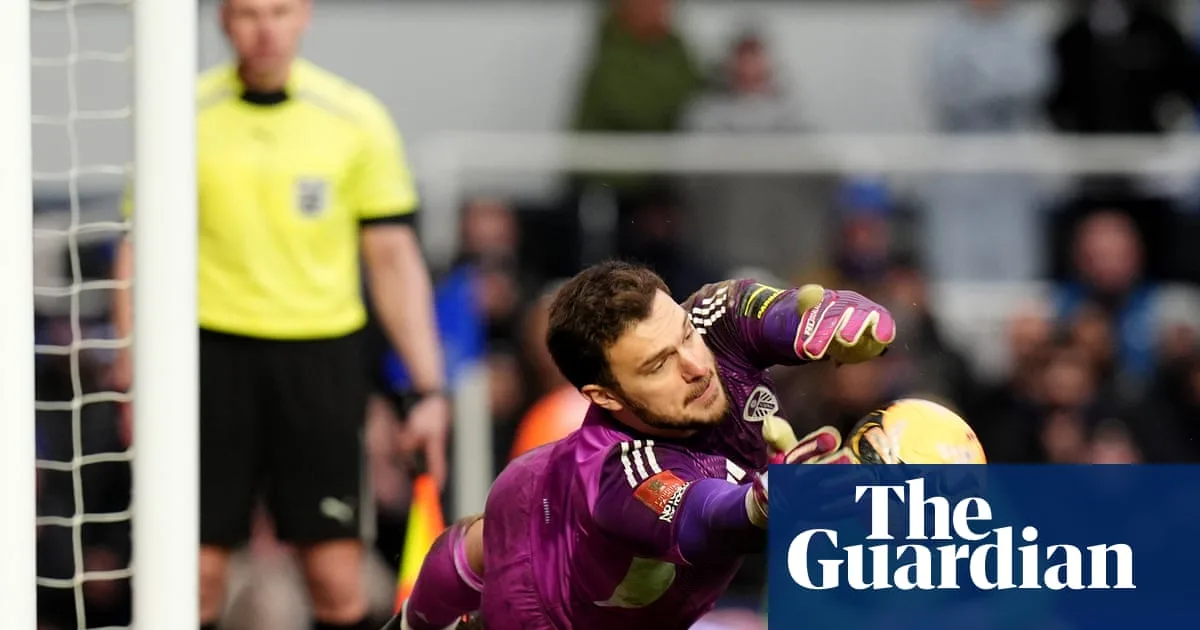
Three minutes before half-time, Birmingham winger Carlos Vicente drifted past Sean Longstaff and dramatically threw himself to the ground. From a distance, it certainly appeared to be a penalty, but referee Paul Tierney was positioned in the perfect spot. He immediately blew his whistle for a free-kick to Leeds and issued a yellow card to Vicente, who walked away looking rather sheepish. Leeds goalkeeper Lucas Perri then saved a vital spot-kick during the penalty shootout to help his side overcome their Championship opponents.
VAR Absence Sparks Intense Debate
Had the Video Assistant Referee system been in operation, we would likely have endured a three or four-minute review to verify a decision that Tierney had needed only a split-second to make. Who knows, if the officials at Stockley Park had studied the replays for long enough, perhaps they would have determined that the airflow from Longstaff's moving boot had subtly disrupted Vicente's stride? Maybe it would have been awarded as a penalty after all – only for it to be subsequently overturned because, upon closer examination, a stitch on Vicente's boot was deemed a fraction offside. In fact, Leeds were themselves denied a spot-kick at the very end of extra-time when Brenden Aaronson fell under a challenge from Patrick Roberts, but it was another marginal call that would still have been hotly disputed even if VAR had reversed the on-field decision.
The reaction to Saturday's refereeing mistakes, particularly those witnessed in the Aston Villa versus Newcastle United fixture, has been utterly maddening for many observers. Just because a referee has a poor game, it does not automatically mean that VAR is unequivocally 'a good thing'. Newcastle manager Eddie Howe even acknowledged as much after watching his team secure a 3-1 victory at Villa Park. It is a fair assumption that many supporters would be perfectly happy to swap the tiresome delays and baffling over-rules in exchange for a few more genuine errors slipping through the net, which is precisely why the temptation to introduce VAR throughout the entire FA Cup and within the English Football League should be firmly resisted.
Premier League Reality and Birmingham's Ambitions
As far as Premier League football is concerned, the horse has well and truly bolted. Every single summer we are bombarded with technical terms like 'high bar' and 'over-forensic' – only for the same old nonsense to cast a long shadow over the season that follows. For better or for worse, we must simply accept its presence now. However, actively trying to extend its influence into other competitions is pure folly.
Birmingham City, of course, will hope to see a great deal more of VAR in the years ahead. The US investment group Knighthead have enormous plans for this historic club and they are targeting a second promotion in as many seasons, having successfully returned to the Championship from League One last term. There was further heavy investment during the January transfer window too, in a concerted attempt to secure a play-off position.
Chairman Tom Wagner, the driving force behind those ambitious plans, is currently recovering from a stroke but is said to have watched the game intently. The Tilton End unfurled a heartfelt banner that read 'Get Well Soon, Tom' while the players wore TW13 – Wagner's lucky number – on their sleeves as a mark of respect. Wagner would undoubtedly have liked what he saw during a dominant first-half display.
Match Analysis and Key Moments
Though both sides made six changes to their starting line-ups, Birmingham settled into the match much quicker – which was no surprise for a team beaten only once at home in the Championship this entire season. Lucas Perri had been recalled in goal for Leeds and he produced a stunning stop in the 11th minute, turning Jay Stansfield's angled effort onto the crossbar at full stretch. It was all Birmingham during the opening period. Gabriel Gudmundsson slid bravely to cut out Vicente's dangerous cross with Stansfield and August Priske lurking menacingly. Christoph Klarer's goalbound header from Kai Wagner's corner was heroically blocked. Then Demarai Gray twice came agonisingly close, first with a strike that hit his own team-mate Priske, and then drawing another fine stop from Perri following a slick counter-attack involving Priske and Vicente.
Frustrated that his team could not find the crucial breakthrough, Vicente took matters into his own hands and was shown the yellow card for tumbling near Longstaff. Leeds were simply relieved to make it to half-time and manager Daniel Farke responded by sending on Ethan Ampadu for the woefully ineffective Facundo Buonanotte. Ampadu's presence immediately seemed to galvanise Leeds and just four minutes into the second half they took the lead. Nmecha collected a neat pass from Noah Okafor, created space on his right foot, and beat Ryan Allsop at the near post from twenty yards with a precise finish.
Birmingham did not lose heart and continued to force the pace aggressively, yet at the decisive moments they found that both luck and composure had deserted them. During two separate second-half stoppages, Blues boss Chris Davies gathered his players for impromptu team talks as they did absolutely everything to force extra-time – and they finally got their reward when substitute Patrick Roberts' 89th-minute strike from distance took a huge deflection off James Justin and flew past the helpless Perri. They really should have won it with the very last kick of normal time when Justin switched off defensively, Ibrahim Osman – who missed several good chances – struck the post, and fellow substitute Kanya Fujimoto's follow-up effort was bravely blocked by Jaka Bijol.
Match FactsBirmingham (4-2-3-1): Allsop 6; Osayi-Samuel 7 (Fujimoto 83), Klarer 7, Panzo 7 (Neumann 91, 6), Wagner 6.5; SOLIS 8 (Betteka 114), Doyle 7.5; Vicente 5 (Roberts 74, 7), Stansfield 7, Gray 6.5 (Osman 46, 6); Priske 6.5 (Duksch 74, 6). Scorer: Roberts 89. Booked: Solis, Vicente, Klarer. Manager: Chris Davies 7.
Leeds United (4-2-3-1): Perri 7.5; Justin 5.5, Bornauw 7 (Rodon 91, 6), Bijol 7, Gudmundsson 7; Tanaka 6 (Piroe 78, 6), Longstaff 6; Gnonto 6 (Aaronson 68, 6.5), Buonanotte 4 (Ampadu 46, 6.5), Okafor 6 (Bogle 82); Nmecha 7 (Calvert-Lewin 68, 6). Scorer: Nmecha 49. Manager: Daniel Farke 6. Referee: Paul Tierney 8. Attendance: 28,031.