European Football Associations Fume Over 'Extremely Unfair' World Cup Qualifying System
European football associations are voicing strong discontent over what they describe as an "extremely unfair" World Cup qualifying process, with particular criticism directed at the allocation of slots and the controversial home advantage in play-off matches. As the tournament expands to 48 teams for the first time in 2026, Uefa has been granted only 16 places, a mere increase of three from the previous 13, sparking widespread frustration among European officials.
Inadequate Representation and Historical Tensions
Senior officials argue that this minimal increase fails to provide fair representation for Europe, which boasts 55 member associations. Despite Europe still being the best-represented continent with 16 sides, compared to South America's six out of 10 teams, many feel the proportion is unjust. Historically, this issue stems from decades of European dominance in World Cup representation, leading to calls for a correction to distribute places more equitably and foster football development globally.
However, counterarguments highlight that if FIFA's goal is to maximize revenue for broader good, larger European nations are likely more lucrative than smaller teams from other continents, such as those in Concacaf. Additionally, concerns persist that diluting European participation could reduce the entertainment quality of the event, with some advocating for proportions similar to those used in the Club World Cup.
Political Dynamics and FIFA's Voter Base
The debate takes a political turn as observers note that FIFA President Gianni Infantino's voter base is largely concentrated in Asia and Africa, regions where he enjoys stronger support than in Europe. This dynamic makes it highly unlikely that additional slots will be apportioned to Uefa, as Infantino is perceived as less inclined to cater to European associations that often oppose his policies.
Home Advantage Controversy in Play-Offs
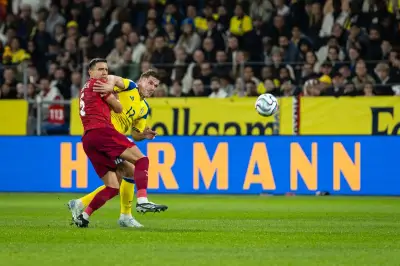
Beyond slot allocation, the issue of home advantage in play-offs has become a focal point of discontent. Specifically, Uefa's system, which FIFA approves, has seen eight out of 12 European play-off matches—including semi-finals and finals—won by the home team over the past week. Officials describe this as "extraordinarily unfair," arguing that such high-stakes matches, arguably the biggest in international football, should not grant one team a significant advantage.
There is growing hope that neutral venues will be explored for future play-offs to ensure fairness. However, Uefa is viewed as unlikely to revert to two-legged qualifiers due to calendar constraints, a system first adapted for Euro 2020 qualifiers with the introduction of the Nations League.
Future Prospects and Ongoing Discussions
The current structure, used for the 2022 and 2026 World Cups as well as Euro 2024, is expected to persist for World Cup qualifiers, as European countries prioritize the higher revenues generated by the Nations League. Nevertheless, discussions are underway regarding potential reforms, including the use of neutral venues in play-offs.
Uefa is also engaged in ongoing talks to evolve qualification formats for the European Championships, with the exact structure for Euro 2028 set to be confirmed in May. As tensions simmer, the call for a more equitable and transparent qualifying process continues to gain momentum across European football circles.