Angelo Cijntje can look back now and smile. It was September 2023 and Curaçao’s trip from Trinidad to Martinique for a Concacaf Nations League game had been complicated on matchday by the lack of a charter flight. “A small propeller plane had to shuttle back and forth, flying players over in groups of six,” Cijntje, the performance coach, says. “The starting XI made it on time, but the subs came in while the game was under way. Their luggage didn’t make it, so they had nothing but their boots, shin pads and maybe a pair of socks.”
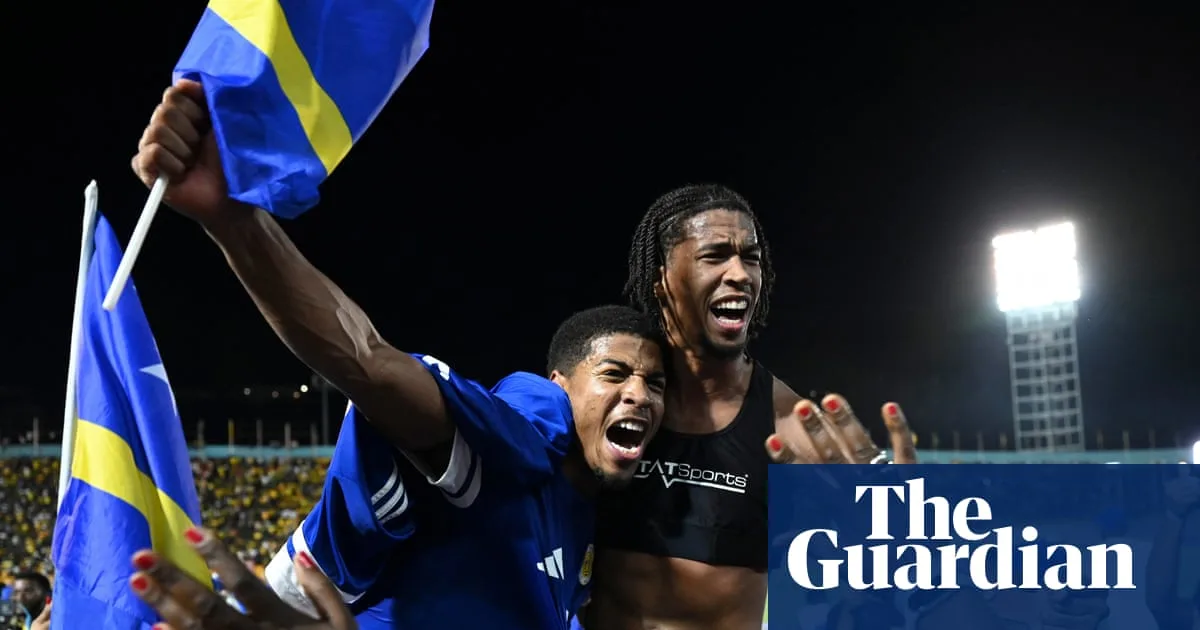
Wouter Jansen, Curaçao’s team coordinator, was also part of that trip. “It’s worthy of a film,” he says. “Those are the kind of adventures you never forget.” Curaçao are about to embark on unforgettable adventures of a very different kind. Remarkably, less than three years after that propeller plane made its way across the Caribbean Sea for the team to lose 1-0 in front of 913 people, they face Germany in Houston on Sunday in their first World Cup match.
The journey began in earnest in about 2003 when Cijntje and Jansen, then playing in the Dutch second division, got a call from the president of the Netherlands Antilles football federation, which included Curaçao as a Dutch colony. Jean Francisca had been scouting players with Curaçaoan roots and spotted that Cijntje and Jansen were born in Willemstad, the capital. On the phone he outlined an ambition to qualify for a major tournament. Both signed up but what they found in Willemstad on their first call-up offers another indication of how far things have come. “The hotel wasn’t properly arranged, the sessions weren’t structured and we didn’t have training kits,” Cijntje says.
The project gathered pace when Curaçao left the Netherlands Antilles in 2010 to become an autonomous country within the Kingdom of the Netherlands. The following year Curaçao became a Fifa member and from 2015 several Dutch coaches were appointed, starting with Patrick Kluivert, whose mother is Curaçaoan. More Dutch-born players joined, including Netherlands youth internationals such as Eloy Room, who had a deep connection with Curaçao, his father’s country. When Room was young, his mum gave him a book about Curaçao’s sporting history that featured Ergilio Hato, a goalkeeper who in 1952 was part of the first Netherlands Antilles team to play at the Olympics. “I would read that book every night,” says Room. “I told my mother: ‘It would be great if I could become a legend for Curaçao too.’”
Curaçao is the smallest nation, by population (about 156,000) and land area (171 square miles), to have qualified for a World Cup. Cijntje and Jansen joined the backroom staff in 2022, but their spell has not been without hiccups. That year the former Feyenoord and Ajax player Dean Gorré, whose son Kenji is part of the World Cup squad, became the technical director and he says a period of board instability created problems. “Hotel rooms were sometimes not paid, with players occasionally even having to pay for their flight tickets upfront,” he says. “It was a low point, but it also made the squad more resilient and tighter as a group.”
Dick Advocaat’s appointment as head coach in January 2024 marked another turning point. “More resources were invested in the national team,” Cijntje says, “with sponsors involved and better conditions as a result, which had positive knock-on effects, such as attracting more players like [PSV’s] Armando Obispo and Tahith Chong [of Sheffield United, the only player in the squad born in Curaçao].” Curaçao were well prepared for World Cup qualifying and had an advantage with the co-hosts, the United States, Mexico and Canada, taking places automatically. “That became a real trigger for all of us,” Cijntje adds.