Cracks Emerge in Celtic's Player Trading Strategy
For years, Celtic Football Club has proudly marketed itself as a gateway to Europe's elite leagues. The proposition to overseas talent has been clear and compelling: sign a multi-year contract, excel in Scottish football, make your mark in European competitions, and within two or three seasons, secure a lucrative move to a more demanding environment. This model promised mutual benefit – Celtic would receive substantial transfer fees for developed assets, while players would advance their careers and earnings. The success story of Virgil van Dijk's progression from Parkhead to global stardom once stood as the blueprint.
Pipeline Blockages and Frustrated Ambitions
Today, that efficient system appears clogged and dysfunctional. While the club occasionally turns a quick profit on players like Matt O'Riley, there are now too many obstacles preventing the smooth operation of this player trading strategy. The situation has created a squad containing individuals whose ambitions have been thwarted, directly impacting performance levels on the pitch.
A revealing incident occurred recently when manager Martin O'Neill disclosed that forward Daizen Maeda believed he was departing for German side Wolfsburg last summer. Maeda had reportedly cleared his locker at the Lennoxtown training ground and was preparing his family for relocation. Celtic blocked the move because they had sold strikers Kyogo Furuhashi and Adam Idah in previous windows and lacked ready-made replacements. While Maeda remains a committed professional, his early-season form noticeably dipped – a natural consequence for any player whose career progression has been artificially halted.

The Reo Hatate Conundrum
The case of Japanese midfielder Reo Hatate further illustrates the growing problem. Signed alongside Maeda four years ago, Hatate attracted interest from Premier League side Brighton in the summer of 2024. After two and a half years in Glasgow, the player was keen on the move, but Celtic decided against it. A year later, with Serie A's Udinese showing strong interest, Hatate's representatives communicated his desire to move to Italy. Amid what has been described as a shambolic transfer window, the club again informed him he was going nowhere.
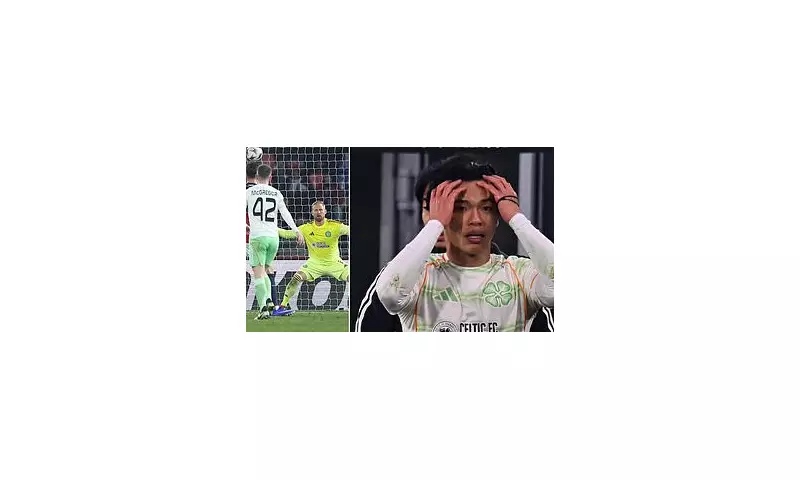
This context is crucial when analysing Hatate's recent dismissal during Celtic's Europa League match against Bologna. While there can be no excuse for the midfielder's "idiocy" in collecting two needless yellow cards in quick succession, his frustration is palpable. Had the club's player trading model been functioning optimally, a younger, hungrier talent would likely have been in his position, and Celtic would have already profited from his sale. Instead, O'Neill fielded a player whose "head went in the space of a few minutes," showcasing a clear cause-and-effect relationship between transfer policy and on-pitch discipline.
Ageing Assets and Goalkeeping Concerns
The issues extend beyond outfield players. Celtic's asset management has also been questioned regarding goalkeeper Kasper Schmeichel. While the Dane has made vital saves this season, errors are becoming more conspicuous. His stationary position as Jonathan Rowe's shot flew past him for Bologna's equaliser is not an isolated incident. Schmeichel turns forty later this year, and it is widely acknowledged he is not the goalkeeper he once was.
Former Celtic keeper Joe Hart retired at 37 after three fine years at the club. The failure to proactively address the goalkeeping position in the summer – whether by promoting Viljami Sinisalo or signing a new number one – highlights a broader failure in forward planning. For a club known for its financial reserves, its management of playing assets is increasingly seen as a weakness.
Resilience Amidst the Chaos
Despite these systemic issues, Celtic displayed remarkable resilience in Bologna. Reduced to ten men after Hatate's dismissal, the team mounted a colossal defensive effort, with Auston Trusty and Liam Scales particularly magnificent in a rearguard action reminiscent of past European heroics. They secured a valuable 2-2 draw that leaves their Europa League qualification fate in their own hands – a simple victory against already-eliminated Utrecht will see them progress.

Manager Martin O'Neill has instilled organisation and structure since his return, clearly lifting spirits within the squad. However, the physical toll of such a gruelling shift, often operating in a 6-3-0 formation without an attacking outlet, raises concerns ahead of a critical domestic fixture.
Title Race Implications and Immediate Challenges
All eyes now turn to Tynecastle, where Celtic face league leaders Hearts this Sunday. Hearts players watching from Scotland would have been encouraged by Celtic's exhausting hour with ten men in Italy. A defeat for Celtic would leave them nine points behind with only fifteen games remaining, pushing their title defence to the brink. The situation would be critical.
Paradoxically, with Hatate suspended for the Utrecht match, O'Neill might consider starting the midfielder against Hearts. It becomes a question of trust – both the manager's trust in the player's mindset, and the player's potentially misplaced trust in the club's willingness to facilitate his career progression. The potential debut of new loan signing Tomas Cvancara adds another layer of intrigue to a fixture Celtic simply cannot afford to lose if they are to retain realistic hopes of silverware.
The broader picture reveals a club at a crossroads. The once-celebrated "rinse and repeat" selling model is faltering, creating a squad containing frustrated talents and ageing assets. While spirit and organisation under O'Neill provide short-term hope, resolving these deep-seated structural issues in player trading and squad management will be essential for Celtic's long-term competitiveness both domestically and in Europe.