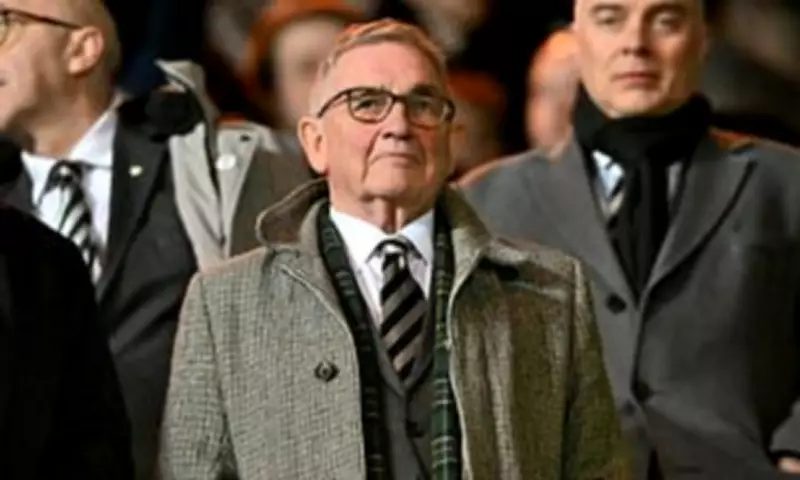
Celtic's Interim Chairman Extends Olive Branch Amid Fan Fury
After six months of escalating tension and public discord, Celtic's interim chairman Brian Wilson has taken a significant step toward reconciliation. Last week, Wilson agreed to engage in direct discussions with various supporter groups, aiming to address the multitude of issues that threaten to fracture the historic football club. This move comes as widespread dissatisfaction permeates the fanbase, with concerns mounting over the club's operational strategies at every level.
Core Grievances Driving Fan Discontent
The primary frustrations articulated by Celtic supporters revolve around three critical areas: a perceived flawed transfer policy, the apparent accumulation of substantial cash reserves without clear purpose, and a severe lack of transparent communication from the club's leadership. These grievances reached a boiling point recently, culminating in an organised boycott of Saturday's Scottish Cup match against Dundee. This protest action underscores the depth of alienation felt by many loyal fans.
The Pressing Questions for Brian Wilson
As Wilson prepares for these crucial meetings, several urgent questions demand answers. Daily Mail Sport's analysis highlights the key issues likely to dominate the discussions.

Where is CEO Michael Nicholson?
This represents a fundamentally fair opening inquiry. While Wilson deserves some acknowledgment for his belated willingness to engage with organised fan groups, he has explicitly stated that his role as chairman is only temporary, following Peter Lawwell's departure. Michael Nicholson, as the club's chief executive, holds responsibility for day-to-day operations. He is the individual who should logically be leading these dialogues with supporters.
Since assuming his current position, initially on an interim basis in 2021, Nicholson has largely avoided public scrutiny. His media appearances have been restricted to occasional interviews on the club's own television channel. Notably, he was absent from the unveiling of new manager Wilfried Nancy. The fact that Nicholson apparently sees no issue with Wilson spearheading these fan meetings only reinforces growing perceptions that he may be ill-suited for the executive role.
Why Did Brendan Rodgers Depart the Club?
With Nicholson consistently avoiding mainstream media responsibilities, no satisfactory explanation has been provided for the mysterious resignation last year of Brendan Rodgers, Celtic's most decorated living manager. To date, supporters have only had access to Dermot Desmond's remarkable character critique, published on the official club website. That statement accused Rodgers of being "divisive, misleading and self-serving," attributing recent failures to "one individual's desire for self-preservation at the expense of others."
Rodgers, now managing in Saudi Arabia, has not publicly responded and is unlikely to do so. However, the central mystery remains unresolved: why would a manager who publicly reaffirmed his commitment to Celtic just days prior suddenly choose to walk away?
Questionable Appointments: Paul Tisdale and Wilfried Nancy
Significant concerns surround the appointments of both Paul Tisdale as head of football operations and Wilfried Nancy as manager. Tisdale, despite success at Exeter City, experienced a disastrous tenure at Stevenage. His managerial experience was confined to the lower tiers of English football, raising doubts about his suitability for a major operational role at Celtic.
Nancy, while an MLS Cup winner with Columbus Crew, had only begun his managerial career four years prior to his Celtic appointment. His team had finished seventh in the Eastern Conference before his move. Supporters rightly question the recruitment process that led to these appointments. Who constituted the interview panel? If external observers could identify potential issues from their CVs alone, how were these candidates approved?
Who is Truly Running Celtic?
A revealing incident occurred in October when Martin O'Neill received a phone call from Dermot Desmond, not CEO Michael Nicholson, regarding a significant club matter. This pattern, where major decisions appear to be directed by the Irish billionaire rather than the executive team, has become normalised, though it is far from standard corporate practice.

Desmond, owning just over 34% of Celtic, is the largest single shareholder but does not possess outright ownership. While his influence is substantial, his voice should not be the sole one heard, especially given his non-executive director status. Wilson must clarify why Celtic operates under this curious hierarchy where one individual's word seems paramount.
The Mystery of the £77 Million Cash Reserve
Financial reports indicate Celtic currently holds approximately £77 million in cash reserves. While maintaining a prudent financial buffer is sensible, the purpose behind amassing such a colossal sum remains opaque. A professional football club's primary function is to field the best possible team for its supporters. By failing to reinvest substantial profits into player recruitment, Celtic appears to be neglecting this core objective.
Speculation has suggested these funds are earmarked for redeveloping the outdated South Stand, but the board has indicated this project may not be viable. In the absence of a clear strategic plan, the rationale for this financial stockpiling seems increasingly inexplicable.
The Ongoing Green Brigade Suspension
This contentious issue originated in November when 200 members of the ultras group, the Green Brigade, received an initial six-match ban due to safety concerns. The suspension has since been extended indefinitely, with no resolution in sight. While the club maintains it had no alternative but to take disciplinary action, the prolonged absence of these vocal supporters is negatively impacting matchday atmosphere.
Home games over the past three months have been notably subdued, and no party benefits from the current stalemate. If Wilson could propose a definitive endpoint to this dispute, it would represent a major step toward rebuilding trust with a significant segment of the fanbase.
What is Celtic's Grand Strategic Vision?
Perhaps the most startling revelation from November's tumultuous AGM came from Ross Desmond, son of Dermot Desmond, who outlined Celtic's perceived position in European football's hierarchy. He argued that the financial landscape has created an expanding gap, making progress in Europe risky and potentially threatening the club's stability. Many interpreted this as a surrender of European ambitions.
No reasonable fan expects Celtic to compete financially with European giants like Paris Saint-Germain or Real Madrid. However, the club's recent record—five consecutive Champions League qualifying defeats to teams like AEK Athens, Cluj, and Ferencvaros—suggests systemic underpreparation. There is no inherent reason why Celtic cannot emulate a club like Club Brugge, operating smartly in the transfer market, consistently aiming for the Champions League knockout stages, while dominating domestically. A clear, ambitious statement of intent from the leadership is desperately needed.
The forthcoming discussions between Brian Wilson and Celtic supporters represent a critical juncture for the club. Whether these talks can bridge the widening chasm between the boardroom and the stands remains to be seen. The answers provided, or the lack thereof, will likely determine the immediate future of one of Britain's most storied football institutions.