In a significant development for European football, Barcelona has officially announced its withdrawal from the European Super League project, leaving Real Madrid as the sole remaining club involved in the controversial breakaway competition. This decision marks a pivotal moment in the ongoing saga surrounding the proposed league, which has faced widespread opposition since its inception.
The Super League's Rapid Unraveling
The European Super League was initially launched in 2021 with a total of twelve clubs signing up to participate. However, the project quickly encountered fierce backlash from fans, governing bodies, and the broader football community. This public outcry prompted a swift retreat from many of the founding members.
Premier League Clubs Lead the Exodus
The six English Premier League clubs involved—Arsenal, Chelsea, Liverpool, Manchester City, Manchester United, and Tottenham Hotspur—were among the first to withdraw their participation following the intense fan reaction. Their departure set a precedent for other clubs to reconsider their involvement.

Spanish club Atletico Madrid and Italian giants AC Milan and Inter Milan subsequently followed suit, exiting the project. This left only three clubs remaining: Barcelona, Real Madrid, and Juventus. Juventus further reduced the group when it withdrew in 2024, opting instead to rejoin the European Football Clubs (EFC) association.
Barcelona's Formal Withdrawal Statement
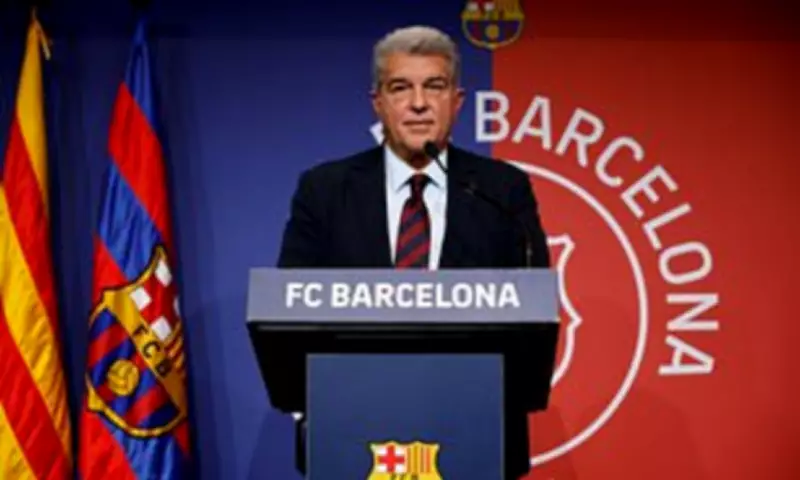
In a statement published on Saturday morning, Barcelona confirmed its definitive exit from the Super League. The club stated, 'FC Barcelona hereby announces that today it has formally notified the European Super League Company and the clubs involved of its withdrawal from the European Super League project.' This notification leaves Real Madrid as the last club still formally attached to the initiative.
Laporta's Evolving Stance on UEFA Relations
Barcelona president Joan Laporta had previously expressed confidence in 2023 that a Super League would still be launched. However, his position shifted notably last year as he emphasized Barcelona's desire to foster closer ties with UEFA, European football's governing body.
Laporta articulated this strategic pivot in October, stating, 'We are committed to building bridges between the Super League and UEFA. Barça's position is clear. Those affected and those concerned are already aware of that. We are in favour of pacification because there is a way forward for the clubs in the Super League to return to UEFA.'
He further elaborated on Barcelona's alignment with established football institutions, adding, 'We feel very close to UEFA and the EFC. It is important that we are there and that we implement everything that can be improved, both in UEFA and in the EFC.' This rhetoric underscores a broader reconciliation effort within European football's governance structures.
Timing and Broader Context
Barcelona's withdrawal comes just four days after Laporta confirmed that his board would resign ahead of standing for re-election in the club's upcoming elections next month. This timing suggests a strategic realignment of the club's priorities and external relationships as it prepares for a new electoral cycle.
The Super League project, once envisioned as a transformative force in club football, now appears increasingly isolated with only Real Madrid's continued involvement. The mass departures highlight the enduring influence of fan sentiment and the central role of traditional governing bodies like UEFA in shaping the sport's future.