Atlanta's Meteoric Rise as America's Soccer Capital
The eccentric rapper, actor, and trendsetter Andre Benjamin, better known as Andre 3000, once famously declared, 'The world's a stage and everybody gots to play their part.' Soon, the global stage will arrive at Atlanta's doorstep, and this vibrant Southern metropolis stands fully prepared to embrace its starring role. As the clock steadily counts down toward the 2026 FIFA World Cup, Atlanta has secured a pivotal position in the tournament, hosting one of the two prestigious semifinal matches of the world's most beloved sporting spectacle.
From Football Territory to Soccer Hotbed
Atlanta's selection as a host city was not merely due to its status as a major urban center in the American South. Over the past decade, the 'Big Peach' has methodically solidified its reputation as not only a burgeoning hub for soccer but as the undisputed capital of American soccer. This transformation represents a significant cultural shift in a region historically dominated by American football.
The American South has long been considered sacred ground for American football. Institutions like Georgia Tech in Atlanta and the University of Georgia in nearby Athens each boast four college national championships. Mercedes-Benz Stadium annually hosts both the SEC Championship and the Peach Bowl, alongside serving as home to the NFL's Atlanta Falcons. Beyond football, the Atlanta Braves remain the Deep South's sole Major League Baseball franchise, with Ted Turner's national broadcasts beginning in 1977 showcasing the city to the entire nation.

For decades, however, soccer struggled to establish meaningful roots in the region. Atlanta briefly hosted the Atlanta Chiefs during the original North American Soccer League era, but failed to make 'The Beautiful Game' resonate with local audiences. This all changed dramatically in 2017, catalyzed by billionaire Arthur Blank's visionary stadium project.
The Stadium That Changed Everything
'They conducted a comprehensive feasibility study that revealed we actually have a highly motivated soccer community here in Atlanta,' explained Heather Sautter, Vice President of Corporate Communications for AMB Sports + Entertainment, the parent company overseeing both Atlanta United and the Falcons. 'Arthur Blank decided, let's just make it happen.'
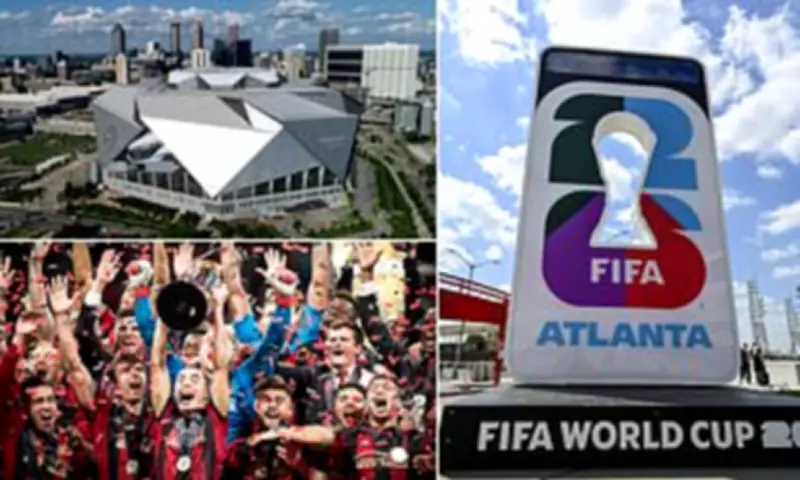
Mercedes-Benz Stadium stands as one of the world's most impressive sporting cathedrals. At just under nine years old, the facility maintains state-of-the-art status, offering both luxury seating (with 20% designated as premium) and remarkably affordable concession prices, recognized as the cheapest in the entire United States. Stadium designers intentionally created a versatile space that adapts to different sports, ensuring football games don't feel like soccer matches and vice versa.
Representatives from the Metro Atlanta Chamber of Commerce note a remarkable statistic: throughout the stadium's history, total attendance for soccer matches has surpassed that for football games, and they confidently assert 'it will never go back.'
Atlanta United's Immediate Impact
The launch of Atlanta United FC as an MLS expansion team in 2017 marked a turning point. The team captivated American soccer from its inception, winning the MLS Cup in just its second season before a record crowd of 73,019 spectators. This victory represented the first major professional sports championship for an Atlanta team since the Braves' 1995 World Series triumph.
This instant success fostered sustained community support that continues today. Even during the club's most challenging season last year, when Atlanta United finished 14th out of 15 Eastern Conference teams, average attendance remained strong at 43,992 fans per match—nearly 13,000 more than their closest rivals.
'The fans who simply want to support a winning team will come and go,' Atlanta United sporting director Chris Henderson told the Daily Mail. 'But there exists a really strong foundation of core supporters who have followed this team through all its ups and downs. This represents a genuine connection between the club's identity and its place within the city.'

Building a Comprehensive Soccer Ecosystem
Atlanta's soccer appeal extends beyond local residents in the South's most prosperous city. The metropolitan area hosts distinct communities of expatriates from European nations like Belgium, Germany, and the United Kingdom, alongside significant populations from Mexico, Central America, and emerging soccer nations like South Korea.
'It was crucial to implement the right infrastructure from the beginning,' Sautter emphasized. 'We engaged in extensive groundwork within soccer communities, understanding their needs and desires. This represented a truly grassroots effort to bring everyone along with us.'
The city and Atlanta United have responded to growing demand by expanding opportunities across Georgia. MARTA, the local transportation authority, is developing its 'StationSoccer' program, constructing pitches in partnership with a local nonprofit. Five facilities are already operational with five more underway. Simultaneously, Atlanta United's GA 100 initiative aims to build 100 soccer pitches statewide, with 18 already completed from Dalton in northern Georgia to Brunswick on the Atlantic coast.
Major Infrastructure Investments
Two landmark developments underscore Atlanta's commitment to soccer's future. First, the $250 million Arthur M. Blank US Soccer National Training Center, a sprawling 200-acre complex located just 30 minutes south of downtown Atlanta. This facility features 17 outdoor playing surfaces, 200,000 square feet of indoor space, and capacity to host all 23 national teams fielded by the US Soccer Federation.
'One essential requirement is year-round playing capability,' USSF CEO JT Batson explained. 'That eliminates significant portions of the country. Then you need proximity to a major international airport. Once we determined Atlanta was the ideal location, we explored thoroughly and definitely found everything we needed here.'
Second, Atlanta has been awarded an NWSL expansion franchise scheduled to begin play in 2028. While the team remains unnamed, there's strong confidence about its competitive potential.
'Knowing we'll be an expansion team means there will be more patience initially,' said Josh Blank, Arthur Blank's son, who plays a key role in developing the NWSL team. 'But it fundamentally comes back to what we want to represent.' Referencing Atlanta United's journey, Blank added, 'There were inevitable growing pains, but they created incredibly exciting soccer. We hope to replicate that with our women's team—ideally winning many games while playing an attractive style.'
World Cup Preparation and Legacy
With this comprehensive background, Atlanta's selection as a World Cup host city appears inevitable. The city will stage eight matches including Round of 32, Round of 16, and semifinal contests. Visitors will experience trademark Southern hospitality alongside abundant accommodations, with tens of thousands of hotel rooms within a 15-minute walk of Mercedes-Benz Stadium (which will receive temporary renaming for the tournament).
Atlanta has evolved beyond merely appreciating soccer to fully embracing the sport as integral to its civic identity. Now, with the World Cup less than 70 days away, the entire ATL community prepares to welcome the world to the city 'where the players play,' ready to demonstrate how a traditional football heartland transformed itself into America's undisputed soccer capital.