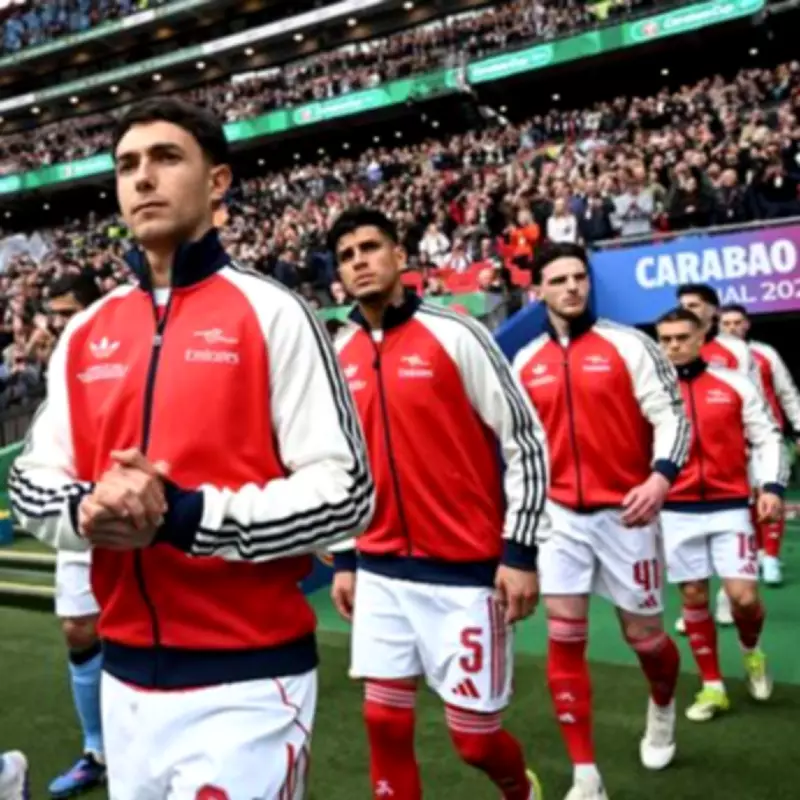
Mounting Arsenal Withdrawals Should Force FIFA to Rethink International Breaks
Eleven Arsenal players have now either pulled out of international duty or left their national teams' training camps, prompting rival fans to criticise the Gunners and question their players' morals. This situation has sparked a heated debate over player commitment to their countries and fuelled accusations that Arsenal are pressuring federations to send their stars home early.
Club versus country remains football's perennial tug of war. After Martin Zubimendi's withdrawal from the Spain squad, the total of Arsenal players opting out has reached eleven ahead of the crucial run-in. But is anyone truly surprised? The Gunners are entering the biggest period in their recent history, with a famous Treble still on the cards. Arsenal's next five fixtures include three cup quarter-finals and a potential Premier League title decider.
The Pressure of Fixture Congestion
Like it or not, players whose nations are only involved in friendlies this month are going to be extra careful. On the other hand, Riccardo Calafiori and Viktor Gyokeres will be doing everything in their power to help Italy and Sweden respectively in their World Cup qualifying play-off finals. For those returning to London Colney, including Noni Madueke, Declan Rice, and Bukayo Saka, their own countries might feel that they're better off back at their clubs to avoid jeopardising long-term fitness ahead of the World Cup.

It's also worth noting that the full extent of Arsenal's injury woes will only be discovered when their line-up against Southampton is announced on Saturday night. But one thing is certain: FIFA cannot continue to schedule an international break so late in the standard European season, or football will continue to eat itself alive. The international calendar is chock-a-block at the best of times, but when vital play-off matches and dead-rubber friendlies are shoved between the knockout phases of club competitions, something needs to be done.
FIFA's Calendar Adjustments and Future Proposals
FIFA have already shown their willingness to adapt by merging the September and October breaks into a three-week long window, the first of which we'll see later this year. This change will prevent the majority of top-level domestic leagues in Europe from pausing three times in as many months. It will give international managers an extended chunk of time to work with their players, and likely result in fewer players pulling out when they know a club fixture isn't just a few days away.
So, without counting any chickens before they've hatched, how about merging the November and March breaks too? Let's consider the middle of February, sufficient time after clubs' winter breaks and, in this hypothetical scenario, before the Champions League knockouts. This would allow the end of a qualifying cycle to flow straight into the play-offs, and instead of fans scrambling to plan for a summer tournament with just over two months' notice, they'd have significantly longer.
Logistical Challenges and Fair Play Considerations
There are obvious logistical hurdles in having the play-offs take place straight after qualifying, but there should be enough expertise within FIFA and the different confederations to pre-book venues. And speaking of venues, surely it makes more sense for play-off matches to take place at neutral ones rather than giving some teams home advantage based on a draw? Granted, there'll no doubt be complaints from Premier League obsessives about having a longer break than usual, but at least fans would only moan twice a season instead of four times.
Simply put, FIFA cannot continue to squeeze in an international window at a pressure point of the season when they're already pushing players and staff to their limits with a gluttony of fixtures. Don't blame Arsenal; blame the game. The mounting withdrawals from the Gunners' squad highlight a systemic issue that demands urgent reform to balance club and country commitments effectively.