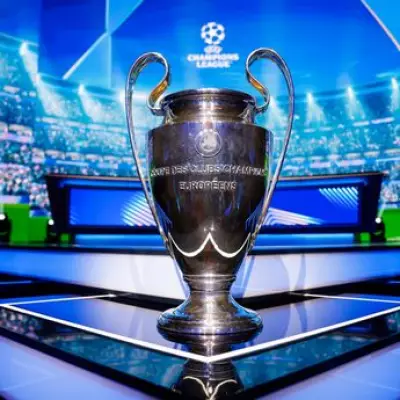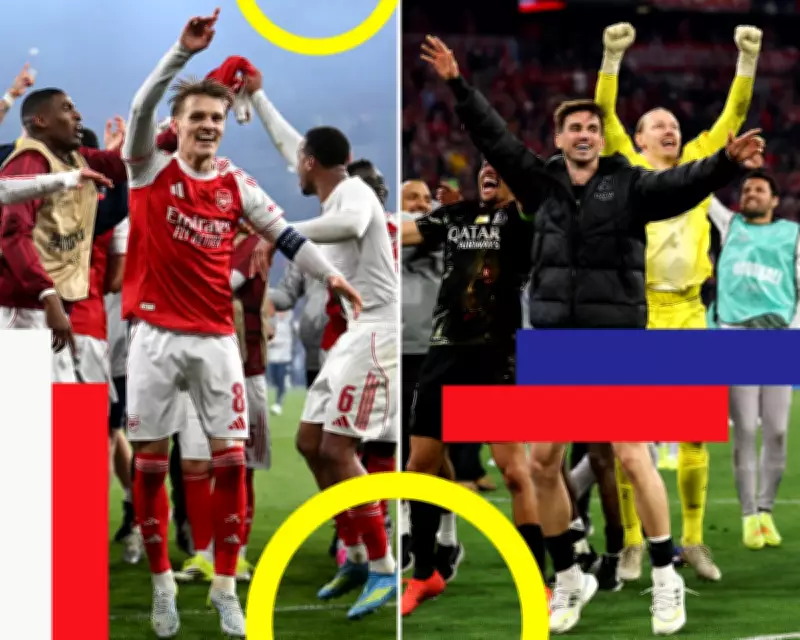
Arsenal and Paris Saint-Germain have secured their places in the Champions League final, set to take place in Budapest. Here is a detailed look at how both teams reached the summit of European football and the elements that may determine the eventual winner.
PSG's Defensive Masterclass
Paris Saint-Germain will attempt to become the first club outside Real Madrid to win two consecutive European Cups since AC Milan in 1990. After a nine-goal thriller in the first leg, Vincent Kompany promised more from Bayern Munich, but the second leg told a different story. PSG showcased defensive discipline, with attacking players committed to pressing opponents high. Luis Enrique's side never lost control of the tie, despite Bayern registering 33 shots compared to PSG's 22.
Khvicha Kvaratskhelia, who plays like an old-style winger, set up Ousmane Dembélé's goal while also pressing hard and high. Bayern found space scarce until Harry Kane's late consolation. Luis Enrique's team remains largely unchanged from last season, sticking to a proven formula. A year older but still youthful, PSG's project has taken years and billions of euros since the Qatari takeover in 2011, but now delivers the success long dreamed of.

Arsenal's Steady Rise
Arsenal's Champions League journey has followed a linear progression: quarter-finals, semi-finals, and now the final over the past three seasons. If they beat PSG and secure three more Premier League wins, May 2025 could be the most glorious month in club history. Despite a gruelling campaign with occasional wobbles, Mikel Arteta's determination, bordering on stubbornness, has paid off. Thierry Henry, Arsenal's captain in the 2006 final, praised Arteta: "You have to give this man a lot of credit because he came under a lot of criticism. I was in that too, I will be honest, for a very long time."
Bukayo Saka, scoring the decisive goal against Atlético Madrid, embodies the value of homegrown talent. Myles Lewis-Skelly, who broke through as a left-back but was educated in midfield, has waited his turn. Dropping from prominence may cost him a World Cup spot, but Thomas Tuchel may value his versatility. Arteta, often seen as risk-averse, selected the 19-year-old in a Champions League semi-final, defying that perception. Lewis-Skelly, previously a victim of tough love, dovetailed with Declan Rice to dominate midfield against Atlético. Arteta has also shown faith in 16-year-old Max Dowman, who was on the bench. Lewis-Skelly is now in line to play in Arsenal's biggest match in two decades, with Saka fresh after an injury-hit season.
Player of the Week: Marquinhos
Marquinhos, at PSG since 2013, embodied defensive effort in Munich, organising the backline to blunt Kane, Michael Olise, and Luis Díaz. Willian Pacho was an able lieutenant, while Warren Zaïre-Emery was nursed through as a stand-in right-back. "Tonight we showed that we also know how to defend, how to battle like crazy," Marquinhos said.
They Said It
Vincent Kompany was unhappy with refereeing across the semi-final: "We have to look at some of the phases that were decided by the officials across the two games... If we look at both legs probably too much went against us." Two handball calls were crucial: Nuno Mendes escaped a second yellow card, and João Neves handled in his own box, but the penalty was not given because handball is not handball when a ball is played by a teammate.
The Pundit's Chair
Former Arsenal player Stewart Robson, on Arteta's touchline antics: "If I was running down the side, I'd make sure I actually topped him. I'd tackle the ball and tackle him at the same time." This came after ESPN host Dan Thomas asked: "At what stage, as the opposition coach, do you want to punch Arteta in the face?"
Looking Ahead
PSG's defensive resilience against Bayern disproves the notion that the final will pit English grit against French attacking flair. Both managers seek control in different forms. For Arsenal, there are echoes of the 2006 final against Barcelona, led by Ronaldinho. Gunners fans grimace at Jens Lehmann's early red card and the impact of Barcelona supersubs Henrik Larsson and Juliano Belletti.

Budapest will host the fourth final between clubs from European capital cities, after Benfica vs Real Madrid (1962), Real Madrid vs Partizan Belgrade (1966), and Ajax vs Panathinaikos (1971). Arsenal can right the wrongs that have haunted them, watching as Chelsea collected the Champions League twice. Revenge is also in the air: last season, PSG knocked Arsenal out in the semi-finals.