Anfield's Roar Falls Silent as PSG Crush Liverpool's European Hopes
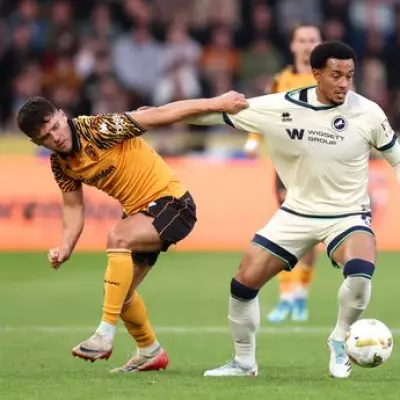
Arne Slot had implored Anfield to unleash its legendary decibels, but even the stadium's fabled atmosphere proved insufficient to inspire Liverpool against a clinical Paris Saint-Germain. The stage was meticulously set for one of Liverpool's classic comeback nights, yet this current iteration of the team, facing the reigning European champions, found no path to salvation.
The Weight of History and the Reality of the Present
Historically, Liverpool has demanded miracles from its hallowed ground, and Anfield has often delivered. Precedent fosters belief, weaving into the very mythos of great stadiums that develop their own life and identity. However, a football club cannot simply surrender its fate to an arena, hoping it will accomplish what the players, management, and executive body cannot. No ground, not even the revered Anfield, possesses an infinite capacity for miracles.
Just because Liverpool famously overturned a 3-0 deficit against Barcelona in 2019, there was no logical reason to believe they could overhaul a two-goal deficit against Paris Saint-Germain in 2026. Anfield certainly played its part on a blustery evening where early drizzle escalated into teeming rain. The pre-match rendition of "You'll Never Walk Alone" was suitably stirring, and the noise from both sets of supporters remained boisterous throughout. Yet, it was ultimately not enough to alter the course of destiny.

A Tie Decided in Paris and Sealed on Merseyside
In truth, this Champions League tie was effectively decided during the first leg in Paris the previous week. This would arguably have remained the case even if Liverpool had mounted a more significant comeback, simply because PSG had failed to build the commanding lead their superiority suggested they deserved. Liverpool, to their credit, came closer than many anticipated. They arguably exerted more pressure on PSG's defence than during last season's encounters, even though the 4-0 aggregate scoreline appears far more damning than last year's penalty shootout defeat.
While progressing one round further than the previous campaign, few would characterize this season as an improvement for Liverpool. This performance against PSG ranked among their better showings in recent weeks. In isolation, it might have been dismissed as a simple case of being beaten by the superior side over two legs. Yet, all matches exist within a broader context. This result does not necessarily edge manager Arne Slot closer to the exit, but it decisively denies him the most obvious—and perhaps the only—escape route from mounting pressure.
Critical Moments and Crushing Misfortune
The narrative might have unfolded differently but for two pivotal moments. First, Matvey Safonov's crucial save from Milos Kerkez, followed immediately by Marquinhos's brilliant block on Virgil van Dijk's effort around the half-hour mark. Second, and perhaps more devastating, was the injury to Hugo Ekitiké a minute prior. Liverpool's liveliest player in the opening exchanges slipped under no pressure, seemingly damaging his Achilles tendon. After three failed attempts to stand, he was carried off the pitch, his World Cup participation now in serious doubt.
The role of misfortune in the decline of great teams should never be underestimated. This incident marked only the third time Ekitiké and Alexander Isak had started a game together for Liverpool. Isak himself was a significant gamble, starting his first match in five months—a wild throw of the dice from Slot, perhaps recalling their effective partnership away at Eintracht Frankfurt. Slot had admitted he did not expect Isak to last the full match, withdrawing him at halftime, but by then the promising strike partnership had already been prematurely ended by injury.

Questions of Planning and a Disjointed Attack
The fact that Ekitiké and Isak had started together only three times raises profound questions about the summer's transfer strategy. What was the original plan? Were they envisioned as the primary strike pairing, only to be scuppered by Isak's disrupted pre-season and subsequent injury? Was this diamond formation, with Florian Wirtz at the apex of midfield, the tactical idea they were working towards? The trio, signed in the summer for a combined £320 million, have shared the pitch for a mere 117 minutes total—a statistic that speaks volumes about the season's disjointed nature.
With Ekitiké replaced by Mohamed Salah, the stage seemed set for one final, glorious Anfield night for the Egyptian icon. However, the Salah of this season is a diminished force compared to his former self. While there were flashes of his old brilliance and some neat touches, there were equally numerous moments where the ghost of what he might once have achieved flickered across the pitch, only to be banished by the harsh reality of the present.
Future Glimpses and a Ruthless Conclusion
By the closing stages, Liverpool's past was joined by glimpses of its future. Youngster Rio Ngumoha displayed some delightful footwork, with one effort cutting in from the left well saved by Safonov. Yet, he had scarcely begun to influence the game when Ousmane Dembélé delivered the knockout blow, finishing the tie with ruthless efficiency.
Beyond their fluid movement and intricate interplay, PSG exhibited a tremendous decisiveness in front of goal—a quality Liverpool have conspicuously lacked throughout the entire campaign. Anfield roared with all its might, but in the end, it could not transform a disjointed team, plagued by misfortune, into conquerors of the European champions. The dream is over, and the inquest begins.