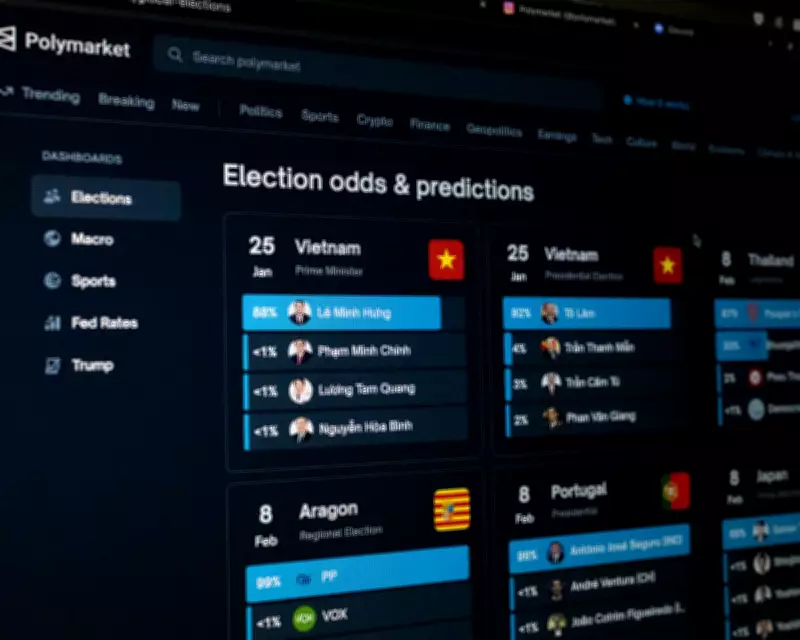
Prediction Markets Transform Global Events into Lucrative Gambling Opportunities
Prediction markets have rapidly evolved into a multi-million-pound industry, with platforms such as Polymarket and Kalshi enabling users to place high-stakes bets on virtually any global event. From geopolitical conflicts like the Ukraine war to trivial matters such as Elon Musk's social media activity, these markets have created a new form of derivatives trading accessible to the masses.
How Prediction Markets Operate
On Polymarket, users can anonymously wager cryptocurrency on the outcomes of various events. For instance, if someone believes Russia will capture the Ukrainian city of Sumy by a specific date, they can purchase a "yes" option based on the current market probability. A bet placed at a 1% chance could yield a hundredfold return if the event occurs, with rival gamblers taking the opposite position. These bets can be traded similarly to traditional financial derivatives, adding a layer of complexity and speculation.
Despite being banned in countries like France, Polymarket continues to attract users who bet on French current affairs, highlighting the platform's global reach and regulatory challenges. Critics argue that such markets are immoral and should be regulated like legalized gambling or outright banned, especially as they involve sensitive topics like warfare and political instability.

Ethical Concerns and Real-World Impacts
The Guardian's investigation, led by reporter Aisha Down, reveals that prediction markets are not just harmless speculation. In conflict zones like Ukraine, official reports from organizations such as the Institute for the Study of War are used to settle bets, often without the knowledge of those producing the information. This has led to instances where journalists, like Israeli reporter Emanuel Fabian, have received threatening messages from Polymarket users seeking to influence outcomes for financial gain.
In one notable case, Fabian's coverage of an Iranian missile strike near Jerusalem became a focal point for a $23 million bet on whether Iran would strike Israel on a specific date. Users pressured him to alter his reporting to favor their wagers, demonstrating how prediction markets can distort journalism and endanger individuals.
Insider Trading and Corruption Risks
Prediction markets also face significant corruption risks. Before the announcement of a US-Iran ceasefire last month, several newly created Polymarket accounts placed nearly $70,000 in bets on a pause in fighting, suggesting insider knowledge. Similar patterns occurred prior to US-Israeli strikes on Iran in February, where six wallets created on the same day correctly wagered on the attacks.
Frequent users have started tracking these suspicious accounts, setting up alerts to copy their trades. One account is believed to be linked to an insider at the US Federal Reserve, allowing others to follow bets on interest rate decisions. This raises questions about the integrity of prediction markets and their potential to facilitate illegal activities.
User Perspectives and Broader Implications
When questioned about the ethics of gambling on events where lives are at stake, Polymarket users often defend the platform as a source of truth and free speech. They argue that in situations like the Ukraine war, where governments and news outlets may provide biased information, prediction markets offer an open-source alternative for assessing reality.
However, as the market grows, some longtime users express concerns that it has devolved into a casino-like environment. The opacity of these platforms makes it difficult to monitor activities, yet their influence is expanding; for example, Goldman Sachs now cites Polymarket sentiment in its market updates. This integration into mainstream finance underscores the need for greater transparency and regulation.
Polymarket did not respond to requests for comment on these issues, leaving many questions unanswered about the future of prediction markets and their role in global affairs.