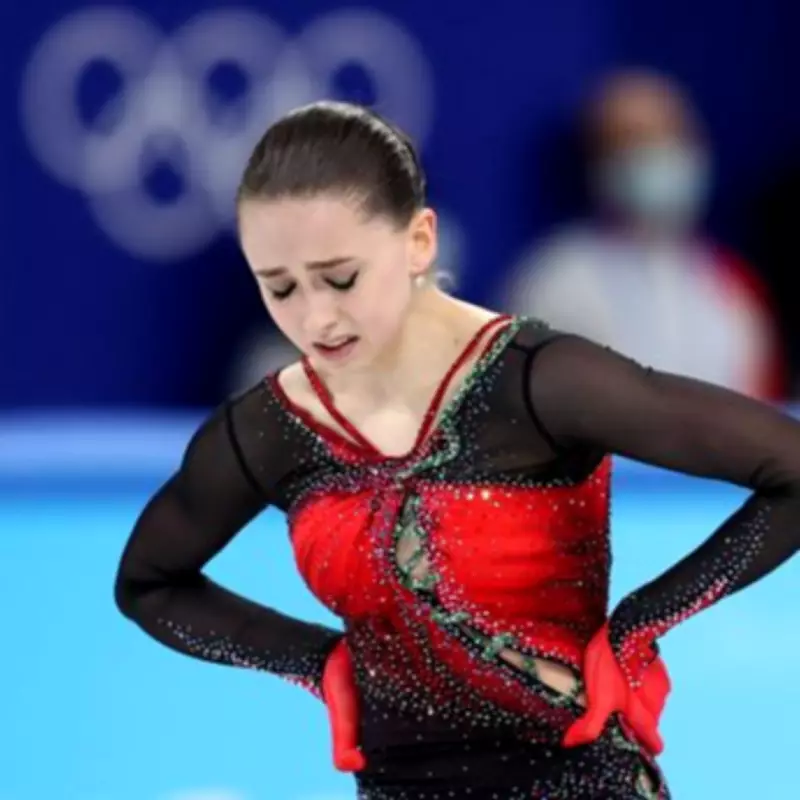
Kamila Valieva Excluded from 2026 Winter Olympics Following Doping Ban Appeal Failure
The 2026 Winter Olympics figure skating competition commenced on Friday without Russian star Kamila Valieva, whose final appeal against a doping suspension has been definitively rejected. This decision conclusively bars the once-celebrated athlete from participating in the Milano Cortina Games, ending a protracted legal saga that began after her controversial appearance at the Beijing 2022 Olympics.
Beijing 2022 Controversy and Subsequent Ban
Valieva, who was merely fifteen years old during the 2022 Winter Olympics, competed in Beijing despite having tested positive for the banned heart medication trimetazidine in December 2021. Her test results were publicly disclosed only after she had already helped the Russian team secure a gold medal in the team event. Remarkably, she was still permitted to skate in the individual competition, where she ultimately finished in fourth position.
In January 2024, the Court of Arbitration for Sport imposed a rigorous four-year ban on Valieva, a ruling that was subsequently endorsed by the World Anti-Doping Agency. This sanction led to Russia being demoted to third place in the team event, with the United States elevated to gold and Japan to silver. The reallocated medals were formally presented during the 2024 Summer Olympic Games.

Widespread Condemnation of Adult Responsibility
The case ignited intense international debate regarding the culpability of the adults surrounding the teenage skater. Former American figure skater and coach Adam Rippon expressed profound dismay on social media at the time, vehemently arguing that Valieva's support system had catastrophically failed her.
"This entire situation is heartbreaking," Rippon stated. "This young girl is just 15. She's a minor. The adults around her have completely failed her. They've put her in this awful situation and should be punished. They put her sport performance ahead of her health and well-being."
The World Anti-Doping Agency echoed this sentiment in an official declaration, emphasizing that "the doping of children is unforgivable" and calling for severe penalties for any coaches, doctors, or support personnel found to have provided performance-enhancing substances to minors.
Final Legal Appeal Dismissed in 2025
Valieva's last-ditch effort to overturn the ban concluded in October 2025 when the Swiss Federal Tribunal dismissed her final appeal. The court ordered her to pay more than £20,000 in legal costs and damages. According to reports from the Russian news agency TASS, the judges determined that a significant portion of Valieva's arguments relied on evidence submitted after the original contested decision had been issued, and her defense failed to provide necessary supporting documentation.
This definitive legal ruling officially confirmed her exclusion from the 2026 Winter Olympics, despite the participation of several other Russian and Belarusian figure skaters who are competing as 'individual neutral athletes' due to their countries' International Olympic Committee ban.
Broader Implications for Olympic Sport
The Valieva case has raised critical questions about the protection of child athletes in high-pressure competitive environments and the consistency of anti-doping enforcement. While the skater herself has faced the full consequences of the ban, the ongoing discourse continues to focus on the systemic failures and the responsibilities of the adults entrusted with her care and training.
As the 2026 Winter Olympics proceed, the absence of Kamila Valieva serves as a stark reminder of one of the most contentious doping scandals in recent Olympic history, underscoring the enduring challenges in maintaining integrity and fairness in international sports.